Within-country increases in clean-cooking access represent the most robust national-level indicator associated with a reduced burden of interstitial lung disease, according to a longitudinal analysis of 204 countries spanning 2000 to 2021 with projections to 2050 published in BMC Public Health.
The study linked Global Burden of Disease 2021 estimates with World Bank and World Health Organization indicators across 204 countries from 2000 to 2021, directly standardizing reconstructed both-sex outcomes. To investigate national infectious, environmental, social, and health-system correlates of interstitial lung disease and pulmonary sarcoidosis, researchers evaluated 23 prespecified exposures across lags of 0, 1, 3, 5, and 10 years, running a total of 114 models.
The statistical modeling incorporated country and year fixed effects along with country-clustered standard errors, applying Benjamini–Hochberg false-discovery-rate control with a significance threshold of q < 0.05 across the complete family of tests. Out of the 114 exposure–lag evaluations, 21 met the false-discovery-rate threshold. Robustness was evaluated using region-by-year fixed effects, country-specific trends, distributed-lag models, alternative variance estimators, mutual adjustment, inverse-probability weighting, income interaction tests, and temporal falsification analyses.
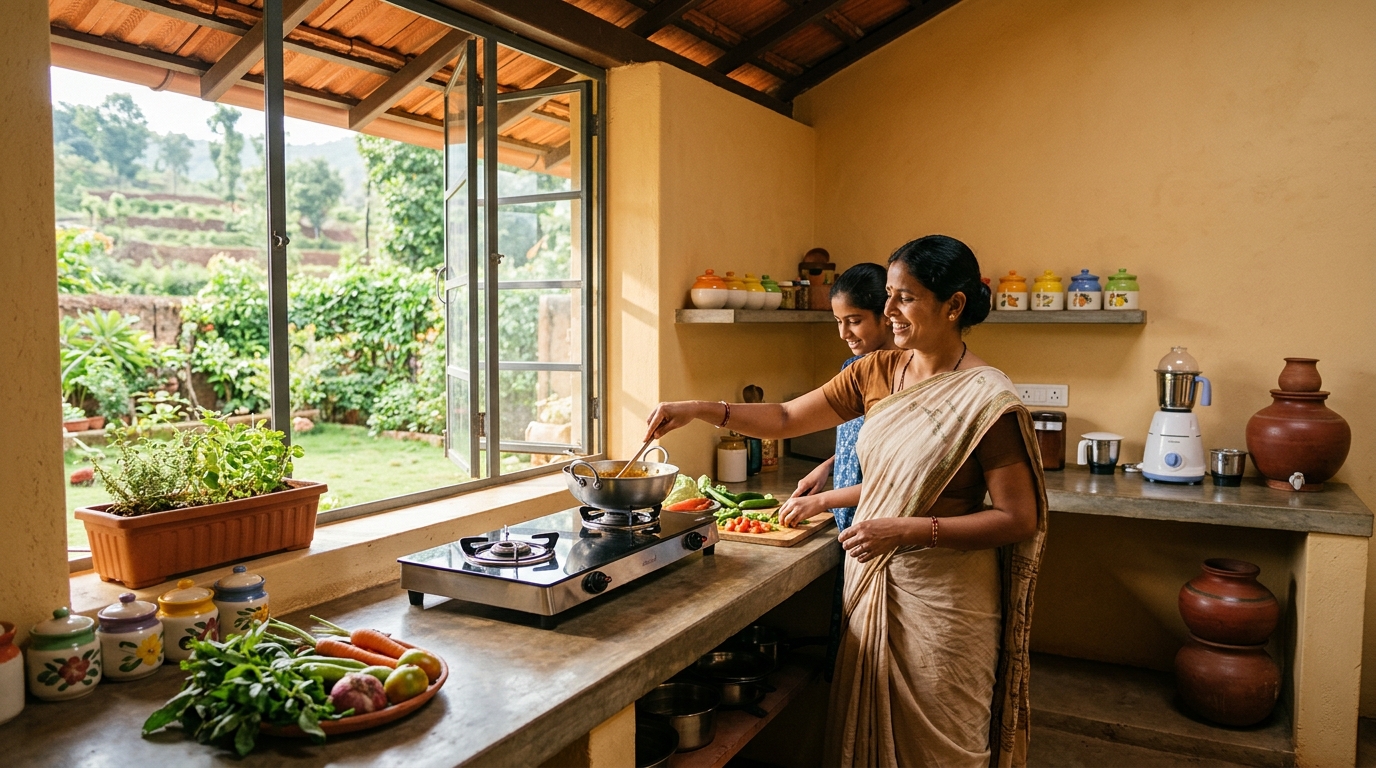
Evaluated per within-country standard deviation, higher clean-cooking access was associated with a 0.93 percent lower disability-adjusted life year (DALY) rate ten years later (95% confidence interval, 0.34 to 1.52 percent lower; q = 0.019). Conversely, higher tuberculosis incidence was associated with a 0.92 percent higher DALY rate three years later (95% CI, 0.37 to 1.47 percent; q = 0.012), and higher societal poverty was linked to a 3.38 percent higher rate one year later (95% CI, 1.29 to 5.52 percent; q = 0.017). An observed inverse association with universal health coverage did not survive false-discovery-rate control (-1.95 percent; q = 0.066).
When models incorporated subregion-by-year fixed effects to eliminate spatial autocorrelation, only the clean-cooking access association persisted, although country-specific slopes remained heterogeneous. In contrast, the tuberculosis association disappeared after adjusting for future incidence or country-specific trends, and interaction tests indicated that no exposure association differed significantly by national income level, with all interaction q-values at 0.42. Over the observational timeframe, global DALYs for interstitial lung disease rose from 2.09 million in 2000 to 4.04 million in 2021.
Projections combining empirically shrunk country trends with Monte Carlo simulations of slope and trend-persistence uncertainty estimated that, under an ensemble ranging from no change to complete continuation of 2010–2021 trends, the global burden would reach 6.15 million DALYs (95% uncertainty interval, 4.12 to 9.38 million) by 2050. The authors noted that clean-cooking access serves as a proxy for reduced household combustion exposure, while tuberculosis and poverty patterns reflect shared structural and regional trajectories rather than independent effects, emphasizing that these national-level correlations generate hypotheses and do not establish individual-level causality or intervention outcomes.
The research was motivated by earlier global evidence indicating that interstitial lung disease and pulmonary sarcoidosis are rising worldwide and remain unequally distributed across countries. However, national infectious, environmental, social, and health-system correlates of this burden had remained poorly characterized.
Subject of Research: National correlates and longitudinal burden projections of interstitial lung disease across 204 countries
Article Title: Household energy, tuberculosis, and poverty: which national signals track the rising global burden of interstitial lung disease? A 204-country longitudinal study, 2000–2021, with projections to 2050
Article References: Buendía, J. A. (2026). Household energy, tuberculosis, and poverty: which national signals track the rising global burden of interstitial lung disease? A 204-country longitudinal study, 2000–2021, with projections to 2050. BMC Public Health. https://doi.org/10.1186/s12889-026-30268-1
Image Credits: AI Generated
DOI: 10.1186/s12889-026-30268-1
Keywords: interstitial lung disease, pulmonary sarcoidosis, clean cooking, household energy, global health, tuberculosis, poverty, disease burden, epidemiology, Household, energy, national
News Source: Barbara Leach. (November 8, 2026). Clean Cooking Access Tracks Lower Global Interstitial Lung Disease Burden. Scienmag.