In a groundbreaking new study published in Nature Communications, researchers have unveiled a novel approach to profiling human circadian rhythms using accelerometer data derived from sleep-wake cycles in two extensive cohort studies. This innovative methodology not only provides unprecedented insights into the biological underpinnings of human circadian behavior but also holds significant promise for advancing personalized medicine, public health interventions, and chronotherapeutic strategies. By leveraging wearable technology to capture continuous, objective measurements of physical activity and rest patterns, the study marks a pivotal shift towards large-scale, real-world monitoring of circadian health.
Circadian rhythms, the intrinsic 24-hour cycles governing physiological processes such as sleep, hormone secretion, and metabolic function, are foundational to human health. Disruptions in these rhythms are linked to a myriad of diseases including neurodegenerative disorders, cardiovascular diseases, and mental health conditions. Traditional assessments of circadian timing often rely on laboratory-based methods such as chronotype questionnaires or melatonin sampling, which are either subjective or invasive and logistically complex. The current study circumvents these limitations by utilizing accelerometer-derived activity data, drawn from two large cohorts, to map sleep-wake cycles with high temporal resolution.
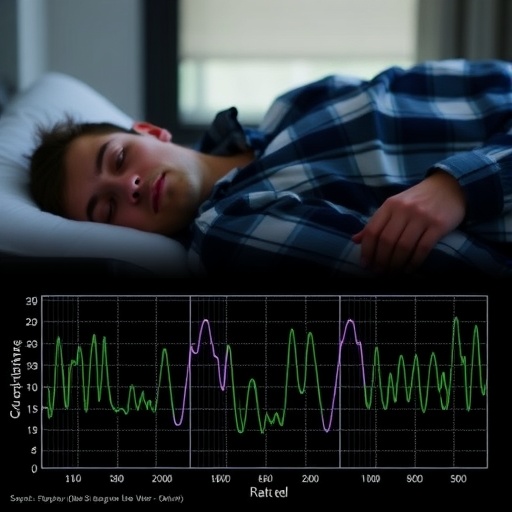
The researchers structured their investigation around high-fidelity accelerometer data collected from participants wearing wrist-worn devices continuously over extended periods. This raw movement data was then processed through advanced algorithms designed to identify patterns indicative of sleep and wakefulness. By analyzing the timing, duration, and fragmentation of rest-activity cycles, the study generated robust circadian profiles, uncovering interindividual variability and population-level trends with detail previously unattainable outside of controlled lab settings.
A key innovation in this work lies in the computational techniques employed. The team implemented machine learning frameworks capable of distinguishing subtle activity patterns amidst ambient noise, artifacts, and participant-specific behavioral idiosyncrasies. These methods not only improved the accuracy of sleep-wake detection but also enabled the derivation of secondary metrics such as phase stability, amplitude of rhythmicity, and diurnal preference. Importantly, these circadian parameters were validated against established biomarkers from a subset of participants, affirming the reliability of accelerometer-derived profiles.
Beyond methodological advancements, the study revealed compelling associations between circadian rhythm characteristics and demographic, lifestyle, and health variables. For instance, profiles showed marked shifts correlated with age, gender differences, and body mass index, reflecting complex biobehavioral interactions. The use of two cohorts permitted replication of findings and cross-validation, thus strengthening confidence in the generalizability of the results. Moreover, the longitudinal aspect of accelerometric monitoring opens new avenues for tracking circadian alterations over time within individuals, enabling early detection of rhythm disruptions linked to disease onset.
One of the study’s most exciting implications relates to its potential application in personalized medicine. Circadian profiling via passive accelerometry could enable clinicians to tailor treatment timing—known as chronotherapy—maximizing therapeutic efficacy and minimizing side effects. For example, optimizing the timing of drug administration to align with individual circadian peaks may revolutionize management strategies for hypertension, depression, or cancer therapies. Furthermore, public health initiatives could utilize population-level circadian data to devise work schedules, lighting conditions, and urban planning that respect biological timing, thereby enhancing societal well-being.
The integration of consumer-grade wearable technology in research exemplified by this study also promises to democratize circadian science. With the proliferation of smartwatches and fitness trackers worldwide, the scalability of such monitoring could empower millions to understand and optimize their own circadian rhythms. This bi-directional feedback loop between individuals and researchers may catalyze novel behavioral interventions and foster widespread circadian literacy. However, the study’s authors caution that standardized data processing pipelines and privacy safeguards will be essential to harness the full potential of this technological paradigm.
From a technical perspective, the use of accelerometry avoids many challenges intrinsic to traditional circadian assessment methods. It offers non-invasive, continuous, and longitudinal data acquisition across diverse environments, free from recall bias inherent in self-report measures. Nonetheless, the study acknowledges certain limitations, such as the need to control for extraneous movement unrelated to circadian physiology and the influence of social and environmental factors on rest-activity patterns. Ongoing refinement of analytic algorithms will be critical to disentangling these confounds and isolating true biological rhythms.
Crucially, by analyzing data from two demographically distinct cohorts, the study provides compelling evidence that accelerometer-based circadian measures are robust across varied populations and settings. The cross-cohort replication enhances the validity of the circadian phenotypes described and offers insights into how lifestyle, ethnicity, or geographic factors modulate circadian dynamics. This sets the stage for future meta-analyses and integrative studies combining accelerometric profiles with genomic, metabolomic, and environmental data to unravel the complex architecture of circadian regulation.
The implications of these findings extend to workplace health and performance optimization. Understanding individual circadian profiles can inform shift work schedules to mitigate circadian misalignment and its adverse effects such as fatigue, cognitive decline, and metabolic disturbances. Occupational health programs may integrate accelerometer-derived circadian data to personalize shift rotations or recommend targeted interventions like light therapy or strategic napping. Importantly, such applications align with growing societal recognition of circadian health as a pillar of wellness.
In addition, the study’s approach offers profound potential in clinical diagnostics and prognostics. For neurodegenerative diseases like Alzheimer’s or Parkinson’s, where circadian dysfunction often precedes overt symptoms, accelerometer data could serve as an early biomarker. Similarly, mental health disorders characterized by sleep and circadian disruptions, such as bipolar disorder and depression, might be monitored non-invasively over time, facilitating timely therapeutic adjustments. The scalability and cost-effectiveness of wrist-worn accelerometry support its integration into routine clinical practice.
Looking ahead, the authors envision expanding their circadian profiling framework to incorporate multi-modal sensor data, including heart rate variability, skin temperature, and light exposure, all measurable via modern wearables. This comprehensive chronobiological monitoring promises to refine circadian phenotyping further and uncover complex interactions between environmental cues and endogenous rhythms. The fusion of wearable technology, big data analytics, and systems biology heralds a new era in circadian research, transforming foundational science into actionable health solutions.
In summary, this landmark study showcases a powerful, scalable, and validated approach to circadian rhythm profiling using accelerometer measures from sleep-wake cycles. By bridging the gap between laboratory research and real-world monitoring, the findings offer transformative insights with broad implications across medicine, public health, and everyday life. As the world grows increasingly aware of the importance of circadian health, such pioneering work positions wearable technology at the forefront of personalized chronobiology, unlocking new pathways to enhance human well-being and disease prevention.
Subject of Research:
Human Circadian Rhythm Profiling Using Accelerometer Data of Sleep-Wake Cycles in Cohort Studies
Article Title:
Circadian rhythm profiles derived from accelerometer measures of the sleep-wake cycle in two cohort studies
Article References:
Vidil, S., Danilevicz, I.M., Dugravot, A. et al. Circadian rhythm profiles derived from accelerometer measures of the sleep-wake cycle in two cohort studies. Nat Commun (2025). https://doi.org/10.1038/s41467-025-66407-2
Image Credits: AI Generated
Tags: accelerometer sleep-wake datachronotherapeutic strategiescircadian rhythms researchdisruptions in circadian rhythmshigh-fidelity activity data analysislarge-scale circadian health monitoringneurodegenerative disorders and circadian healthpersonalized medicine advancementsphysiological processes and sleepprofiling human circadian behaviorpublic health interventionswearable technology in health