


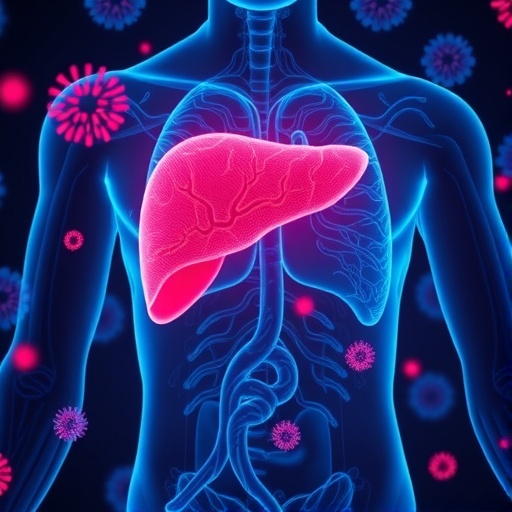
In a groundbreaking study poised to redefine our understanding of the interplay between psychological stress and liver disease, researchers have unveiled a compelling mechanistic link connecting chronic stress to the acceleration of liver cancer progression. This pivotal investigation elucidates how stress-induced perturbations in a brain–liver neural circuit lead to compromised hepatic immunity and metabolic dysfunction, thereby fostering a fertile ground for liver oncogenesis. The study, recently published in Nature Metabolism, integrates sophisticated murine liver cancer models with metabolic and immunological analyses to uncover how catecholaminergic signaling disruption in hepatocytes undermines immune surveillance through a metabolic checkpoint involving the kynurenine pathway.
For decades, the medical community has recognized the deleterious effects of chronic psychological stress on systemic health, with mounting epidemiological evidence implicating stress as a contributory factor in liver diseases ranging from steatohepatitis to hepatocellular carcinoma (HCC). Despite this association, the molecular underpinnings linking stress to hepatic oncogenesis remained largely enigmatic. The current study addresses this critical knowledge gap by investigating the impact of chronic psychosocial stress on hepatic immune dynamics and metabolic processes that govern tumor progression.
Central to the researchers’ findings is the identification of a disrupted brain–liver neural axis involving catecholamine-mediated β2-adrenergic receptor (ADRB2) signaling. Under normal physiological conditions, ADRB2 activation in hepatocytes appears to sustain the expression of quinolinate phosphoribosyl transferase (QPRT), an enzyme pivotal in the kynurenine metabolic pathway. Chronic stress, however, downregulates ADRB2 signaling, which in turn suppresses QPRT expression. This molecular derailment reroutes kynurenine metabolism, diverting it from the biosynthesis of nicotinamide adenine dinucleotide (NAD^+) towards the accumulation of kynurenic acid (KA), a metabolite with notable immunomodulatory properties.
The implications of this metabolic shift are profound, particularly in the context of hepatic immune surveillance. QPRT depletion and the resultant kynurenine metabolic reprogramming induce mitochondrial dysfunction within liver-resident CD8^+ T cells, a critical effector population responsible for anti-tumor immunity. By impairing their mitochondrial integrity and functional capacity, stress effectively blunts the cytotoxic arsenal of hepatic CD8^+ T cells, diminishing their ability to recognize and eradicate malignant hepatocytes. Consequently, the immune microenvironment becomes permissive to unchecked tumor growth and progression.
To substantiate these mechanistic insights, the team employed both carcinogen-driven and oncogene-driven liver cancer models in genetically modified male mice subjected to chronic stress paradigms. These models provided a robust platform for dissecting the interplay between stress-induced neuroendocrine alterations, metabolic pathway reconfiguration, and immune cell functionality. Intriguingly, observations revealed that bolstering ADRB2 or QPRT expression within hepatocytes, or pharmacologically supplementing nicotinamide to rescue NAD^+ levels, reinstated CD8^+ T cell competence and curtailed tumor advancement despite ongoing stress.
Extending their findings to human pathology, the researchers analyzed liver tissue samples from patients diagnosed with liver cancer, demonstrating significant correlations between hepatic expression of ADRB2 and QPRT, intratumoral NAD^+ and KA concentrations, and the frequency and effector status of CD8^+ T cells. This translational evidence underscores the clinical relevance of the ADRB2-QPRT-NAD^+ axis as a metabolic checkpoint that stress exploits to undermine immune surveillance in the liver.
At its core, this revelation portrays chronic psychological stress as a systemic disruptor that penetrates the neural-metabolic-immune nexus of the liver. The study posits that this axis offers a hitherto underappreciated target for therapeutic intervention, highlighting the possibility that modulation of hepatic adrenergic signaling or kynurenine metabolism could reestablish immune vigilance and retard liver cancer progression. Such strategies hold promise, particularly in the context of adjuvant therapies for liver cancer patients experiencing chronic stress.
Moreover, these findings may have broad implications beyond oncology, potentially shedding light on stress-related exacerbations in other chronic liver diseases characterized by immune dysregulation and metabolic perturbations. The kynurenine pathway, long studied for its role in neurodegenerative and psychiatric disorders, now emerges as a critical mediator bridging the mind-body axis with hepatic immunity and cancer biology.
Importantly, the research narrative posits NAD^+ restoration via nicotinamide supplementation as a feasible strategy for rescuing mitochondrial function in liver CD8^+ T cells. Given NAD^+’s central role in cellular metabolism and aging, its depletion in stressed hepatic environments illuminates novel avenues for metabolic therapies aimed at rejuvenating exhausted immune cells and reinstating anti-cancer functions.
This intricate dissection of stress-induced metabolic and immunological derailment challenges the conventional paradigms of liver cancer pathogenesis, which often emphasize genetic mutations and environmental toxins. By incorporating psychological stress as a bona fide driver of malignant progression through direct molecular mechanisms, the study broadens the scope of integrative oncology and psychosomatic medicine.
Additionally, the meticulous characterization of the ADRB2 signaling pathway in hepatocytes implicates β2-adrenergic receptors as potential pharmacological targets. Modulating these receptors could buffer the deleterious metabolic consequences of chronic stress, thereby preserving hepatic immunometabolic homeostasis. Future drug development efforts may thus benefit from exploiting this pathway to develop liver-targeted adrenergic receptor modulators.
Beyond molecular biology and immunology, this investigation invites a paradigm shift in clinical management strategies. Screening liver cancer patients for stress levels and associated metabolic markers might identify individuals at elevated risk for rapid disease progression, enabling personalized interventions that integrate psychosocial support with metabolic and immunological therapies.
Furthermore, the study’s multi-modal approach—integrating behavioral stress models, metabolic assays, immune phenotyping, and human tissue analyses—sets a new benchmark for multidisciplinary research aimed at unraveling complex neuroimmune-metabolic circuits in disease. This holistic methodology reinforces the growing appreciation of systemic interconnectedness in pathophysiology and the necessity of bridging neural, metabolic, and immune disciplines in translational research.
Looking ahead, questions remain regarding the broader applicability of these findings across sexes, given the current mouse model focus on males, and the temporal dynamics of stress-induced metabolic changes during tumor initiation versus progression. Delineating these variables will be crucial for fully harnessing the therapeutic potential of targeting the kynurenine pathway and adrenergic signaling in liver cancer.
In conclusion, this pioneering study by Sun et al. penetrates the complex interface of psychological stress, hepatic metabolism, and immune surveillance to reveal a metabolic checkpoint governing liver cancer progression. By implicating the ADRB2-QPRT axis and NAD^+ homeostasis in orchestrating CD8^+ T cell functionality, the research paves the way for novel therapeutic approaches that transcend conventional cancer treatment paradigms. The elucidation of this brain–liver immunometabolic circuit not only deepens our mechanistic understanding but also charts an innovative path toward mitigating the oncogenic consequences of chronic psychological stress.
Subject of Research: The study explores how chronic psychological stress impairs hepatic immune surveillance and promotes liver cancer progression through disruption of the kynurenine metabolic pathway and β2-adrenergic receptor signaling in hepatocytes.
Article Title: Chronic stress drives liver cancer by impairing the hepatic kynurenine pathway and immune surveillance.
Article References:
Sun, R., Jiao, D., Yuan, W. et al. Chronic stress drives liver cancer by impairing the hepatic kynurenine pathway and immune surveillance. Nat Metab (2026). https://doi.org/10.1038/s42255-025-01430-7
Image Credits: AI Generated
DOI: https://doi.org/10.1038/s42255-025-01430-7
Tags: brain-liver neural circuit dysfunctioncatecholaminergic signaling and liver oncogenesischronic stress and liver cancerhepatic immunity and tumor growthhepatocellular carcinoma and stress factorsimmune system disruption in liver diseasekynurenine pathway and liver diseasemetabolic dysfunction in cancer progressionmurine models in cancer researchNature Metabolism study on liver cancerpsychological factors in liver diseasepsychological stress effects on liver health



