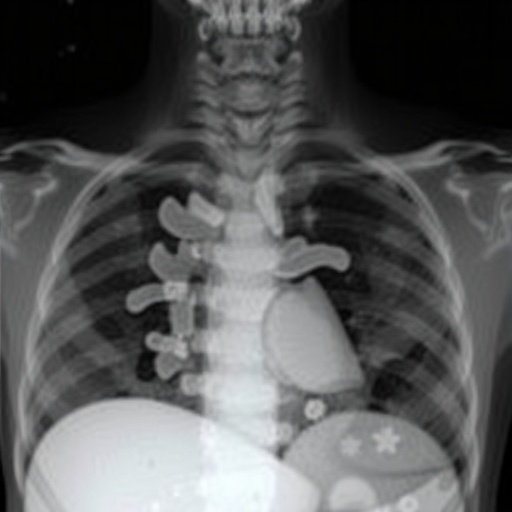
In a remarkable case that challenges existing medical paradigms, researchers have unveiled a striking correlation between tertiary hyperparathyroidism and the presence of ectopic parathyroid adenomas within the mediastinal region. This condition was notably observed in a patient suffering from chronic kidney disease (CKD) along with cardiovascular complications. The findings, poised to captivate the medical community, illustrate not only the complexity of parathyroid disorders in the context of CKD but also highlight the challenges faced by clinicians in diagnosing and managing such intricate cases.
Tertiary hyperparathyroidism often arises as a consequence of prolonged secondary hyperparathyroidism, particularly in patients with advanced kidney disease. In this specific instance, the patient’s deteriorating renal function had led to an imbalance in calcium and phosphate metabolism, triggering an exaggerated parathyroid hormone (PTH) response. This hormonal response is typically known to regulate calcium levels, but in cases of CKD, the feedback mechanism becomes severely disrupted, leading ultimately to tertiary hyperparathyroidism wherein the parathyroid glands become hyperplastic and frequently hyperactive.
The identification of ectopic parathyroid adenomas presents an additional layer of complexity. These abnormal growths of parathyroid tissue can occur outside the typical anatomical locations (the neck), complicating the diagnostic process. Radiological imaging techniques have become pivotal for accurate localization of these ectopic glands. The patient in question underwent advanced imaging studies, which revealed a mediastinal parathyroid adenoma contributing to elevated serum calcium levels and increased cardiovascular risk, a situation that demanded immediate clinical attention.
The cardiovascular implications of tertiary hyperparathyroidism are ominous, particularly in the context of CKD where arteriosclerosis and left ventricular hypertrophy are prevalent. Elevated serum calcium and PTH levels can lead to vascular calcification, exacerbating heart disease and significantly raising the risk of cardiovascular events. The researchers emphasized that managing hyperparathyroidism in these patients is not solely about correcting calcium levels; it is imperative to consider the overall impact on cardiovascular health and quality of life.
Surgical intervention remains a cornerstone in the management of ectopic parathyroid adenomas. In this case, the surgical team performed a successful resection of the mediastinal adenoma, which in turn yielded a remarkable normalization of calcium levels and an improvement in the patient’s symptoms. Postoperative follow-up highlighted the importance of multidisciplinary management involving endocrinologists, nephrologists, and surgeons to ensure optimal outcomes.
Furthermore, the case underscores the interplay between chronic kidney disease and parathyroid disorders, drawing attention to the need for regular monitoring of calcium and parathyroid hormone levels in CKD patients. Early identification of tertiary hyperparathyroidism is crucial in preventing the progression of complications such as ectopic adenomas. Patients recognized to be at higher risk should receive guidance on lifestyle modifications and management strategies to mitigate cardiovascular risks associated with metabolic disturbances.
Diving deeper into the pathophysiology of this condition reveals the intricacies of calcium homeostasis and its regulation. Parathyroid hormone exerts a direct effect on bone, kidneys, and the gastrointestinal tract to maintain calcium equilibrium. However, in CKD, the kidneys fail to properly excrete phosphate resulting in vascular calcification and further systemic complications.
The case presented also opens dialogue about variations in individual responses to parathyroid hormone levels, reinforcing that not every patient with CKD will develop severe hyperparathyroidism. Genetic predispositions, coexistent health conditions, and adherence to treatment regimens play significant roles in the presentation of these disorders, indicating that a one-size-fits-all approach may not be adequate for management.
The implications of this research extend beyond the singular case, calling for broader studies to examine the prevalence and clinical outcomes associated with ectopic parathyroid adenomas in CKD. Multi-center studies could provide further insight into the etiological factors at play and develop a clearer understanding of the long-term effects these conditions have on patient morbidity and mortality.
In conclusion, the case of tertiary hyperparathyroidism with mediastinal adenoma in a patient with chronic kidney disease illustrates a timely intersection of endocrinology, nephrology, and cardiovascular health. The unique findings of this report have the potential to reshape the clinical approach toward monitoring and treating hyperparathyroid conditions, ultimately aiming for improved patient outcomes. Such exploration promises to connect the dots in the complex web of endocrine and renal interaction, highlighting the necessity for a collaborative approach in treating multifaceted cases.
As the medical community endeavors to decipher these intricate relationships, continued research will be paramount in enhancing our understanding of the underlying mechanisms, refining diagnostic criteria, and innovating treatment strategies that address the nuances of tertiary hyperparathyroidism in the context of chronic kidney disease.
Subject of Research: Tertiary hyperparathyroidism and ectopic mediastinal parathyroid adenoma in chronic kidney disease patients.
Article Title: Tertiary hyperparathyroidism with ectopic mediastinal parathyroid adenoma in a patient with chronic kidney disease and cardiovascular complications: a case report.
Article References:
Salahaldin, M.M., Zrineh, A., Keshek, A.A. et al. Tertiary hyperparathyroidism with ectopic mediastinal parathyroid adenoma in a patient with chronic kidney disease and cardiovascular complications: a case report. BMC Endocr Disord (2026). https://doi.org/10.1186/s12902-025-02160-3
Image Credits: AI Generated
DOI:
Keywords: chronic kidney disease, tertiary hyperparathyroidism, ectopic parathyroid adenoma, cardiovascular complications, calcium homeostasis, metabolic disorders.
Tags: advanced kidney disease managementcalcium phosphate metabolism in renal diseasecardiovascular complications of CKDchallenges in diagnosing parathyroid disorderschronic kidney disease complicationsectopic parathyroid adenoma diagnosishormonal responses in chronic kidney diseasehyperplastic parathyroid glands in CKDmediastinal parathyroid adenomasparathyroid hormone regulation in kidney diseaseradiological imaging in parathyroid diagnosistertiary hyperparathyroidism and CKD