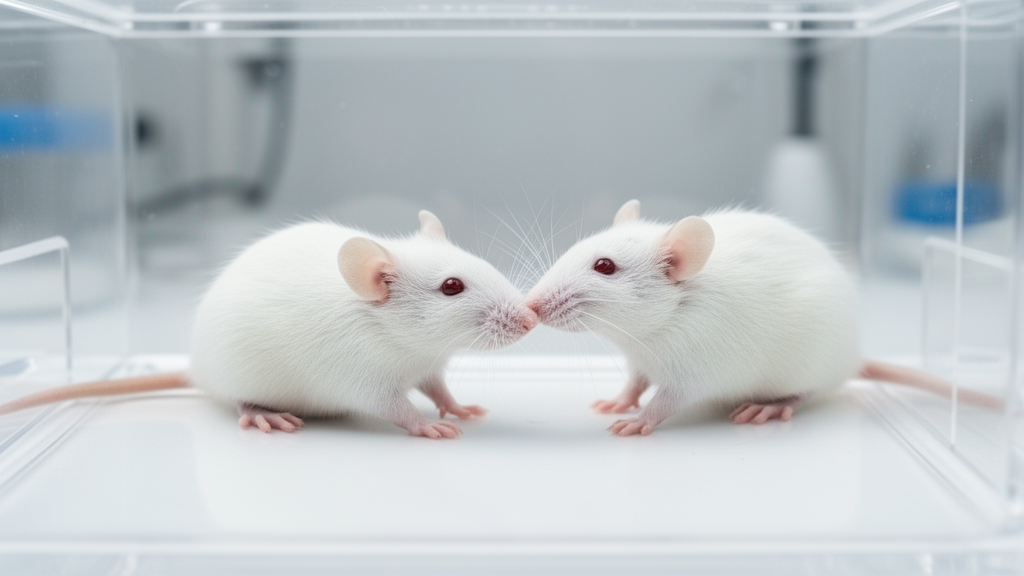
Chronic exposure to broad-spectrum antibiotics induces pronounced, context-dependent reorganization of functional brain connectivity and shifts regional cerebral metabolism in male mice while leaving their fundamental capacity for social discrimination intact. Researchers at the Feinstein Institutes for Medical Research investigated how sustained pharmacological disruption of the gut-brain axis influences neural network architecture when animals navigate different social environments. Using in vivo positron emission tomography paired with automated behavioral quantification, the investigators demonstrated that mice receiving chronic antibiotics sustained normal levels of social discrimination and gross locomotor exploration, yet exhibited widespread reorganization in functional connectivity and persistent hypometabolism across limbic circuits. Rather than causing an overt collapse of social behavior, chronic antibiotic administration forced neural networks into an energetically volatile configuration characterized by reduced organizational efficiency and elevated reliance on sensory cortices during social encounters.
Understanding the physiological communication pathways between the gastrointestinal tract and the central nervous system has become a central focus of neurobiology, as alterations in gut microbial communities are frequently reported alongside neuropsychiatric conditions marked by social processing difficulties. Although antibiotics are extensively utilized in preclinical models to induce gut dysbiosis, prior behavioral investigations have reported contradictory outcomes regarding whether microbial depletion impairs social affiliation, induces social avoidance, or preserves baseline social drive. The authors hypothesized that these conflicting findings across the scientific literature might arise because antibiotic exposure does not simply ablate social performance, but instead alters the internal neural mechanisms, regional metabolic allocations, and functional network topologies that support social processing under varying degrees of environmental and social novelty.
To rigorously examine these neural adaptations, the researchers evaluated adult male C57BL/6J experimental mice alongside male BALB/cJ stimulus mice, which provided a distinct social target with consistent coat color for precise automated tracking. Animals entered the study at six to seven weeks of age, acclimated under a reversed twelve-hour light-dark cycle, and were maintained with ad libitum access to standard bedding, chow, and water. Experimental mice assigned to the antibiotic treatment cohort received a broad-spectrum antibiotic cocktail dissolved in their drinking water for three to three and a half weeks prior to behavioral testing and continuously throughout the experiment. The cocktail combined ampicillin at one gram per liter, vancomycin at half a gram per liter, neomycin at one gram per liter, gentamicin at one gram per liter, and metronidazole at one gram per liter, while control mice consumed regular drinking water ad libitum.
The experimental protocol evaluated mice across three distinct social contexts designed to elicit progressive levels of social engagement: an initial ten-minute solitary isolation session, a ten-minute interaction with a familiar stimulus mouse that had undergone two prior habituation trials the preceding day, and a novel interaction session divided into two consecutive five-minute exposures with unfamiliar stimulus mice. Testing occurred during the active dark cycle to maximize naturalistic exploratory behaviors. Animal movements and physical interactions were recorded inside a square arena and evaluated using DeepLabCut markerless pose tracking across fourteen anatomical keypoints per animal, restricted to frames meeting a high tracking confidence threshold. Custom computational routines parsed bout frequencies, latencies, and durations for nose-to-nose contact, anogenital investigation, social avoidance responses, and thigmotactic center-periphery positioning.
Behavioral quantification revealed that both control and antibiotic-treated mice displayed social discrimination index scores significantly below zero, with no statistically significant difference between the two experimental groups, demonstrating that basic social recognition remained operational despite chronic antibiotic exposure. Furthermore, total social investigation duration, cumulative nose-to-nose sniffing, anogenital sniffing, baseline locomotor distance, and spatial anxiety measures did not significantly differ between cohorts. However, antibiotic-treated mice exhibited significantly greater social avoidance and a significantly reduced approach-avoidance ratio when encountering novel conspecifics. While control animals displayed an adaptive increase in their approach-avoidance ratio from familiar to novel sessions and successfully habituated across the two novel encounters by reducing avoidance bouts, antibiotic-treated mice failed to exhibit this behavioral transition, maintaining persistent avoidance behaviors throughout novel exposures.
To capture the metabolic state of the brain during these social challenges, animals received an intraperitoneal injection of fluorine-18 fluorodeoxyglucose radiotracer, followed by a twenty-minute pre-behavioral uptake window and a ten-minute active behavioral interaction. Immediately following each behavioral session, mice were anesthetized with isoflurane and scanned on a dedicated small-animal microPET scanner to acquire consecutive ten-minute emission and transmission scans. Reconstructed volumetric images were spatially coregistered to a standardized mouse magnetic resonance imaging template aligned within Paxinos and Franklin stereotaxic space, skull-stripped, and proportionally scaled to each animal’s global mean cerebral standardized uptake value. This proportional normalization established relative regional metabolic metrics where values exceeding unity indicated metabolic activity higher than the whole-brain average, allowing precise cross-subject comparisons across seventy-four bilaterally parcellated anatomical nodes.
Voxel-wise comparisons revealed persistent metabolic depressions within limbic structures among antibiotic-treated mice across all three behavioral settings. During isolation, antibiotic-treated animals exhibited significantly diminished relative metabolic activity in the anterior cingulate cortex, medial globus pallidus, lateral entorhinal cortex, and paranigral nucleus. When placed with familiar partners, treated mice continued to display reduced metabolic activity in the caudate putamen, posterior hypothalamus, parasubiculum, and intermediate reticular nucleus, alongside increased primary visual cortex activation. During novel interactions, metabolic reductions concentrated within the medial amygdala and lateral hypothalamus, whereas primary somatosensory cortex regions representing the barrel field and forelimb displayed pronounced hyperactivation. Across experimental contexts, chronic antibiotic administration consistently suppressed metabolic engagement within central socio-emotional circuits while triggering context-dependent metabolic hyperactivation across primary sensory cortical areas.
Functional connectivity analyses demonstrated that this altered metabolic landscape was accompanied by striking context-dependent network rewiring, with sixty-three total connectivity differences identified between groups across all sessions. Network alterations were relatively modest during isolation, comprising six significant connectivity gains and one loss within thalamo-limbic circuits, but expanded dramatically during familiar social interaction into forty-eight connectivity gains and two losses centered on thalamo-limbic, brainstem-limbic, and striato-limbic pathways. During this familiar interaction, the medial geniculate nucleus emerged as a prominent operational hub, forming extensive novel correlations with the entorhinal cortex and parasubiculum. When confronted with novel mice, however, these connections dissipated, leaving only two gains and four losses. Topological graph analyses confirmed that antibiotic-treated mice exhibited significantly elevated degree centrality but significantly lower small-worldness across isolation and familiar encounters, reflecting a network architecture that possessed more overall connections but lower global integration efficiency.
Within-group longitudinal transitions across consecutive social settings further emphasized the rigidity and vulnerability of neural networks in antibiotic-treated mice. Control mice transitioning from isolation to familiar social interaction exhibited a classic sensory-to-limbic metabolic shift, characterized by decreased somatosensory and prelimbic cortex activity alongside increased anterior cortical amygdala and lateral entorhinal cortex activity. Antibiotic-treated mice exhibited no significant regional metabolic modulation across this transition, indicating an inability to recruit typical limbic gating mechanisms. In terms of functional topology, transitioning from isolation to familiar interaction caused antibiotic-treated mice to add thirty functional connections and lose only one, whereas transitioning from familiar interaction to novel partners triggered a dramatic unraveling of thirty-four connections and the establishment of only five, indicating profound instability in network organization across shifting environmental demands.
The authors suggested that several physiological mechanisms linking the gut to the brain could mediate these observed network disturbances. Prolonged broad-spectrum antibiotic consumption suppresses indigenous gut microbiota that produce crucial short-chain fatty acids such as butyrate, which maintain blood-brain barrier integrity, regulate microglial homeostasis, and sustain histone acetylation within limbic structures. Depletion of microbial tryptophan metabolites, which serve as serotonin precursors and neuroactive kynurenine intermediates, could directly impair synaptic plasticity across amygdalar and hippocampal circuits. Furthermore, disrupted vagal afferent communication between the enteric nervous system and brainstem nuclei may explain the pronounced alterations observed in brainstem-limbic functional connectivity. The investigators noted that their findings align conceptually with the selfish network hypothesis, in which metabolically constrained neural assemblies reorganize to preserve immediate behavioral output at the expense of topological efficiency, network stability, and long-term energetic sustainability.
Notwithstanding these robust neuroimaging observations, several methodological boundaries define the interpretive scope of the study. The experimental design utilized broad-spectrum antibiotics to disrupt the gut environment but did not perform direct microbiome sequencing to quantify individual taxonomic alterations, meaning that the neural findings must be attributed to the systemic physiological consequences of chronic antibiotic exposure rather than confirmed bacterial depletion. Additionally, metabolic functional connectivity derived from static radiotracer accumulation reflects inter-regional statistical correlations rather than directed causal pathways, precluding definitive conclusions regarding directionality or compensatory intentionality without invasive optogenetic or chemogenetic circuit manipulations. The study was also conducted exclusively in male mice using a single antibiotic cocktail regimen, necessitating cautious translational interpretation when relating these preclinical rodent findings to human neuropsychiatric conditions involving complex microbiome-gut-brain interactions.
Subject of Research: Neural functional connectivity and brain metabolic reorganization following chronic antibiotic exposure during social behavior in mice
Article Title: Context-dependent brain connectivity reorganization following chronic antibiotic exposure during social behavior
Article References: Coppin, F. M., Mahadeo, L., Bulbul, M., Yeung, K., Ma, Y., Vo, A., Huerta, P. T., & Carrión, J. (2026). Context-dependent brain connectivity reorganization following chronic antibiotic exposure during social behavior. Frontiers in Neuroscience, 20, Article 1936717. https://doi.org/10.3389/fnins.2026.1936717
Image Credits: AI Generated
DOI: 10.3389/fnins.2026.1936717
Keywords: gut-brain axis, functional connectivity, positron emission tomography, antibiotics, neuroimaging, social behavior, limbic system, neural networks, Context-dependent, brain, connectivity, reorganization
News Source: Cassandra Pierce. (November 9, 2026). Chronic Antibiotic Exposure Reshapes Mouse Brain Functional Connectivity During Social Interactions. Scienmag.