In a groundbreaking study published in Nature Communications, a team of researchers led by Ni, Gu, and Shen has unveiled a novel mechanism by which chondrocytes—the specialized cells responsible for cartilage maintenance—respond to oxygen-deprived or hypoxic microenvironments. Their work sheds light on how these cells intricately reprogram their chromatin landscape to activate a specific molecular complex involving CADM1-AS1 and HDAC1, which collectively orchestrate powerful anti-inflammatory signals. The implications of this discovery extend beyond fundamental biology, offering promising avenues for therapeutic interventions in chronic inflammatory diseases and cartilage degeneration.
Cartilage tissue, characterized by its avascular nature, is notoriously hypoxic, meaning that cells embedded within often operate under limited oxygen supply. While hypoxia has conventionally been viewed as a stressful condition detrimental to cell survival and function, this latest research portrays a more nuanced picture. Ni and colleagues demonstrate that chondrocytes have evolved adaptive mechanisms to not only endure low oxygen tensions but actively exploit these conditions for beneficial gene regulatory outcomes. This dual functionality hinges upon dynamic chromatin remodeling centered around epigenetic modulators such as histone deacetylase 1 (HDAC1), which in turn modulate inflammatory responses.
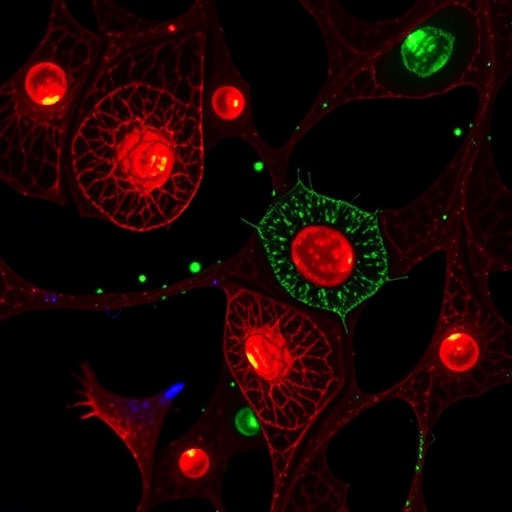
The study utilized cutting-edge chromatin immunoprecipitation sequencing (ChIP-seq) alongside RNA sequencing to profile epigenomic and transcriptomic shifts within hypoxic chondrocytes. The researchers observed a pronounced enrichment of HDAC1 recruitment at specific genomic loci under hypoxic conditions. Simultaneously, they identified a previously underappreciated long non-coding RNA (lncRNA), CADM1-AS1, as a pivotal player. Acting as a scaffold, CADM1-AS1 facilitates the formation of an HDAC1-containing complex that targets pro-inflammatory gene promoters, effectively repressing their transcription. This chromatin-level repression underlies a potent anti-inflammatory response, highlighting a sophisticated regulatory axis hitherto unrecognized in cartilage biology.
Further delving into the molecular choreography, Ni et al. found that the hypoxia-inducible factors (HIFs), key transcriptional activators under oxygen starvation, indirectly promote CADM1-AS1 expression. This regulatory cascade exemplifies how environmental stress signals are transduced into epigenetic modifications, reorienting the cellular transcriptome toward homeostasis. Notably, disruption of this pathway via knockdown of either CADM1-AS1 or HDAC1 precipitated exaggerated inflammatory profiles, underscoring its essential role in maintaining joint health.
The practical applications of this insight are manifold. Inflammatory joint diseases such as osteoarthritis and rheumatoid arthritis often involve dysregulated chondrocyte function and unchecked inflammation within cartilage. Strategies aimed at enhancing the CADM1-AS1/HDAC1 axis may offer novel therapeutic modalities to dampen inflammation and protect cartilage integrity. This approach could complement existing anti-inflammatory drugs but with potentially fewer side effects due to its cell-intrinsic and localized action.
The research team also employed in vivo models to confirm the physiological relevance of their discoveries. Mice engineered to lack CADM1-AS1 expression in cartilage exhibited exacerbated joint inflammation and accelerated cartilage degradation when subjected to inflammatory stimuli. Conversely, overexpression of CADM1-AS1 conferred protection against such pathology. These findings suggest that manipulation of non-coding RNA-mediated chromatin remodeling can translate into measurable outcomes in living organisms, bolstering the translational potential of the study.
From a broader perspective, this study provokes a reevaluation of how hypoxia influences cellular identity and function. Rather than merely dampening metabolism or signaling, hypoxia emerges as a dynamic signal that reprograms the epigenome, enabling cells to mount precise and context-dependent responses. The revelation of lncRNAs like CADM1-AS1 as key molecular intermediaries in this process invites further exploration of other non-coding elements that might play comparable roles across diverse tissues.
Moreover, the intricate interplay between HDAC1 and CADM1-AS1 adds to the growing recognition that histone modification enzymes do not operate in isolation but are integrated within multi-component regulatory hubs. The elucidation of these hubs at a genomic level offers promising targets for drug development, with specificity for pathological states conferred by their reliance on environmental cues like hypoxia.
This investigation also spotlights the power of integrating multi-omics technologies to unravel complex biological phenomena. By combining epigenomic, transcriptomic, and functional analyses, the authors pieced together a cohesive model that links external microenvironmental cues to internal gene regulatory mechanics—a paradigm increasingly essential in biomedical sciences.
An intriguing avenue for future research is whether similar CADM1-AS1/HDAC1-mediated networks operate in other hypoxic tissues or cell types, such as tumors or ischemic organs. Given that hypoxia is a hallmark of many pathological conditions, understanding the universal versus tissue-specific roles of such chromatin remodeling complexes could have far-reaching implications for therapeutic innovation.
The findings also reignite interest in long non-coding RNAs, which for decades were dismissed as “junk” DNA. This study reinforces the concept that lncRNAs serve as versatile regulators capable of orchestrating protein complexes, modulating chromatin, and fine-tuning gene expression landscapes in response to environmental stimuli.
As chondrocytes occupy a central niche in musculoskeletal health, a deeper appreciation for their adaptive chromatin dynamics may transform the clinical approach to joint diseases. Harnessing endogenous anti-inflammatory pathways encoded within these cells themselves, by leveraging the CADM1-AS1/HDAC1 axis, may yield more durable and resilient therapeutic outcomes compared to traditional immunosuppressive drugs.
In conclusion, Ni, Gu, Shen, and their colleagues offer a compelling narrative that shifts the paradigm of chondrocyte biology, portraying hypoxia not as a danger but as an instructive signal that prompts chromatin reprogramming. Their elucidation of the CADM1-AS1/HDAC1 complex-mediated anti-inflammatory signaling axis opens promising vistas for both fundamental science and clinical therapeutics, with the potential to alleviate the burden of inflammatory cartilage disorders affecting millions worldwide.
This study exemplifies the intricate sophistication of cellular adaptation and highlights how deciphering these internal molecular dialogues can inspire next-generation medical breakthroughs. As researchers continue probing the epigenetic underpinnings of health and disease, discoveries like this will redefine therapeutic frontiers and deepen our understanding of the molecular symphony sustaining life.
Subject of Research: Chondrocyte epigenetic reprogramming under hypoxia and its role in anti-inflammatory signaling via CADM1-AS1/HDAC1 complex.
Article Title: Chondrocytes reprogram chromatin in hypoxic microenvironments to activate CADM1-AS1/HDAC1 complex-mediated anti-inflammation signals.
Article References:
Ni, W., Gu, T., Shen, P. et al. Chondrocytes reprogram chromatin in hypoxic microenvironments to activate CADM1-AS1/HDAC1 complex-mediated anti-inflammation signals. Nat Commun (2026). https://doi.org/10.1038/s41467-026-71563-0
Image Credits: AI Generated
Tags: anti-inflammatory gene regulation in chondrocytesCADM1-AS1 and HDAC1 complexcartilage tissue hypoxia adaptationchondrocyte chromatin remodelingchromatin reprogramming under low oxygenepigenetic regulation in cartilage cellsepigenomic profiling in chondrocyteshistone deacetylase 1 in inflammationhypoxia-induced anti-inflammatory responsemolecular mechanisms of cartilage maintenanceRNA sequencing in inflammation researchtherapeutic targets for cartilage degeneration