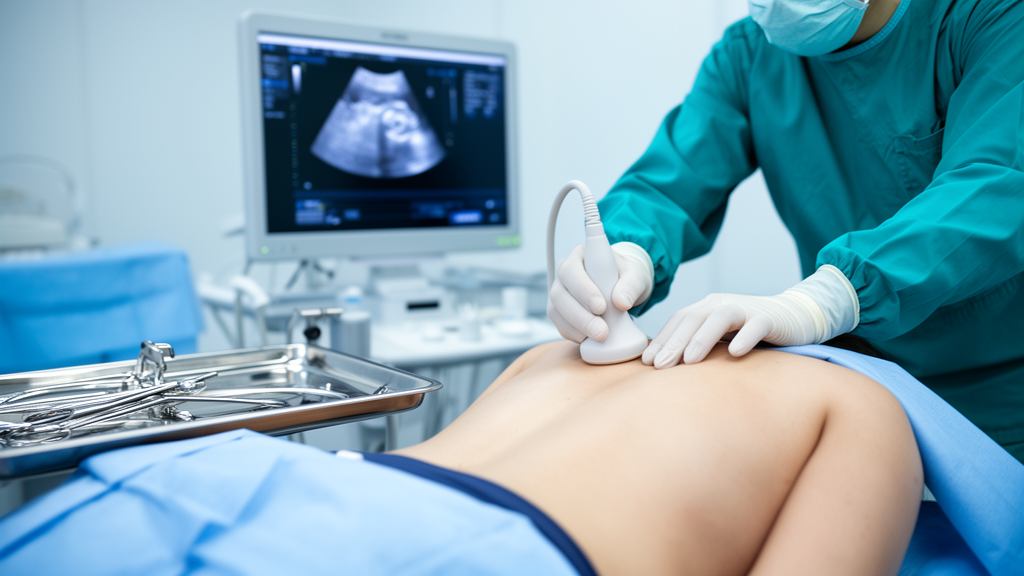
A multidisciplinary group of Chinese experts has published the first national consensus document dedicated to the clinical practice of the thoracolumbar interfascial plane (TLIP) block. Released in the journal Anesthesiology and Perioperative Science in March 2026, the review article provides standardized guidance for anesthesiologists and pain physicians on the anatomical basis, procedural techniques, and safety protocols for this relatively new regional anesthesia method. The consensus aims to address the growing adoption of TLIP blocks in clinical settings by offering evidence-based recommendations that prioritize patient safety and effective pain management for spinal surgeries and chronic pain conditions.
The TLIP block involves the injection of local anesthetic into specific fascial planes in the lumbar region to achieve analgesia. The technique was first proposed in 2015 by Hand et al., who targeted the plane between the multifidus and longissimus muscles adjacent to the L3 vertebral body. This original approach, known as the traditional medial intermuscular block, works by blocking the dorsal rami of the lumbar spinal nerves and their branches that traverse these fascial layers. In 2017, Ahiskalioglu et al. introduced a modified version, termed the modified TLIP or lateral TLIP block, which targets the plane between the longissimus and iliocostalis muscles. This modification was developed to leverage the better ultrasonographic visualization of the iliocostalis muscle compared to the multifidus, offering clearer ultrasound images and simpler manipulation.
The consensus document details the complex anatomy of the thoracolumbar fascia, which serves as the structural foundation for these blocks. The thoracolumbar fascia is a layered network of connective tissue that envelops and stabilizes the lower trunk musculature. While two-layer models of this fascia have been historically described, the three-layer model is currently more widely accepted. According to this model, the fascia consists of anterior, middle, and posterior layers. At the L3 level, the paraspinal muscles are arranged from medial to lateral as the multifidus, longissimus, and iliocostalis, creating two potential interfascial spaces where the local anesthetic can be deposited to bathe the dorsal rami of the spinal nerves.
Ultrasound guidance is a critical component of the TLIP block, and the consensus strongly recommends against performing the procedure as a blind technique based solely on surface landmarks. Clinicians are advised to use a low-frequency curved array probe, typically in the range of 2 to 5 MHz, to identify key bony landmarks such as the spinous processes and transverse processes. For slender patients weighing 40 kg or less, a high-frequency linear probe may be suitable. The procedure usually involves locating the L3 vertebral level, which can be achieved through cranial approaches starting from the 12th rib or caudal approaches starting from the sacrum. The 12th rib localization method is particularly recommended for reliability due to potential anatomical variations such as lumbarization or sacralization.
Two primary approaches are recognized in the consensus: the traditional medial intermuscular approach and the modified lateral intermuscular approach. In the traditional technique, the needle is inserted from lateral to medial at approximately a 30-degree angle to the skin, targeting the plane between the multifidus and longissimus muscles. In contrast, the modified technique involves inserting the needle from medial to lateral at approximately a 15-degree angle, targeting the plane between the longissimus and iliocostalis muscles. Clinical studies indicate that while both approaches provide effective analgesia for lumbar fusion surgeries with no statistically significant difference in pain outcomes, the modified lateral approach is generally favored. This preference is driven by shorter procedural times, higher first-attempt success rates, and a reduced risk of accidental neuraxial puncture or inadvertent epidural spread.
The choice of local anesthetic is another key aspect of the consensus, with amide-type anesthetics such as ropivacaine, bupivacaine, and levobupivacaine being the most frequently used agents. Ropivacaine is generally preferred due to its lower cardiotoxicity and neurotoxicity compared to bupivacaine and levobupivacaine, as well as its greater differentiation between motor and sensory blockade. The consensus recommends using 0.25% to 0.5% ropivacaine or 0.25% bupivacaine in a volume of 15 to 20 mL per side. Strict adherence to maximum safe dosages is emphasized, with limits set at 3 mg/kg for ropivacaine and 2 mg/kg for bupivacaine, ensuring that total doses do not exceed 200 mg and 150 mg, respectively. Dosage adjustments should be made based on individual patient characteristics, including body weight, age, and comorbidities.
The effectiveness of the TLIP block is typically evaluated based on sensory blockade rather than motor blockade, as the technique primarily targets the predominantly sensory dorsal rami of the spinal nerves. Clinicians are advised to assess cutaneous temperature, pinprick sensation, and cold sensation in the corresponding dermatomes to confirm the onset, extent, and duration of the blockade. Studies have shown that when performed at the L3 level, the block can extend from L1 to L5 across the lumbar dorsal area between both posterior axillary lines. In the original proposal by Hand et al., the area of sensory loss on the back reached 137.4 square centimeters at 5 minutes and 217.0 square centimeters at 20 minutes after the block. Some reports indicate that the blockade can extend even further, from T12 to L5, providing comprehensive coverage for posterior thoracolumbar pain.
Clinical applications of the TLIP block are primarily focused on perioperative analgesia for spine-related surgeries, including conventional open lumbar surgery, minimally invasive spinal surgery, and spinal cord stimulator implantation. In open lumbar surgeries such as lumbar fusion, discectomy, and laminectomy, the TLIP block has been shown to significantly reduce perioperative opioid consumption and improve postoperative pain scores. Meta-analyses have confirmed that the block provides effective postoperative analgesia, lowering pain scores both at rest and during movement within 24 hours after surgery. For minimally invasive procedures like percutaneous transforaminal endoscopic discectomy and transforaminal lumbar interbody fusion, the TLIP block offers a new option for multimodal analgesia, helping to reduce short-term postoperative pain and promote early recovery.
The safety profile of the TLIP block is considered highly favorable, with few reported clinical complications and a very low overall incidence rate. Common complications of nerve blocks, such as block failure, bleeding, nerve injury, and systemic toxicity, are rare in this context because the target area contains few major blood vessels or important nerves. However, a specific but rare complication is inadvertent entry into the spinal canal, which has been reported in only one case involving a patient with a history of microdiscectomy. This risk is lower with the modified lateral approach due to its needle trajectory and injection site location. Contraindications for the block include systemic severe infection, local infection at the puncture site, significant coagulation disorders, allergy to local anesthetics, and patient refusal to cooperate.
The consensus also addresses the potential role of the TLIP block in the management of chronic pain, although research in this area remains limited. A reported case of a patient with chronic lumbar pain demonstrated that a modified lateral intermuscular TLIP block using bupivacaine and methylprednisolone resulted in significant pain reduction lasting up to four weeks. While further studies are needed to confirm the efficacy and safety of the TLIP block in pain treatment, current evidence from its use in lumbar surgery suggests that it holds promise as a potential option for managing chronic low back pain. The document provides ten evidence-graded recommendations to guide clinicians in effectively and safely applying the TLIP block, emphasizing the importance of clinical judgment and adherence to procedural standards.
This expert consensus represents a significant step forward in the standardization of regional anesthesia techniques in China. By providing a comprehensive review of the anatomical basis, blocking techniques, and clinical applications of the TLIP block, the document aims to facilitate the safe and effective use of this procedure in clinical practice. The working group acknowledges that some recommendations are based on limited clinical evidence and advises healthcare professionals to consider the actual circumstances when applying the consensus. As the technique continues to gain traction in clinical settings, the consensus serves as a valuable resource for anesthesiologists and pain physicians seeking to optimize pain management strategies for their patients.
Subject of Research: Clinical practice guidelines for thoracolumbar interfascial plane block
Article Title: Chinese expert consensus on thoracolumbar interfascial plane block (2025 edition)
Article References: Zhang, H., Xu, T., Wang, X., The Chinese Expert Consensus Writing Group on Thoracolumbar Interfascial Plane Block, Zhou, S., Chen, Y., Cai, Y., Duan, B., Feng, X., Gong, Q., Guo, H., Huang, X., Jiang, W., Jiang, Y., Li, S., Li, Y., Liao, Q., Lei, H., Ma, B., … Zheng, Y. (2026). Chinese expert consensus on thoracolumbar interfascial plane block (2025 edition). Anesthesiology and Perioperative Science, 4(1), Article 18. https://doi.org/10.1007/s44254-026-00165-2
Image Credits: AI Generated
DOI: 10.1007/s44254-026-00165-2
Keywords: thoracolumbar interfascial plane block, regional anesthesia, spinal surgery, pain management, ultrasound guidance, clinical consensus, local anesthetic, lumbar spine, perioperative care, fascial plane block, Chinese, expert
News Source: Ophelia Keating. (November 9, 2026). China Issues First Consensus on Thoracolumbar Nerve Block. Scienmag.