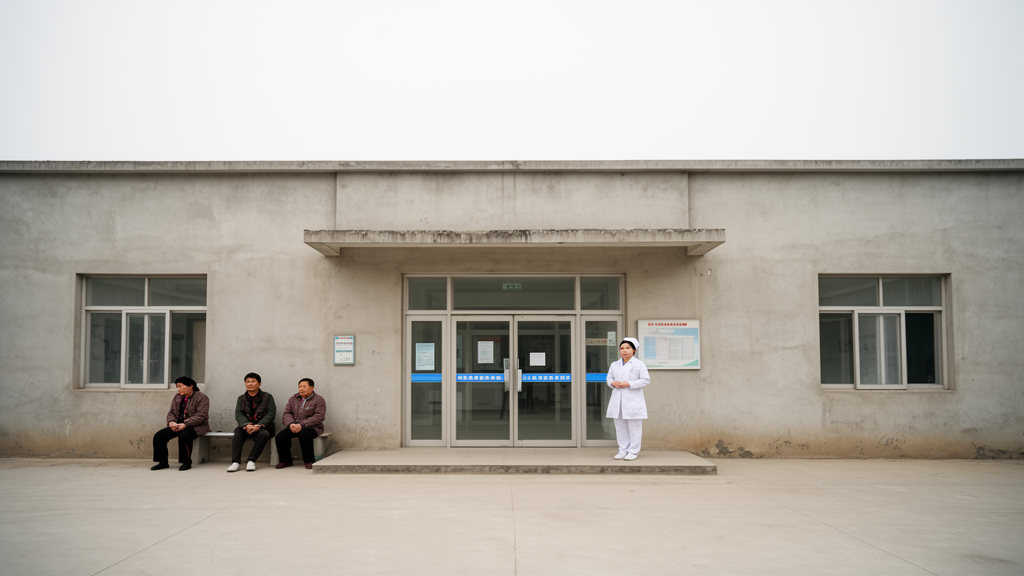
A new study published in Frontiers in Public Health reveals that community health service centers across China are experiencing a significant decline in operational efficiency while facing stark geographic imbalances in resource distribution. The research, conducted by a team from Capital Medical University and Gansu University of Chinese Medicine, analyzes data from 2015 to 2024 to evaluate how well these primary care hubs align with the permanent resident population.
The study addresses the dual pressures of a rapidly aging global population and strained health resources, positioning community health service centers as the critical link between hospitals and home-based healthcare. Given the significant socioeconomic disparities among China’s 31 provincial-level administrative regions, the researchers sought to determine whether the spatial distribution of these resources actually matches population needs. The team utilized official data from the National Bureau of Statistics and the National Health Commission to conduct a systematic assessment of both static allocation efficiency and dynamic productivity trends over the decade.
To measure the spatial alignment between health resources and population, the researchers employed the Health Resource Aggregation Degree, or HRAD, index. This metric allows for a direct comparison of resource density against the permanent resident population in each province. The analysis showed that the density of community health service resources in eastern provinces was significantly higher than in central and western provinces. The disparity was extreme, with the difference between the highest and lowest HRAD values exceeding a factor of 10,000. This indicates a profound mismatch in how resources are distributed relative to where people live, highlighting stark interprovincial inequalities in primary care access.
For evaluating static allocation efficiency, the team used a three-stage Data Envelopment Analysis, or DEA, model. After adjusting for these variables, the overall technical efficiency, or TE, of the community health centers decreased from 0.635 to 0.624. Within this adjustment, pure technical efficiency, or PTE, rose slightly, while scale efficiency, or SE, declined.
The dynamic trends in total factor productivity, or TFP, were tracked using the Malmquist index, a tool that measures changes in productivity over time. The study found that the TFP was 0.942, which corresponds to an annual decline of 5.8 percent. This consistent downward trend indicates that the community health centers are becoming less productive year over year.
Regional variations in efficiency trends were also pronounced. The analysis revealed that only five provinces achieved efficiency improvements during the study period. One province remained stable, while the remaining 25 provinces all showed a downward trend in productivity.
The authors conclude that China’s community health care resources face significant interprovincial spatial imbalances and declining efficiency, with lagging technological progress serving as a primary driver. They recommend that policymakers prioritize promoting technology transfer and service model innovation in central and western regions, alongside increasing total investment in resources. Implementing differentiated regional resource allocation strategies is also suggested to address the specific needs of different areas.
Subject of Research: Efficiency and resource allocation of community health centers in China
Article Title: Resource allocation efficiency and population alignment of community health centers: a home-based healthcare perspective
Article References: Ba, Y., Luo, Z., Zhang, Y., Guo, B., Chen, Y., & Liu, L. (2026). Resource allocation efficiency and population alignment of community health centers: a home-based healthcare perspective. Frontiers in Public Health, 14, Article 1936096. https://doi.org/10.3389/fpubh.2026.1936096
Image Credits: AI Generated
DOI: 10.3389/fpubh.2026.1936096
Keywords: Community Health, Resource Allocation, China, Primary Care, DEA Model, Health Economics, Population Aging, Productivity, Spatial Imbalance, Home-Based Care, Resource, allocation
News Source: Phoebe Ingram. (November 9, 2026). China Community Health Centers Show Declining Efficiency. Scienmag.