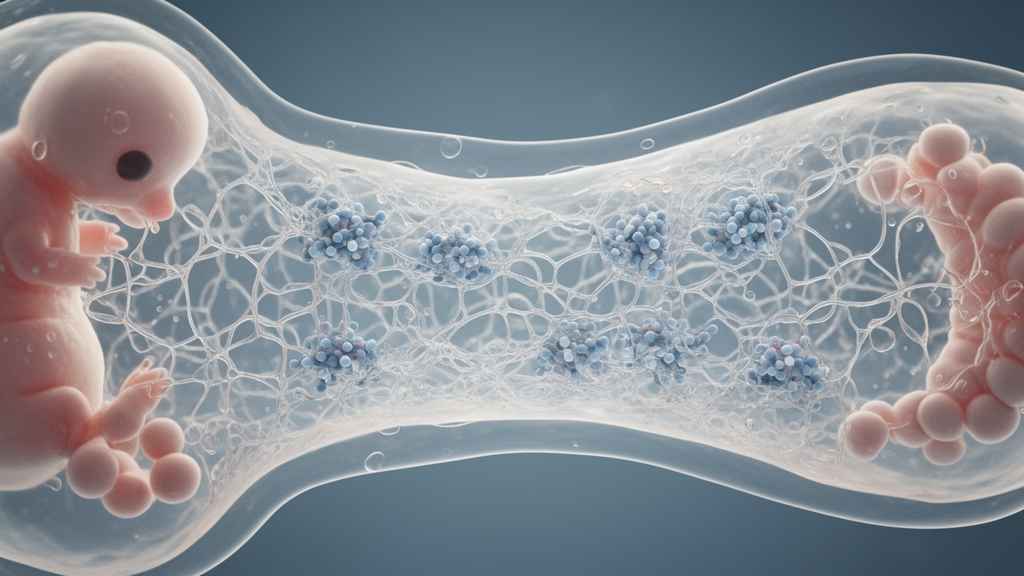
Embryonic cerebrospinal fluid in chick embryos is not a homogeneous fluid but rather an interlaced, sponge-like fibrillar mesh functioning as a luminal extracellular matrix intimately associated with the neuroepithelium, according to a study published in Fluids and Barriers of the CNS.
The development of tubular organs depends on the presence of a transient luminal extracellular matrix within internal cavities, where it regulates both tubular dimensions and morphogenesis. In the embryonic neural tube, brain cavities are filled with embryonic cerebrospinal fluid, a protein-rich fluid recognized for exerting trophic and mechanical influences on neuroepithelial development, although its molecular organization and morphogenetic coordination mechanisms have remained poorly understood.
Within this fluid environment, SCO-spondin is identified as a giant glycoprotein characterized by multiple matricellular domains capable of mediating interactions with diverse molecules, alongside structural domains associated with self-assembly. These biochemical characteristics led the investigators to assess whether embryonic cerebrospinal fluid exhibits a defined structural organization and to map its molecular constituents, focusing specifically on SCO-spondin.
To characterize the fluid’s architectural and biochemical profile, researchers examined chick embryos using a combination of histochemistry, immunohistochemistry, light-sheet microscopy, and scanning electron microscopy. The team subsequently employed co-immunoprecipitation coupled with tandem mass spectrometry to isolate and identify the specific molecular binding partners of SCO-spondin.
Structural and compositional analyses revealed that the isolated luminal matrix is acellular, porous, and glycosylated, with SCO-spondin and fibronectin serving as principal structural constituents. The resulting fibrillar mesh incorporates proteoglycans and lipophilic aggregates into a scaffold structure that may contribute to retaining fluid and signaling molecules within the cavity.
Proteomic profiling identified 74 distinct molecular interactors associated with SCO-spondin. These interactors include structural proteins, lipoproteins, extracellular vesicles, and specialized morphogen carriers such as retinol-binding protein, transthyretin, and riboflavin-binding protein, indicating that SCO-spondin associates with macromolecular complexes that participate in molecular transport and extracellular spatial organization during early developmental stages.
Based on these observations, the researchers conclude that embryonic cerebrospinal fluid functions as a structured supramolecular network and a dynamic luminal extracellular matrix rather than a simple fluid solution. The authors propose that this porous scaffold may play an important role in embryonic brain morphogenesis by organizing molecular components within ventricular cavities and coordinating their interactions with the adjacent neuroepithelium, with SCO-spondin acting as a key organizing component.
Subject of Research: Extracellular matrix organization and SCO-spondin interactome of chick embryonic cerebrospinal fluid
Article Title: Structural and molecular characterization of the chick embryonic cerebrospinal fluid reveals a luminal extracellular matrix network containing SCO-spondin
Article References: Maurelia, F., Aguayo, J., González, M., Thiele, F., Arrué, R., Molina-Chavez, B., Sepúlveda, V., Recabal, A., Torrejón, M., Farkas, C., Guillot, C., Gato, Á., & Caprile, T. (2026). Structural and molecular characterization of the chick embryonic cerebrospinal fluid reveals a luminal extracellular matrix network containing SCO-spondin. Fluids and Barriers of the CNS. https://doi.org/10.1186/s12987-026-00871-w
Image Credits: AI Generated
DOI: 10.1186/s12987-026-00871-w
Keywords: embryonic cerebrospinal fluid, SCO-spondin, extracellular matrix, chick embryos, neuroepithelium, brain morphogenesis, proteomics, matricellular proteins, Structural, molecular, characterization, chick
News Source: Ophelia Keating. (November 8, 2026). Chick Embryo Cerebrospinal Fluid Forms Luminal Matrix Network Containing SCO-Spondin. Scienmag.