A comprehensive narrative literature review published in Discover Chemistry emphasizes that combining chemometric strategies with Green Analytical Chemistry principles offers systematic pathways to reduce hazardous chemical usage, minimize waste generation, and decrease energy consumption across chemical, pharmaceutical, food, and environmental sectors. Chemometrics applies mathematical and statistical methods to chemical data to extract meaningful information and optimize experimental methodologies. By deploying multivariate calibration, signal processing, and structured experimental designs, laboratories can effectively handle high-dimensional, complex data sets while substantially diminishing their operational footprint. The authors report that the strategic integration of chemometrics and Quality by Design frameworks can cut solvent consumption by up to sixty percent and significantly shorten analytical runtimes without compromising data quality or analytical accuracy.
The review delineates how the twelve principles of Green Analytical Chemistry guide modern laboratory practice away from toxic reagents and energy-intensive procedures toward sustainable alternatives such as water, ethanol, and natural deep eutectic solvents. To evaluate these developments objectively, analytical scientists rely on standardized greenness metrics that convert ecological impact into quantifiable parameters. Tools examined in the review include the National Environmental Methods Index, which uses a four-quadrant pictogram to assess persistent bioaccumulative toxic chemicals, hazardous risks, corrosivity, and waste volume; the Analytical Eco-Scale, which assigns penalty points against an ideal score of one hundred; the Green Analytical Procedure Index, which applies a semi-quantitative pentagram symbol to map every phase from sampling to detection; the Analytical Greenness Metric, which delivers a clock-shaped visual profile scored from zero to one; and Analytical Method Volume Intensity, which quantifies solvent volume consumption relative to chromatographic data output in liquid chromatography systems.
Exploratory data analysis serves as a foundational pillar within chemometrics, enabling researchers to compress massive data arrays generated by spectroscopy and chromatography into manageable, informative representations. Principal Component Analysis transforms correlated variables into statistically independent, orthogonal latent variables known as principal components, where the first principal component captures the greatest variance and the second accounts for the remaining orthogonal variance. The review observes that high-dimensional spectral datasets can routinely be condensed into two to fifteen principal components while retaining at least ninety-five percent of total variance. Complementing this, Hierarchical Cluster Analysis provides unsupervised classification by grouping observations into tree-like dendrograms using agglomerative or divisive algorithms. When combined with Principal Component Analysis, cluster analysis facilitates botanical verification, the discrimination of adulterated honey varieties, the identification of chemical interferences in metabolomics, and the evaluation of environmental groundwater quality.
Multivariate calibration techniques resolve overlapping spectral and chromatographic signals to enable simultaneous quantification of multiple analytes in single measurements. Partial Least Squares regression identifies latent variables that maximize the covariance between predictor matrices such as spectral responses and dependent concentration matrices, making it exceptionally effective for collinear and high-dimensional analytical data. In comparison, Principal Component Regression reduces dimensionality through Principal Component Analysis prior to multiple linear regression fitting, whereas standard Multiple Linear Regression models raw variables directly but requires strictly orthogonal predictors. Comparative evaluations highlighted in the review, such as the quantification of non-steroidal anti-inflammatory drugs, demonstrated that Partial Least Squares achieved superior predictive accuracy with root mean square errors between 0.12 and 0.15, outperforming Principal Component Regression and Multiple Linear Regression. Advanced multiblock strategies like Sequential and Orthogonalized Partial Least Squares systematically extract predictive features from distinct data blocks, successfully quantifying recycled polyethylene terephthalate blends across commercial additive formulations.
The implementation of Design of Experiments and Response Surface Methodology replaces traditional one-factor-at-a-time experimentation with rigorous, resource-efficient statistical frameworks. By modeling main effects, curvature, and multi-factor interactions simultaneously, structured factorial matrices such as Central Composite and Box-Behnken designs reduce total experimental burden by fifty to ninety percent compared to conventional trial-and-error workflows. In chromatographic method optimization, researchers demonstrated that screening critical parameters via Central Composite Design reduced eighty to one hundred planned experiments down to seventeen, reducing acetonitrile volume by sixty percent and total solvent usage from eighty milliliters to twenty-five milliliters per analysis. Similarly, application of fractional factorial designs in electrode surface optimization isolated critical variables in sixteen runs rather than thirty-two, improving sensitivity by 3.5-fold and lowering heavy-metal detection thresholds to 0.8 nanograms per liter, while chemical manufacturing case studies registered forty to sixty percent reductions in hazardous byproduct generation.
Advanced signal processing tools significantly enhance data fidelity by decoupling authentic analytical signals from instrumental drift, background scatter, and experimental noise. Wavelet Transforms decompose complex, non-stationary signals into distinct time-frequency components using scalable basis functions, outperforming classical Fourier techniques when resolving spikes or baseline discontinuities. In voltammetric electrochemistry, continuous wavelet transforms isolated faradaic current components to achieve three-fold lower detection limits and enhance calibration linearity, while discrete wavelet filtering on near-infrared pharmaceutical tablet data lowered prediction errors from 1.4 percent to 0.92 percent. Net Analyte Signal methods mathematically isolate the specific spectral vector orthogonal to all interfering matrix components, thereby cancelling complex matrix interference during solid-phase drug analysis. Additionally, digital filtering methods improve signal-to-noise ratios and throughput across analytical workflows without requiring repetitive sample averaging.
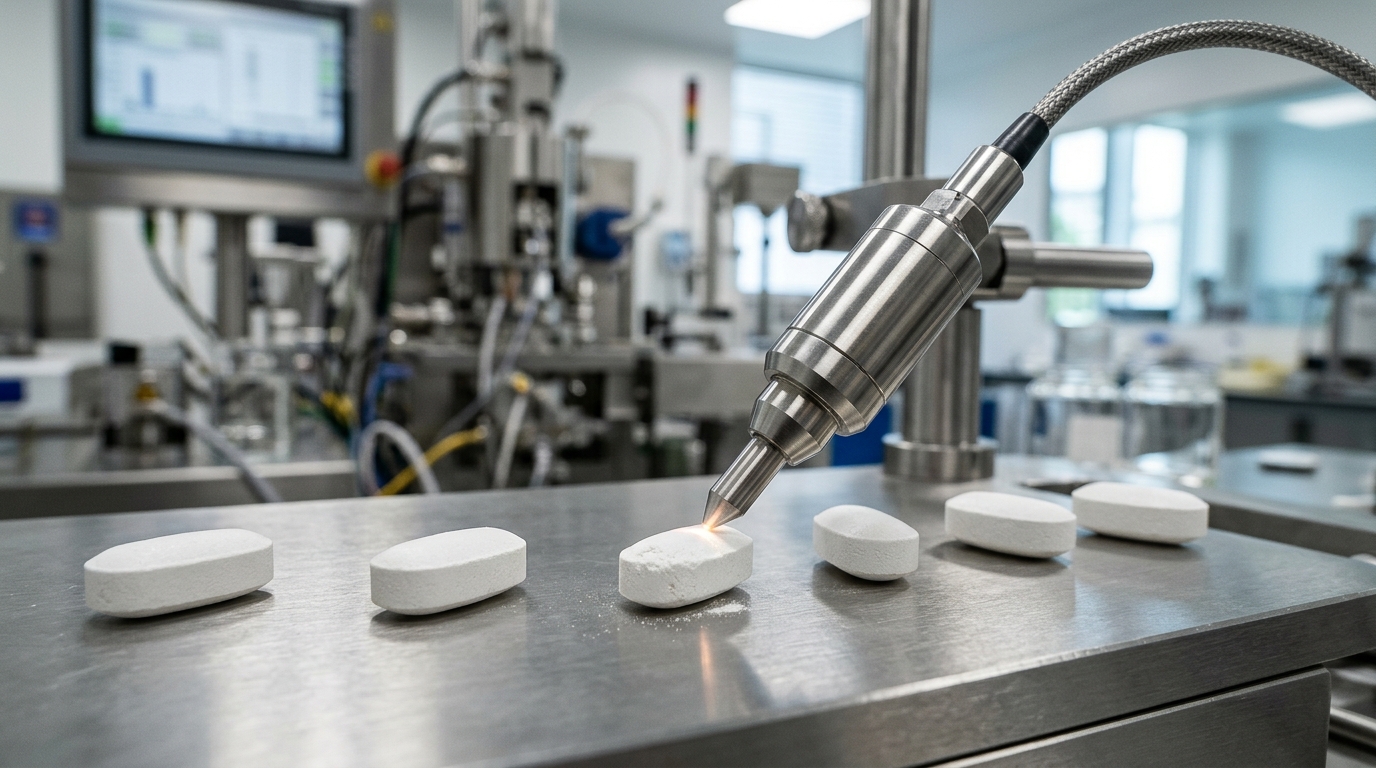
Within the pharmaceutical and nutraceutical sectors, chemometrics accelerates drug development, solid-state formulation analysis, and high-throughput quality control. Near-infrared and Fourier-Transform Infrared spectroscopy coupled with multivariate regression provide non-destructive assays for tablet hardness, dissolution profiles, excipient compatibility, and the simultaneous quantification of multi-drug therapies, bypassing tedious separation runs and hazardous mobile phases. In food manufacturing, chemometric classification models verify the botanical and geographical provenance of honey, virgin olive oils, teas, and wines, while portable Raman spectroscopy coupled with Principal Component Analysis tracks real-time spoilage in refrigerated poultry. Spectroscopic monitoring during wine fermentation accurately tracks anthocyanins, tannins, and sugars, facilitating agile operational adjustments while avoiding resource-intensive wet-chemical laboratory assays.
Despite its proven operational and ecological benefits, the widespread adoption of chemometrics confronts technical and practical barriers across contemporary laboratory environments. The review identifies persistent shortages of specialized statistical training among laboratory analysts, leading to model misspecification, inadequate feature selection, and severe risks of overfitting where models demonstrate deceptively low cross-validation errors but fail on independent datasets. Chromatographic data introduces unique complexities including retention-time shifts, baseline drift, and co-eluting peaks that necessitate rigorous preprocessing, signal alignment, and deconvolution algorithms such as PARAFAC2. Furthermore, analytical instruments produce vast data volumes that demand dedicated computational infrastructure, standardized data exchange formats, and user-friendly software packages capable of handling multidimensional separation platforms.
To guarantee scientific reproducibility and ensure compliance with regulatory frameworks like Analytical Quality by Design and ICH guidelines, chemometric calibrations require comprehensive validation protocols. Robust model deployment depends on establishing explicit Method Operable Design Ranges, calculating leverage diagnostics, and monitoring Hotelling’s T-squared and Q-residuals to define clear applicability domains. Rather than relying solely on internal cross-validation, analysts must report root mean square errors across calibration, cross-validation, and external independent test sets, recognizing that an error escalation exceeding twenty percent indicates model over-parameterization. Ongoing inter-laboratory standardization, automated preprocessing tools, and the integration of artificial intelligence with process analytical technology are projected to expand the democratization and regulatory acceptance of chemometric methodologies across sustainable analytical science.
In their concluding synthesis, the review authors emphasize that chemometrics represents an indispensable computational foundation for advancing sustainable industrial practices and environmental stewardship. While existing literature demonstrates compelling reductions in analysis duration, reagent volumes, and hazardous waste across proof-of-concept studies, closing the implementation gap requires updating educational curricula to train analytical chemists in advanced statistical methods. Future research directions highlight the necessity of establishing universally harmonized greenness assessment criteria, broadening regulatory acceptance of chemometrically optimized protocols, and deploying emerging technologies such as machine learning, Internet of Things sensors, and Industry 4.0 platforms to ensure verifiable, long-term ecological balance across analytical disciplines.
Subject of Research: Integration of chemometric methods and green analytical chemistry in industrial applications
Article Title: Chemometric strategies for green analytical chemistry across diverse industries
Article References: Saha, P., Pandit, B., Biswas, P., & Ray, S. (2026). Chemometric strategies for green analytical chemistry across diverse industries. Discover Chemistry, 3(1), Article 622. https://doi.org/10.1007/s44371-026-01087-5
Image Credits: AI Generated
DOI: 10.1007/s44371-026-01087-5
Keywords: chemometrics, green analytical chemistry, principal component analysis, partial least squares, design of experiments, response surface methodology, quality by design, greenness metrics, wavelet transforms, net analyte signal, multivariate calibration, pharmaceutical analysis, food authenticity, process analytical technology, spectroscopy, analytical eco-scale, environmental sustainability
News Source: Bethany Barker. (November 15, 2026). Chemometrics Cuts Analytical Solvent Use and Testing Times Across Multiple Industries. Scienmag.