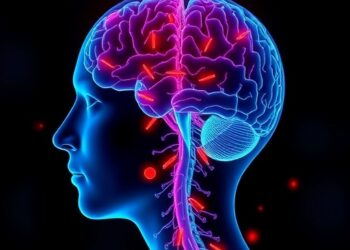
In the relentless pursuit to unravel the complexities of breast cancer metastasis, a groundbreaking study has emerged, illuminating the pivotal role of chemokines in directing metastatic spread to specific organs. This research, recently published in Scientific Reports, propels our understanding beyond traditional paradigms, suggesting that these small but potent signaling proteins may serve as navigational beacons for cancer cells, dictating their journey from primary tumors to distant niches within the body. The implications of these findings are profound, offering new avenues for targeted therapies and personalized interventions in breast cancer treatment.
Metastasis remains the primary cause of mortality in breast cancer patients, with the dissemination of malignant cells to bones, lungs, liver, and brain complicating clinical outcomes. Despite advances in early detection and localized treatments, the molecular mechanisms governing the organotropism of metastatic cells have eluded comprehensive characterization. This study addresses that gap by focusing on chemokines—chemotactic cytokines known for their regulatory roles in immune cell trafficking—and their potential influence in orchestrating the metastatic itinerary.
Chemokines operate through binding to specific G protein-coupled receptors expressed on target cells, triggering signaling cascades that influence cellular migration, adhesion, and invasion processes. In the context of cancer, aberrant chemokine signaling has been implicated in tumor progression and metastasis, but elucidating the exact pathways and their organ-specific implications required intricate molecular analyses and in vivo validation. Here, the authors dissect the chemokine-receptor interactions that may underlie selective homing of breast cancer cells to distant organs.
The multi-author team employed a combination of transcriptomic profiling, receptor-ligand affinity assays, and animal modeling to map the chemokine landscape in breast cancer subtypes and their corresponding metastatic patterns. Their findings reveal distinct chemokine expression signatures within primary tumors that correlate strongly with organ-specific metastatic tropism. For instance, elevated expression of certain chemokines was observed in tumors predisposed to bone metastasis, suggesting a molecular dialogue between cancer cells and the microenvironment of the secondary organ.
Moreover, the study uncovers that breast cancer cells themselves upregulate chemokine receptors enabling them to respond to organ-derived chemokine gradients. This receptor expression facilitates cancer cell migration along chemokine concentration gradients, effectively guiding the malignant cells to metastatic niches where the chemokine milieu supports their survival and proliferation. This nuanced interplay between chemokines and receptors sets the stage for a more deterministic model of metastatic dissemination rather than a purely stochastic process.
The investigation also sheds light on the dynamic cross-talk between cancer cells and stromal components at secondary sites. Chemokines secreted by resident cells in bone marrow, lung tissue, and brain parenchyma create a pre-metastatic niche, priming these environments to become hospitable for incoming tumor cells. This preconditioning involves immune modulation, extracellular matrix remodeling, and angiogenesis, all orchestrated through chemokine-mediated signaling networks, according to the authors’ comprehensive analyses.
Importantly, the study delineates the downstream intracellular signaling pathways activated upon chemokine-receptor engagement, highlighting roles for PI3K/AKT, MAPK, and NF-kB cascades in promoting cancer cell motility and invasiveness. These insights not only deepen the mechanistic understanding but also identify potential molecular targets for disrupting the chemokine-directed metastatic process. By intercepting these signals, it may be possible to inhibit the homing capabilities of breast cancer cells, thereby reducing metastatic burden.
The clinical relevance of these findings is underscored by correlative analyses involving patient-derived tumor samples and clinical outcomes. The presence and levels of specific chemokines and their receptors in primary tumors were predictive of metastatic site occurrence and patient prognosis. This prognostic potential raises the prospect of developing chemokine-based biomarkers that can guide therapeutic decision-making and risk stratification in breast cancer management.
Furthermore, therapeutic strategies that block chemokine receptors, currently explored in inflammatory and autoimmune diseases, might be repurposed or tailored to impede breast cancer metastasis. The authors discuss ongoing developments in small-molecule inhibitors and monoclonal antibodies that target chemokine signaling pathways, positing that such approaches could complement existing chemotherapy, radiotherapy, and immunotherapy regimens.
Beyond therapeutic implications, this research also paves the way for advanced diagnostic imaging techniques. By leveraging chemokine receptor expression patterns, novel imaging agents could facilitate early detection of micrometastases in vulnerable organs, enabling timely intervention. This aligns with the broader trend toward precision medicine, where interventions are customized based on molecular and genetic tumor profiles.
The study also highlights the complexity of chemokine networks, acknowledging that the redundancy and promiscuity of chemokine-receptor interactions pose challenges for straightforward therapeutic targeting. Nevertheless, the data suggest that combination therapies addressing multiple chemokine axes simultaneously might overcome these obstacles, an avenue ripe for future research.
Incorporating patient heterogeneity, the authors emphasize the necessity of stratifying breast cancer subtypes when considering chemokine-directed therapies. Hormone receptor status, HER2 expression, and genetic mutations influence chemokine profiles and metastatic behavior, necessitating personalized approaches for maximum efficacy.
This investigation stands as a testament to interdisciplinary collaboration, integrating molecular biology, oncology, immunology, and translational medicine. The depth of molecular insight coupled with clinical applicability exemplifies the trajectory of cancer research toward holistic understanding and innovative solutions.
In summary, the study by Ayoub, EL-Houseini, Tharwat, and colleagues marks a seminal advance in decoding the metastatic behavior of breast cancer through the lens of chemokine signaling. By illustrating how chemokines act as molecular navigators for metastatic breast cancer cells to colonize specific distant sites, the research opens new frontiers in diagnosis, prognostication, and treatment. As breast cancer continues to pose a formidable challenge globally, such insights are invaluable in steering the course toward more effective cures and improved patient survival.
Subject of Research: The role of chemokines in directing site-specific metastasis in breast cancer.
Article Title: The potential directing role of chemokines for specific metastatic sites in breast cancer.
Article References:
Ayoub, A.M., EL-Houseini, M.E., Tharwat, E. et al. The potential directing role of chemokines for specific metastatic sites in breast cancer.
Sci Rep (2026). https://doi.org/10.1038/s41598-026-45036-9
Image Credits: AI Generated
DOI: 10.1038/s41598-026-45036-9
Tags: breast cancer metastasis to bones lungs liver brainbreast cancer metastatic siteschemokine receptors and cancer cell migrationchemokine signaling pathways in cancerchemokine-mediated tumor invasionchemokines in breast cancer metastasisimmune cell trafficking and cancer spreadmolecular mechanisms of cancer metastasisorgan-specific metastasis mechanismspersonalized treatment strategies for breast cancerrole of chemotactic cytokines in cancertargeted therapies for breast cancer metastasis