In a groundbreaking advancement poised to transform cancer drug discovery, researchers at the University of Bath have unveiled an innovative bacterial technology capable of producing, chemically stabilizing, and screening millions of peptide molecules within living cells. This pioneering approach accelerates the identification of promising therapeutic candidates targeting some of the most challenging cancer drivers, particularly transcription factors, long deemed ‘undruggable’ due to their structural dynamics and intracellular localization.
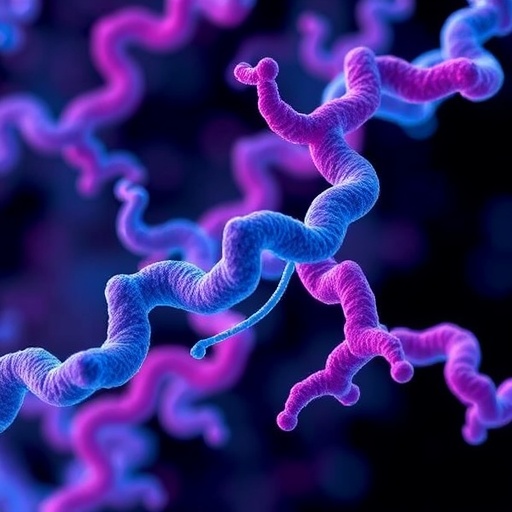
At the heart of this technology is the use of bacteria as miniature peptide factories. Each bacterium produces a unique peptide sequence, which is then chemically modified inside the living cell—a process called ‘stapling’ that locks the peptide into specific conformations. This intracellular chemical stabilization is critical because many peptides are flexible and unstable, limiting their therapeutic potential. The bacterial system enables the generation of vast peptide libraries and facilitates real-time testing directly within a biological environment, a monumental shift away from traditional ex vivo chemical modifications.
Typically, peptide drug discovery involves laborious multi-step processes including chemical synthesis, purification, stabilization, and repeated rounds of testing. These procedures often use toxic solvents and are costly and time-consuming. By integrating peptide synthesis, chemical stapling, and functional screening inside live bacteria, the University of Bath team has devised a cleaner, greener, and more cost-effective platform that is inherently scalable.
The chemical stapling performed inside the bacteria acts as a molecular clamp, fixing peptides into defined three-dimensional shapes that enhance their stability and biological functionality. This step is executed post-synthesis but prior to testing, enabling the production of structurally constrained peptides that better mimic natural protein interactions. Importantly, this happens within the cellular milieu, preserving biologically relevant contexts that conventional methods fail to capture.
The research team developed a specialized assay, called the Transcription Block Survival (TBS) assay, which couples chemical stabilization to a survival-based screening strategy. In this assay, only bacteria that produce peptides capable of effectively inhibiting a target transcription factor survive. This biological selection pressure ensures that millions of peptide variants are simultaneously screened, with only the most potent and non-toxic peptides enriching the bacterial population.
This ingenious marriage of chemistry and biology not only streamlines the discovery pipeline but also inherently filters out unstable or harmful peptides early in development. Because bacterial survival serves as a direct proxy for peptide efficacy and safety, the approach naturally cultivates viable drug candidates without extensive downstream screening bottlenecks.
The researchers showcased the power of their platform by targeting CREB1, a transcription factor hyperactivated across various cancer types including colorectal cancer. Transcription factors like CREB1 orchestrate gene expression programs that drive cancer progression and metastasis, but their intrinsically disordered structures have stymied traditional drug development efforts. The stapled peptides discovered through this method successfully penetrated cultured human cancer cells, selectively shutting down CREB1-related gene pathways, and inducing cancer cell death—a promising proof of concept for tackling similarly elusive targets.
Future directions for this technology involve testing these peptide inhibitors in more complex biological systems, including tissue models and animal studies, to validate their therapeutic potential in vivo. Success in these stages could herald a new paradigm for intracellular drug targeting, enabling modulation of protein functions previously considered out of reach for conventional small molecules or biologics.
Unlike current drug development platforms that often specialize in either chemical synthesis or biological screening, this integrated system capitalizes on the synergy between chemical modification and biological functionality within a living cell. Such an approach could revolutionize medicinal chemistry by streamlining the creation of resilient, efficacious peptides tailored for intracellular targets.
Professor Jody Mason, CEO of Revolver Therapeutics and an integral member of the research team, emphasized the novelty of the approach: it transcends mere binding affinity to generate peptides that are chemically locked, resistant to enzymatic degradation, and capable of functioning inside living cells. This breakthrough opens a new frontier in drug discovery, particularly for diseases driven by ‘undruggable’ cancer targets.
The environmental and economic benefits of this technology are notable as well, given the elimination of hazardous solvents and simplified peptide harvesting directly from bacterial cultures. This scalability and sustainability position the platform as a promising candidate for industrial translation, offering accelerated timelines and reduced costs for peptide-based therapeutics.
In summary, this bacterial intracellular peptide stapling and screening platform offers a revolutionary tool to identify potent transcription factor antagonists, overcoming limitations of existing drug discovery methodologies. By facilitating the discovery of biologically active, stable peptides in situ, it paves the way for novel cancer therapies and the broader targeting of challenging intracellular proteins.
Subject of Research: Cells
Article Title: Intracellular Cyclisation-Coupled Peptide Library Screening Yields Potent Transcription Factor Antagonists
News Publication Date: 3-Mar-2026
Web References:
Article DOI: 10.1016/j.chembiol.2026.02.002
Image Credits: University of Bath
Keywords
Drug discovery, High throughput screening, Drug candidates, Drug development, Medicinal chemistry
Tags: accelerating cancer drug candidate identificationbacterial production of stabilized peptideschemically stapled peptides for cancer therapyhigh-throughput peptide screening in bacteriainnovative bacterial peptide synthesis technologyintracellular peptide chemical modificationovercoming undruggable cancer targetspeptide drug discovery inside living cellsreal-time functional screening of peptidesreducing toxic solvents in peptide synthesisstabilization of flexible therapeutic peptidestargeting transcription factors in cancer