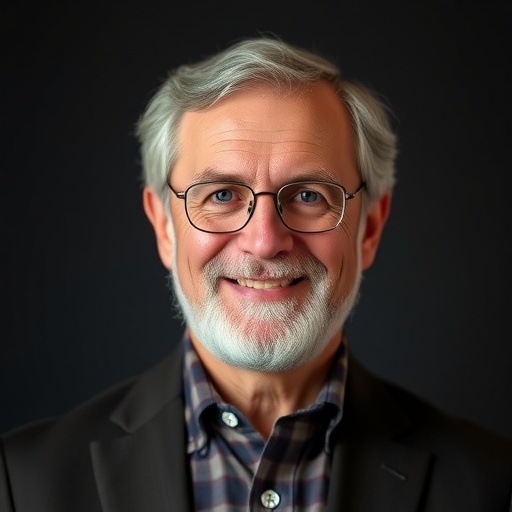
In a landmark recognition at the intersection of theoretical physics and mathematical rigor, Charles Thorn has been awarded the 2026 Dannie Heineman Prize for Mathematical Physics by the American Institute of Physics (AIP) and the American Physical Society (APS). This accolade honors Thorn’s pioneering contributions to the realm of elementary particle physics, with special emphasis on the theory underlying strong interactions and the formative development of string theory, two of the most profound frameworks shaping modern physics.
Charles Thorn’s journey into the depths of physical theory began with an insatiable curiosity about the mechanisms governing our universe. This curiosity, seeded in his childhood and blossoming during his adolescence, ultimately channeled his intellectual pursuits toward physics and mathematics. These disciplines exposed him to phenomena invisible to everyday observation, engaging him with the abstract yet fundamental mysteries that govern fundamental particles and their interactions. His academic path commenced at the Massachusetts Institute of Technology, where he obtained a Bachelor of Science in physics in 1968, followed by doctoral research at the University of California, Berkeley, culminating in a Ph.D. in theoretical elementary particle physics in 1971.
During his doctoral studies under the mentorship of Stanley Mandelstam, himself a previous recipient of the Dannie Heineman Prize, Thorn embarked on critical explorations of one-loop dual resonance models (DRMs). These models represented a pivotal stepping stone toward the construction of string theory as they sought to describe strong interactions among subatomic particles. Thorn’s innovative inclusion of fermions, particle types essential to matter’s composition, into these models, drew inspiration from the groundbreaking work of luminaries such as P. Ramond, A. Neveu, and J. Schwarz, thus expanding the theoretical landscape.
One of Thorn’s seminal achievements was his joint development of the no-ghost theorem alongside Peter Goddard at CERN. In the realm of quantum theory, “ghosts” denote hypothetical states with negative probabilities, which threaten the logical consistency of quantum mechanics. The Goddard-Thorn theorem provided a rigorous proof that these unwanted ghost states do not occur within dual resonance models, thereby validating their soundness within the quantum framework. This theorem laid bedrock foundations that ensured string theory’s mathematical consistency and its viability as a physical theory. Importantly, this breakthrough was independently affirmed by physicist Richard Brower, underscoring its robustness.
Upon joining MIT’s faculty in 1973, Thorn’s research trajectory continued by exploring the dynamics of quarks, the fundamental constituents of baryons. Alongside colleagues A. Chodos, R. Jaffe, K. Johnson, and V. Weisskopf, he contributed to the formulation of the “MIT Bag Theory.” This influential model conceptualizes baryons as systems in which three quarks are confined within a finite spatial region — or “bag” — interacting weakly with one another but strongly constrained by the bag’s boundaries. The theory has been instrumental in advancing our understanding of confinement, one of the most enigmatic features of quantum chromodynamics, the theory describing strong nuclear forces.
Thorn recognizes both the no-ghost theorem and the MIT Bag Theory as pinnacle moments of his career. He reflects on how subsequent work naturally emerged from these foundational achievements, influencing a generation of theoretical physicists and expanding the mathematical toolkit available for exploring the microcosm. His work seamlessly integrates sophisticated mathematical methods with physical intuition, embodying the spirit of mathematical physics.
In a broader collaborative context, Thorn’s tenure at the University of Florida marked a fertile period of innovation. In 1980, he joined forces with P. Ramond, R. Field, and T. Curtright to establish a particle theory group renowned for advancing quantum field theories and string theory ramifications. Among these collaborations, Thorn’s work with Curtright on quantum Liouville field theory stands out. This niche but powerful framework has been pivotal in understanding two-dimensional quantum gravity and conformal field theory. This research earned them the Jesse W. Beams Medal in 2005, reflecting their profound impact on Southeastern Section physics.
Currently Professor Emeritus at the University of Florida and an honored APS Fellow, Charles Thorn remains a venerable figure in theoretical physics. His recent recognition with the illustrious Dannie Heineman Prize not only celebrates his individual intellectual triumphs but also serves to highlight the enduring significance of mathematical frameworks in deciphering fundamental physical laws. Thorn expressed humility and surprise at this honor, remarking on the gratifying surprise of having work from decades prior acknowledged anew in this manner.
The Dannie Heineman Prize itself symbolizes a prestigious tradition dedicated to celebrating breakthroughs in mathematical physics. Established in 1959 by the Heineman Foundation, the prize commemorates Dannie N. Heineman, an engineer and philanthropist whose legacy fosters advances in the physical sciences. The 2026 award ceremony occurred during the APS Global Physics Summit held in Denver, Colorado, where Thorn received a monetary award of $10,000 alongside formal commendation, signifying the communal respect for his contributions.
This award further underscores AIP’s and APS’s missions—organizations dedicated to promoting research excellence, facilitating scientific outreach, and encouraging education within physics and allied disciplines. The collaboration between these bodies ensures that foundational work propelling our understanding of the universe receives the recognition it merits, inspiring new inquiry and innovation in the physical sciences. Thorn’s achievements exemplify how profound theoretical insights, grounded in rigorous mathematics, can revolutionize our conception of nature’s fundamental particles and forces.
Charles Thorn’s career illustrates the essential role of mathematical physics in bridging abstract theoretical constructs with empirical reality. His early identification and resolution of theoretical inconsistencies, as epitomized by the no-ghost theorem, helped secure string theory’s mathematical consistency, enabling it to emerge as a leading candidate for unifying quantum mechanics and general relativity. Meanwhile, the practical insights from the MIT Bag Theory continue to inform particle physics by providing models consistent with experimental observations. Together, these contributions represent cornerstones in the ongoing quest to comprehend the universe at its most elementary level.
As the scientific community celebrates Thorn’s extraordinary legacy, his work serves as a testament to the power of intellectual perseverance and mathematical elegance. His contributions have not only redefined theoretical physics but also opened pathways for future generations to interrogate nature’s secrets. The 2026 Dannie Heineman Prize affirms the enduring value of his groundbreaking work and its influence on the evolving landscape of modern physics.
Subject of Research: Elementary particle physics, theory of strong interactions, string theory, quantum field theory, dual resonance models, mathematical physics.
Article Title: Charles Thorn Honored with the 2026 Dannie Heineman Prize for Mathematical Physics
News Publication Date: March 17, 2026
Web References:
https://engage.aps.org/sesaps/honors/prizes-awards/beams
https://aip.org/
https://aps.org/
Keywords: Mathematical Physics, String Theory, Strong Interactions, Particle Physics, No-Ghost Theorem, Goddard-Thorn Theorem, MIT Bag Theory, Quantum Liouville Field Theory, Dannie Heineman Prize, American Institute of Physics, American Physical Society
Tags: 2026 Dannie Heineman Prize recipientAmerican Institute of Physics honorsAmerican Physical Society physics awardsCharles Thorn mathematical physics awardelementary particle physics pioneerMIT physics alumni achievementsmodern physics foundational theoriesStanley Mandelstam mentorship influencestring theory developmentstrong interaction theory researchtheoretical particle physics contributionsUC Berkeley theoretical physics PhD