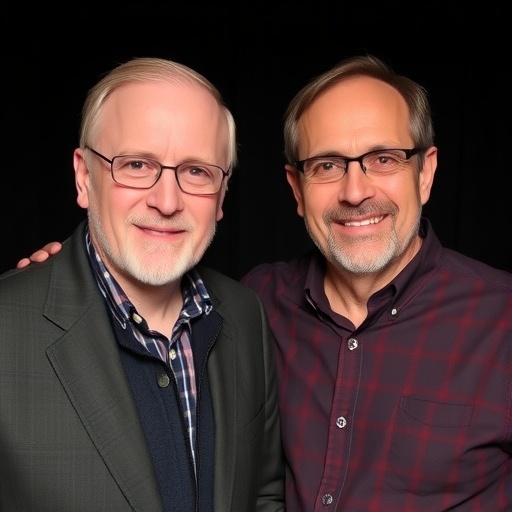
In a landmark announcement that reverberates across the scientific and technological communities worldwide, the Association for Computing Machinery (ACM) has awarded the prestigious 2025 ACM A.M. Turing Award to Charles H. Bennett and Gilles Brassard for their groundbreaking contributions that founded the domain of quantum information science. Their pioneering work has forged a new path at the confluence of physics and computer science, leveraging quantum mechanics not only as a physical phenomenon but as a transformative tool for information processing and secure communication.
Quantum information science emerged from the visionary insights of Bennett and Brassard, who in 1984 unveiled the BB84 protocol—the first practical methodology for quantum cryptography. This protocol demonstrated a revolutionary means of creating secret cryptographic keys with security guarantees grounded in the unassailable principles of quantum physics. Unlike classical methods based on computational difficulty assumptions, BB84 leverages quantum properties such as the no-cloning theorem and measurement disturbance, ensuring that any interception attempt leaves unequivocal traces and thus guarantees unconditional security.
Historically, perfect secrecy in communication was mathematically proven by Claude Shannon in 1949 to require pre-shared secret keys of equal length to the messages transmitted. This theoretical constraint persisted as a formidable challenge, later circumvented by public-key cryptography reliant on computational hardness assumptions. However, as quantum algorithms like Peter Shor’s algorithm threatened to undermine traditional cryptographic infrastructures by efficiently solving factorization problems, the necessity for fundamentally secure quantum communication protocols became paramount. Bennett and Brassard’s protocol stands out as a paradigm shift, rooted in information-theoretic security.
The implications of their work transcend cryptography. Beyond BB84, Bennett and Brassard, together with colleagues, introduced the concept of quantum teleportation in 1993, a protocol that elegantly exploits entanglement—the non-classical correlation between quantum particles separated by vast distances—to transfer an arbitrary quantum state reliably using only local operations and classical communication. This striking demonstration not only advanced fundamental understanding but also paved the way for practical quantum networking.
Entanglement, once relegated to philosophical debates, took on practical significance through their research. The 1996 proposal of entanglement distillation techniques showcased methods to purify noisy entangled states into high-fidelity entanglement, a crucial step towards realizing scalable quantum networks and ultimately, the quantum internet. These innovations have catalyzed ongoing experimental efforts to create global quantum communication infrastructures, integrating satellite-based free-space links and fiber optic networks.
The collaboration of Bennett and Brassard epitomizes interdisciplinary synergy, bridging the gap between theoretical physics and computer science. Their research has significantly influenced areas such as quantum computational complexity, algorithmic design, quantum interactive proof systems, and the fundamental physics of information. Their visionary scholarship has not only expanded the horizons of theoretical inquiry but also sparked a vibrant research ecosystem where physicists and computer scientists coalesce to tackle some of the most profound questions facing science today.
In recognition of their unparalleled impact, Bennett and Brassard have been awarded numerous accolades including the Wolf Prize in Physics, the Micius Quantum Prize, and the Breakthrough Prize in Fundamental Physics. The enduring significance of their work continues to inspire a new generation of researchers exploring the many facets of quantum technologies, from secure communication and computing to sensing and simulation.
The 2025 ACM A.M. Turing Award, often heralded as the Nobel Prize of computing, carries with it not only a monetary prize of one million dollars, generously supported by Google, Inc., but also a profound acknowledgment of their lasting influence. Alan M. Turing, the award’s namesake, laid the mathematical foundations of computing and cryptanalysis, principles that Bennett and Brassard expanded into the quantum regime with extraordinary vision and rigor.
Against the backdrop of the United Nations’ designation of 2025 as the International Year of Quantum Science and Technology, this recognition underscores the global momentum propelling investments into quantum research and development. Governments and industries alike are pivoting toward quantum-resistant solutions to safeguard digital infrastructure, reflecting a broad consensus on the transformative potential of quantum information science—a field that owes much to the foundational contributions of these two luminaries.
Looking ahead, the quantum frontier encapsulates ambitious goals such as designing fault-tolerant quantum computers, discovering novel quantum algorithms surpassing classical counterparts, and extending quantum communication schemes over continental scales through satellites and advanced quantum repeaters. Core quantum protocols like teleportation, entanglement swapping, and distillation underpin these endeavors, transitioning from theoretical constructs into engineering realities.
Google DeepMind and Google Research Chief Scientist Jeff Dean lauded Bennett and Brassard’s seminal work as laying the groundwork for one of the most exhilarating scientific and technological frontiers. Their research continues to influence both the foundational theory and practical innovation, reinforcing the critical role of interdisciplinary collaboration. This award not only honors past achievements but also celebrates the ongoing journey toward a quantum future that promises to redefine computing and communication paradigms.
Charles H. Bennett, an American physicist, has dedicated his career to exploring the intersection of thermodynamics, quantum mechanics, and computer science at IBM Research since 1973. Renowned for converting theoretical insights into tangible scientific contributions, Bennett’s work has deepened the understanding of quantum information processing, earning him memberships in prestigious institutions and multiple distinguished prizes.
Gilles Brassard, a Canadian computer scientist, stands as a pioneering figure in quantum information science, tracing his academic lineage to Cornell University and furthering his influence through professorship and leadership at Université de Montréal. His numerous honors, including appointments as Officer of the Order of Canada and the Ordre national du Québec, highlight his significant contributions and leadership within the scientific community.
Their combined efforts have propelled quantum information science from speculative theory to a vibrant discipline integral to current and future technological innovations. The award of the 2025 ACM A.M. Turing Award to Bennett and Brassard marks a seminal moment reflecting the profound impact of their vision and the accelerating pace at which quantum science is reshaping our understanding of information and computation.
Subject of Research:
Quantum information science, quantum cryptography, quantum communication, quantum computing, quantum teleportation, quantum entanglement, and information-theoretic security.
Article Title:
Pioneers of Quantum Information Science: Bennett and Brassard Receive the 2025 ACM A.M. Turing Award for Foundational Advances
News Publication Date:
2024
Web References:
https://awards.acm.org/about/2025-turing
https://arxiv.org/abs/2003.06557
https://amturing.acm.org/
https://www.acm.org/
Image Credits:
Association for Computing Machinery
Keywords
Quantum computing, Quantum cryptography, Quantum teleportation, Information theory, Quantum entanglement, BB84 protocol, Quantum information science, Secure communication, Quantum networks, Fault-tolerant quantum computing, Quantum algorithms, ACM A.M. Turing Award
Tags: ACM A.M. Turing Award 2025BB84 quantum key distribution protocolCharles H. Bennett quantum contributionsGilles Brassard quantum cryptographyhistory of quantum cryptographyintersection of physics and computer sciencemeasurement disturbance quantum securityno-cloning theorem in cryptographypioneering quantum communication protocolsquantum information science breakthroughsquantum mechanics in secure communicationunconditional security in quantum key exchange