


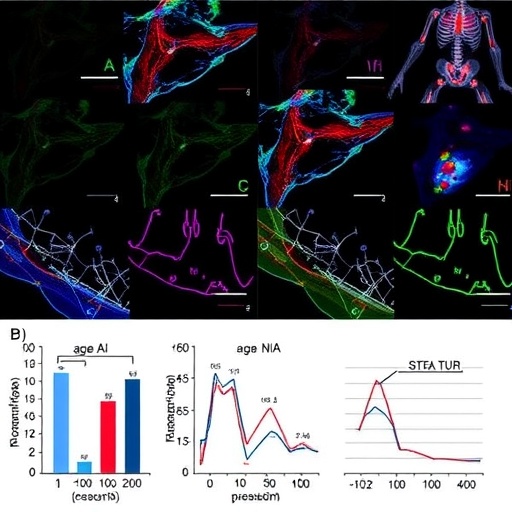
In the intricate world of cellular biology, the preservation of proteostasis emerges as a crucial determinant of stem cell functionality and longevity. Recent groundbreaking research published in Nature Metabolism uncovers a pivotal role for chaperone-mediated autophagy (CMA) in sustaining the regenerative capacity of muscle stem cells (MuSCs) throughout the aging process. This discovery sheds new light on the mechanisms underlying muscle regeneration and opens promising avenues for therapeutic interventions aimed at combating age-related muscular decline.
Proteostasis, or protein homeostasis, ensures cellular health by balancing protein synthesis, folding, and degradation. Stem cells, which are essential for tissue repair and renewal, are particularly reliant on robust proteostasis to maintain their “stemness” – the ability to self-renew and differentiate. The failure of these systems aligns closely with diminished stem cell function across diverse tissues, contributing to aging phenotypes and degenerative disorders. However, ambiguity lingered regarding the specific contributions of selective autophagy pathways like CMA to stem cell maintenance, especially within skeletal muscle.
Chaperone-mediated autophagy represents a specialized form of autophagy that selectively targets cytosolic proteins containing a recognition motif for lysosomal degradation. Unlike bulk autophagy, CMA operates with high specificity, eliminating damaged or unnecessary proteins to prevent cellular stress. The recent investigation spearheaded by Ramírez-Pardo and colleagues offers compelling evidence that CMA is not merely a background housekeeping process but is integral to muscle stem cell viability and regenerative potential.
By utilizing sophisticated genetic models, the researchers effectively ablated CMA function within MuSCs of young mice, observing a profound impairment in their proliferative capabilities. This functional decline translated directly into compromised muscle regeneration following injury. Intriguingly, they further demonstrated that naturally aged MuSCs exhibit diminished CMA activity, linking the pathway’s decline to age-associated regenerative deficits. These insights firmly position CMA as a critical guardian of muscle stem cell function, whose deterioration underlies the loss of muscular repair mechanisms seen in aging populations.
Delving deeper, the team employed comparative proteomics to uncover the molecular substrates regulated by CMA within MuSCs. Through this meticulous protein profiling, they identified disruptions in two pivotal cellular domains: actin cytoskeleton organization and glycolytic metabolism. The actin cytoskeleton orchestrates the architecture and motility of cells, indispensable for effective stem cell proliferation and differentiation. Meanwhile, glycolysis, the central metabolic pathway for energy production, fuels these energy-intensive processes. The dysregulation of these systems in aged MuSCs underscores the mechanistic roots of impaired muscle regeneration.
Of particular note is the revelation that CMA directly influences glycolysis regulation within muscle stem cells. The balance of metabolic substrates and energy availability is a well-known factor in stem cell fate decisions. The team’s data indicate that compromised CMA in aged MuSCs leads to reduced glycolytic activity, depriving these cells of the metabolic robustness needed to enter the cell cycle and expand efficiently. This metabolic bottleneck, exacerbated by disrupted cytoskeletal dynamics, culminates in the observed functional decline.
Perhaps most exciting is the demonstration that restoring CMA activity can reverse these age-related impairments. Pharmacological and genetic reactivation of CMA in aged mouse and human MuSCs rejuvenated their proliferative potential. Furthermore, amplifying glycolytic flux complemented CMA activation, synergistically enhancing stem cell function and promoting robust muscle regeneration. These findings carry immense translational potential, suggesting that targeted modulation of CMA and metabolism could rejuvenate aged muscle tissues and ameliorate sarcopenia and related conditions.
This research also challenges the traditional narrative that stem cell aging is an inexorable process dominated by genetic and epigenetic detritus accumulation. Instead, it highlights the plasticity of stem cell states and the possibility of functional restoration through precise cellular pathway interventions. By positioning CMA at a central node controlling metabolism and cytoskeletal integrity, the study provides a unified conceptual framework for understanding and potentially reversing age-related loss of muscle regenerative capacity.
The implications extend beyond muscle biology, as chaperone-mediated autophagy is conserved among many stem cell types and tissues. Future research inspired by these findings may uncover analogous roles for CMA in other regenerative contexts, from neural to hematopoietic stem cells, broadening the scope of anti-aging regenerative medicine.
Moreover, the study emphasizes the importance of selective autophagy as a therapeutic target distinct from general autophagy pathways. CMA-specific modulation offers a refined strategy to enhance proteostasis selectively without triggering the potentially deleterious consequences of broad lysosomal activation. This nuanced approach could pave the way for next-generation therapies with improved efficacy and safety profiles.
As the global population ages, preserving muscle function becomes paramount to maintaining quality of life, mobility, and independence. The discovery that CMA sustains muscle stem cell regenerative functions provides a promising molecular target to develop interventions aimed at mitigating muscular frailty and degeneration in the elderly. Interventions that boost CMA activity, possibly combined with metabolic enhancers, might soon transition from laboratory success stories to clinical realities.
In conclusion, the study by Ramírez-Pardo and colleagues revitalizes the discourse on stem cell aging by illuminating the indispensable role of chaperone-mediated autophagy in muscle stem cell physiology. Their integrative approach, combining genetic models, proteomics, and metabolic analysis across species, epitomizes the convergence of molecular biology and regenerative medicine. This work not only elucidates fundamental biological processes but also ignites hope for innovative treatments that restore muscle strength and regenerative capacity in aged individuals.
Continued exploration of CMA regulation and substrate specificity, as well as the development of potent CMA activators, will be essential next steps. The intersection of autophagy, cytoskeletal dynamics, and metabolism uncovered here represents a fertile frontier for understanding tissue aging and devising transformative therapies.
The future of muscle regeneration research stands poised for a paradigm shift, guided by the newfound appreciation of CMA’s centrality. Harnessing this pathway could unlock unprecedented regenerative potentials, redefining aging as a manageable and reversible aspect of human biology, rather than an immutable one. As scientists unravel these complex cellular threads, the dream of restoring youthful muscle function draws ever closer to reality.
Subject of Research: Muscle stem cell function, chaperone-mediated autophagy, aging, muscle regeneration, proteostasis
Article Title: Chaperone-mediated autophagy sustains muscle stem cell regenerative functions but declines with age
Article References:
Ramírez-Pardo, I., Campanario, S., Chavda, B. et al. Chaperone-mediated autophagy sustains muscle stem cell regenerative functions but declines with age. Nat Metab (2025). https://doi.org/10.1038/s42255-025-01411-w
Image Credits: AI Generated
DOI: https://doi.org/10.1038/s42255-025-01411-w
Tags: age-related muscular declineaging and muscle regenerationcellular health and agingchaperone-mediated autophagylysosomal degradation in cellsmechanisms of muscle regenerationmuscle stem cells functionalityprotein homeostasis in muscle cellsproteostasis in stem cellsselective autophagy pathwaysstem cell maintenance and agingtherapeutic interventions for muscle decline



