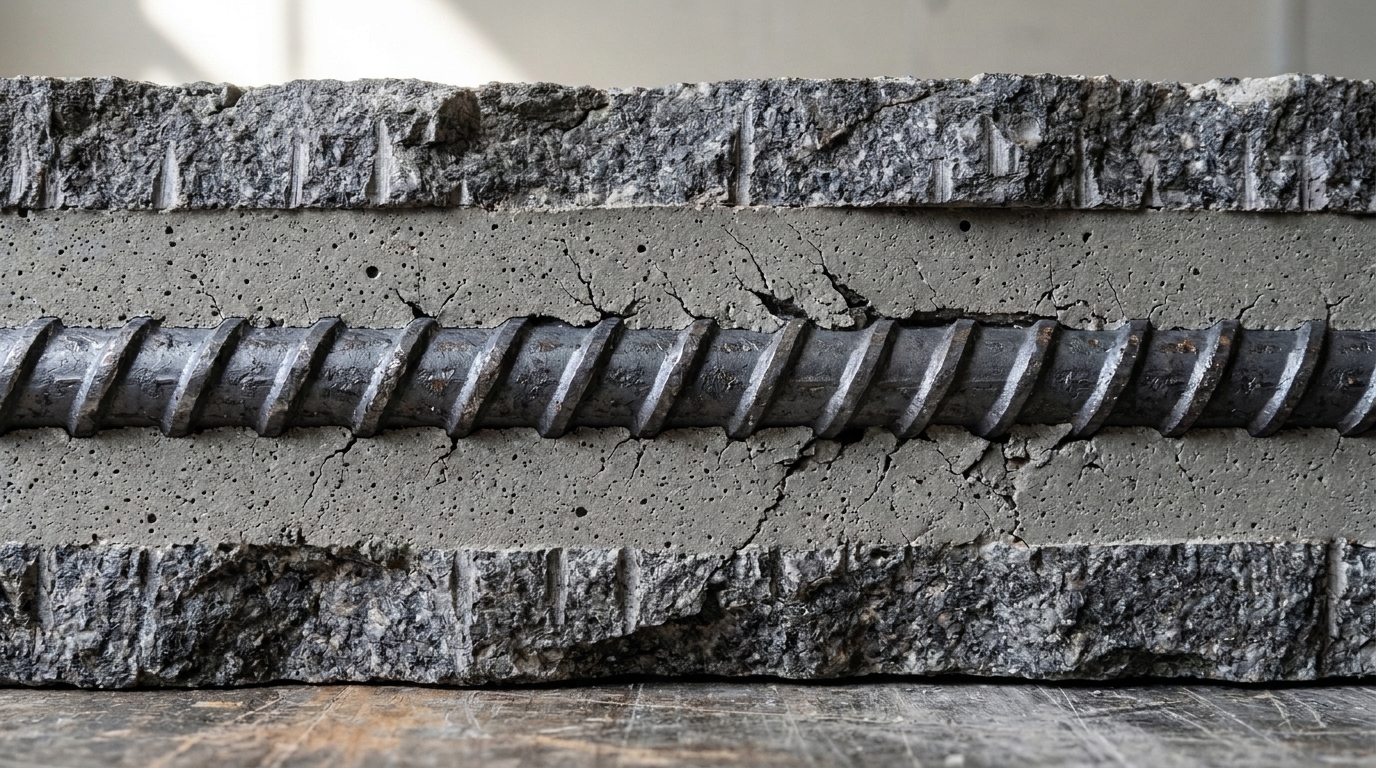
Geotechnical engineers evaluating ground anchor performance have determined that the curing age of cement grout fundamentally governs the evolutionary mechanisms, failure patterns, and shear load transfer along structural interfaces. In experimental investigations examining both tendon-to-grout and grout-to-soil boundaries, researchers discovered that anchor capacity does not follow an uninterrupted upward trajectory as grout hardens over time. While the grout material itself gains compressive strength and stiffness according to predictable non-linear growth curves, the peak shear resistance across the steel tendon interface actually begins to decline after reaching an early developmental threshold. This counterintuitive mechanical response stems directly from rapid increases in elastic modulus paired with internal shrinkage stresses, which accelerate circumferential tensile cracking in the surrounding grout cylinder during mechanical pull-out.
Ground anchorage technology provides high bearing capacity at relatively low economic cost, making it an indispensable reinforcement method across transportation corridors, mining excavations, water conservancy dams, and urban building foundations. In typical field installations, tensile forces applied to an anchor tendon transfer through a surrounding body of hardened cementitious grout into the adjacent soil mass. This mechanical load transmission relies completely on the integrity and shear behavior of two distinct physical boundaries: the inner tendon-grout interface and the outer grout-soil interface. Because interfacial shear performance directly dictates the ultimate macroscopic load capacity of the entire support system, structural engineers have needed more precise experimental data tracking how aging cement grout modifies interfacial shear resistance.
Previous investigations into tendon-grout interfaces frequently relied on pull-out or shear tests conducted under constant confining pressure, an idealized boundary condition that fails to replicate genuine underground confinement. When a ribbed tendon or multi-wire strand is pulled through a grout body, mechanical interlocking creates radial shear dilation that pushes outward against the surrounding soil mass. Because in-situ earth materials possess finite stiffness rather than infinite rigidity, the radial stress acting on the grout changes dynamically with axial displacement. Similarly, earlier evaluations of the grout-soil boundary frequently examined smooth, prefabricated concrete elements rather than cast-in-place slurry that intermixes directly with granular ground particles. To overcome these experimental shortcomings, the research team implemented constant normal stiffness boundary conditions for pull-out tests on the tendon-grout interface and applied constant normal load direct shear testing across the grout-soil interface, integrating optical digital image correlation to track internal soil deformation.
To evaluate the tendon-grout interface under realistic physical constraints, the experimental team engineered cylindrical test specimens measuring one hundred and twenty millimeters in height and one hundred and fifty millimeters in diameter. To simulate constant normal stiffness, the team enveloped each grout cylinder in a polymethyl methacrylate sleeve with a wall thickness of three point eight millimeters. Pull-out forces were applied using a hollow hydraulic jack with a maximum capacity of three hundred kilonewtons operating at a monotonic displacement rate of zero point zero six millimeters per second, while static strain acquisition devices continuously recorded circumferential strain, radial pressure, and axial cable load across curing durations of three, seven, ten, and fourteen days.
For the grout-soil interface, the investigators developed a specialized high-transparency direct shear container fabricated from polymethyl methacrylate to enable real-time visualization of soil kinematics. The lower section of the apparatus was filled with four uniformly compacted layers of natural medium-coarse sand prepared at a controlled relative density of zero point six, over which neat cement grout mixed at a water-to-cement ratio of zero point five was cast to establish an authentic cement-soil mixing zone. A vertical consolidation pressure of thirty kilopascals was applied to the upper plate during curing to reproduce in-situ slurry pressures. Following designated curing intervals of three, seven, and twenty-eight days, specimens underwent direct shear testing under four distinct constant normal load levels spanning one hundred, two hundred, three hundred, and four hundred kilopascals. Shearing was driven horizontally at a controlled displacement rate of one millimeter per minute while high-resolution imaging captured particle displacements at intervals of zero point five millimeters.
The sandy soil utilized in the testing program was recovered from the Caozhong Station excavation on Line 9 of the Shenyang Metro system in China. Physical property evaluations, including gradation grading analysis, relative density assessments, moisture determinations, and specific gravity tests across twelve soil samples, revealed a medium-dense mixture of medium-coarse sand, gravelly sand, and pebbles with particle diameters ranging between zero point one and ten millimeters alongside trace clay fractions. Baseline direct shear testing across three distinct relative densities of zero point four, zero point six, and zero point eight demonstrated a linear Mohr-Coulomb failure envelope with correlation coefficients exceeding zero point nine nine. The tested soil displayed an internal friction angle ranging between thirty-six and forty-one degrees and an apparent cohesion ranging from seven to fourteen kilopascals, properties governed primarily by grain morphology and mechanical interlocking among granular particles.
Standard cube specimens subjected to uniaxial compression demonstrated that compressive strength follows a non-linear evolutionary trend, reaching twenty-six point five megapascals at twenty-eight days with a characteristic shape parameter of zero point two five six. Cyclic elastic modulus tests showed that grout stiffness develops even faster than ultimate compressive resistance; by seven days of curing, the elastic modulus had already attained eighty-five percent of its ultimate twenty-eight-day value of five point two three gigapascals, whereas seven-day compressive strength reached approximately seventy-six percent of its ultimate metric. Direct shear tests on cylindrical grout cores demonstrated that while peak shear strength parameters climbed toward ninety percent of ultimate values within seven days, residual shear strength experienced negligible changes across curing durations, maintaining residual friction angles between thirty-six point seven and thirty-eight point five degrees.
When the researchers executed axial pull-out tests on the tendon-grout interface, they observed that increasing grout age caused a pronounced shift in both macroscopic failure modes and load-displacement trajectories. At three days of curing, the grout accommodated tendon slip through localized interfacial crushing and fragmentation without developing through-going longitudinal fissures. However, as curing progressed to seven, ten, and fourteen days, failure transitioned decisively into radial splitting fracture, culminating in three-line radial cracking patterns spaced at approximately one hundred and twenty degrees around the specimen perimeter. Crucially, the ultimate peak pull-out capacity did not increase monotonically with curing age. Because the grout’s elastic modulus surged rapidly while internal shrinkage stress accumulated, outward shear dilation during pull-out quickly drove circumferential tensile stresses past the material’s cracking threshold. Consequently, specimens cured for longer intervals cracked at earlier axial displacements, causing the overall peak strength to decline despite modest increases in residual frictional resistance from eight point two to nine point six kilonewtons.
Analytical mechanics confirmed the physical mechanism driving this early radial fracture along the tendon-grout interface. Treating the grout cross-section as an axisymmetric plane strain problem governed by polar coordinates, the research team modeled the balance between internal dilation pressure generated by strand interlocking and external confining pressure exerted by the flexible sleeve. The closed-form elastic stress equations demonstrated that circumferential tensile stress peaks along the inner radius immediately adjacent to the steel strand. Whenever pull-out displacement forces this circumferential stress beyond the tensile capacity of the grout, radial cracking initiates and propagates outward toward the boundary. In older grout specimens where higher elastic modulus accelerates stress development under identical radial displacements, this tensile cracking limit is breached earlier in the pull-out process. Once through-cracking occurs, normal stress transfer shifts entirely to the passive lateral confinement of the outer sleeve, causing the load-displacement curve to transition from a ductile hyperbolic hardening shape into an abrupt stress-attenuation profile.
Direct shear testing across the grout-soil boundary demonstrated that cement hydration age exerts its primary influence prior to interfacial peak shear failure, with diminishing impact on post-failure behavior. Across constant normal stresses ranging from one hundred to four hundred kilopascals, peak interfacial strength climbed markedly between three and seven days of curing, accompanied by a sharp rise in initial shear stiffness from zero point one five megapascals per millimeter to approximately zero point seven megapascals per millimeter. Beyond seven days, however, peak shear capacity remained essentially stable, showing negligible differences between seven-day and twenty-eight-day specimens. Linear Mohr-Coulomb regressions indicated that interfacial cohesion rose from ninety-one kilopascals at three days to two hundred and sixty-four kilopascals at twenty-eight days, while residual strength envelopes converged across all curing ages. Furthermore, vertical displacement measurements revealed that normal displacement was consistently dominated by volumetric shear dilatancy, which became increasingly pronounced in specimens cast with more mature, rigid grout matrices.
Digital image correlation provided high-resolution optical tracking of granular kinematics within the transparent direct shear container, revealing the internal structure of the grout-soil shear zone. By tracking natural contrast gradients across soil particles and dyed sand marker horizons, the OpenPIV analytical software mapped horizontal and vertical displacement fields without requiring artificial speckle patterns. The optical data demonstrated that shear deformation did not distribute evenly throughout the soil body; instead, intense shear strain concentrated inside a localized boundary band termed the shear slip zone. In three-day specimens sheared under four hundred kilopascals of normal stress, this active deformation band extended approximately eleven point seven millimeters away from the contact plane, representing roughly nine times the mean grain diameter. By seven days of curing, increased grout strength and enhanced interparticle bonding confined the deformation zone to just four point seven millimeters, or three point six grain diameters, outside of which the upper soil mass moved as a rigid translational block.
The experimental findings demonstrate that while allowing cement grout to cure enhances bulk stiffness and elevates grout-soil interface resistance, it simultaneously increases the brittleness and cracking vulnerability of the inner tendon-grout boundary. Replicate pull-out trials on fourteen-day tendon specimens yielded coefficients of variation below three point three percent, while replicate grout-soil direct shear tests showed peak strength variations of four point one five percent, confirming high experimental reproducibility. However, the authors noted several explicit physical boundaries and limitations within their experimental design. The investigation evaluated the two structural interfaces in separate testing apparatuses rather than within an integrated full-scale anchor body, and direct quantitative comparisons between the shear capacities of the two interfaces were not performed. The researchers highlighted that future experimental programs must establish unified testing protocols to evaluate coupled interface interactions, while examining long-term anchor durability and the influence of specimen geometry on grout shrinkage dynamics under variable environmental curing conditions.
Subject of Research: Cement curing age effects on anchorage interface shear mechanics
Article Title: Experimental study on the effect of cement curing age on shear mechanical properties of anchorage interfaces
Article References: Han, J., Li, S., Chen, Y., Bai, X., Liu, S., Li, T., Jia, P., Zhao, R., & Cheng, C. (2026). Experimental study on the effect of cement curing age on shear mechanical properties of anchorage interfaces. Case Studies in Construction Materials, 25, Article e06686. https://doi.org/10.1016/j.cscm.2026.e06686
Image Credits: AI Generated
DOI: 10.1016/j.cscm.2026.e06686
Keywords: Geotechnical Engineering, Ground Anchors, Cement Grout, Curing Age, Shear Mechanical Properties, Tendon-Grout Interface, Grout-Soil Interface, Direct Shear Test, Pull-Out Test, Constant Normal Stiffness, Constant Normal Load, Digital Image Correlation, Shear Dilatancy, Uniaxial Compressive Strength, Elastic Modulus, Failure Modes, Mohr-Coulomb Criterion, Shear Slip Zone
News Source: Denise Maddox. (November 18, 2026). Cement Curing Age Reshapes Anchorage Shear Strength and Grout Cracking Behavior. Scienmag.