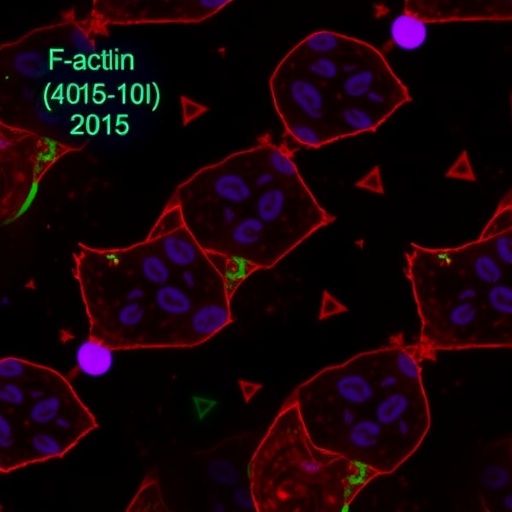
CLEVELAND—Case Western Reserve University has established an Institute for Glial Sciences to advance research of glial cells and their critical role in the health and diseases of the nervous systems, including multiple sclerosis, Alzheimer’s, pediatric leukodystrophies, Autism spectrum disorders, Parkinson’s disease and cancer.
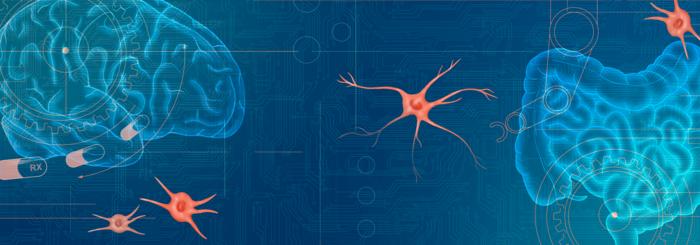
Credit: Caitlin Guttu
CLEVELAND—Case Western Reserve University has established an Institute for Glial Sciences to advance research of glial cells and their critical role in the health and diseases of the nervous systems, including multiple sclerosis, Alzheimer’s, pediatric leukodystrophies, Autism spectrum disorders, Parkinson’s disease and cancer.
Housed within the Case Western Reserve School of Medicine’s Department of Genetics and Genome Sciences, the new institute will be directed by Paul Tesar, the Dr. Donald and Ruth Weber Goodman Professor of Innovative Therapeutics. The institute will focus on three nervous systems: the central, peripheral and enteric.
Glial cells comprise more than half of the cells in these nervous systems and work with neurons to ensure proper neurological function. Despite their importance to human health, few specialized research centers globally are dedicated to studying them.
“As we announce the Institute for Glial Sciences, we’re not just launching a research center, we’re championing a vision,” said Stan Gerson, dean and senior vice president for medical affairs at the School of Medicine. “Guided by Professor Paul Tesar’s exceptional leadership, we’re uniting innovation with impact. From our laboratories into clinical application, this institute embodies our steadfast dedication to exploring new frontiers in glial sciences and effecting real-world change.”
In addition to its core scientific pursuits, the institute will concentrate on developing new methods for studying glial cells and creating new classes of medicines targeting glial cells, Tesar said. The institute will also offer education and training opportunities to students and postdoctoral and clinical fellows eager to specialize in glial cell research and medicine.
“The Institute for Glial Sciences is a manifestation of our collective aspiration to deepen the understanding of glial cells,” Tesar said. “These integral components of our nervous systems have long been overshadowed, and through the Institute, we aim to shed light on their complexity, developing treatments that could revolutionize how we approach neurological care.”
Tesar and his team have been at the forefront of unraveling the complexities of glial cell dysfunction and its crucial role in human neurological diseases. Their pioneering work has not only deepened an understanding of these cells, but also led to groundbreaking advancements in treatments.
Among their notable achievements are the discovery of two novel classes of medicines: a remyelination therapy for multiple sclerosis, which the university licensed to Convelo Therapeutics, and an antisense oligonucleotide therapy for Pelizaeus Merzbacher disease, licensed to Ionis Pharmaceuticals and slated for clinical trials in early 2024.
“The Institute for Glial Sciences aims to build from these accomplishments,” Tesar said, “propelling new breakthroughs in glial science and offering new hope for treatment of neurological diseases.”
Tesar said the institute has already begun adding faculty and staff.
“Philanthropy has been crucial in advancing our work to this stage,” Tesar said, “and will continue to play an even more important role as we expand to impact more patients.”
###
Case Western Reserve University is one of the country’s leading private research institutions. Located in Cleveland, we offer a unique combination of forward-thinking educational opportunities in an inspiring cultural setting. Our leading-edge faculty engage in teaching and research in a collaborative, hands-on environment. Our nationally recognized programs include arts and sciences, dental medicine, engineering, law, management, medicine, nursing and social work. About 6,200 undergraduate and 6,100 graduate students comprise our student body. Visit case.edu to see how Case Western Reserve thinks beyond the possible.