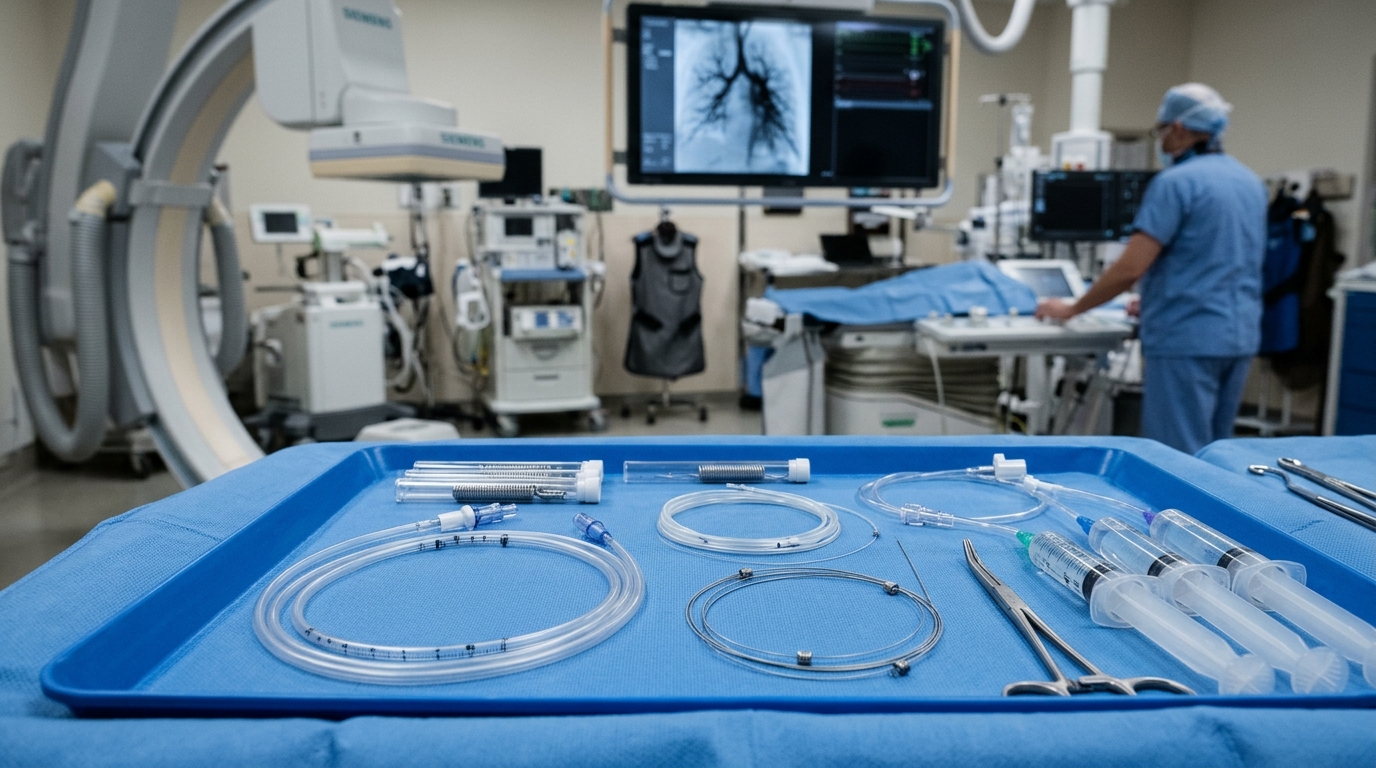
In a retrospective case series of nine patients presenting with concurrent hemoptysis and pulmonary embolism across two tertiary-care hospitals, bronchial artery embolization followed by individualized anticoagulation achieved hemostasis without recurrent bleeding or clinically evident recurrent venous thromboembolic events during six months of follow-up. Managing these coexisting conditions poses clinical challenges because controlling active hemorrhage and administering anticoagulants present competing treatment priorities, with no established consensus on how to balance the associated risks.
Between September 2024 and February 2026, investigators identified 22 patients who presented with concurrent hemoptysis and pulmonary embolism confirmed by computed tomography pulmonary angiography. Eligibility criteria established prior to retrospective data extraction required active hemoptysis necessitating bronchial artery embolization, objectively confirmed pulmonary embolism, initiation of anticoagulation subsequent to embolization, and complete clinical and follow-up documentation. Thirteen patients were excluded: five were transferred or discharged against medical advice, two died, four received medical hemostasis followed by anticoagulation without embolization, and two received anticoagulation directly without embolization.
The nine included patients comprised six men and three women, with ages ranging from 52 to 84 years. All nine individuals underwent bronchial artery embolization to achieve hemostasis, and individualized anticoagulation therapy was initiated between 1 and 10 days following the intervention. Hemoptysis was successfully controlled in every patient, and no recurrent bleeding or clinically evident recurrent venous thromboembolic events occurred throughout the six-month observation window.
The study authors concluded that bronchial artery embolization followed by individualized anticoagulation may represent a potentially feasible clinical strategy for carefully selected, hemodynamically stable patients experiencing concurrent hemoptysis and pulmonary embolism. They emphasized that anticoagulation timing must be individualized according to hemostasis, clinical status, and thrombotic risk, noting that these preliminary observations cannot be interpreted as demonstrating the safety or efficacy of the approach.
Subject of Research: Bronchial artery embolization and anticoagulation in concurrent hemoptysis and pulmonary embolism
Article Title: Bronchial artery embolization followed by anticoagulation in patients with concurrent hemoptysis and pulmonary embolism: a case series and narrative literature review
Article References: Yu, X., Luo, X., Sun, Y., Gao, N., Feng, S., Wan, Y., Yao, Z., Yuan, L., Bian, C., Long, F., & Li, D. (2026). Bronchial artery embolization followed by anticoagulation in patients with concurrent hemoptysis and pulmonary embolism: a case series and narrative literature review. BMC Pulmonary Medicine. https://doi.org/10.1186/s12890-026-04912-w
Image Credits: AI Generated
DOI: 10.1186/s12890-026-04912-w
Keywords: bronchial artery embolization, pulmonary embolism, hemoptysis, anticoagulation, hemostasis, case series, computed tomography pulmonary angiography, respiratory medicine, Bronchial, artery, embolization, followed
News Source: Ophelia Keating. (November 6, 2026). Case Series Explores Embolization and Anticoagulation in Concurrent Hemoptysis and Embolism. Scienmag.