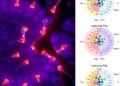
In the evolving field of artificial vision systems, researchers are delving deep into the complexities of the human retina. The retina, a marvel of biological engineering, offers a treasure trove of inspiration for the development of optoelectronic devices. Its unique curved geometry significantly reduces optical aberrations, thus allowing for clearer imaging. Furthermore, the human retina is not merely a passive receptor of light; it also engages in signal preprocessing. This capability stems from its intricate neural pathways and high synaptic facilitation, which enables a sophisticated system of information processing. However, replicating these biological functions in artificial devices presents a formidable challenge.
In a groundbreaking study, researchers have made significant strides by introducing a novel design known as the cascaded two-stage optoelectronic synapse. This innovative system leverages silicon photovoltaic cells to modulate sodium-alginate-gated synaptic transistors, creating an intricate interplay between light and electronic signals. The first stage of this process involves the conversion of an initial light signal into a gate voltage through photovoltaic cells paired with an electric double-layer capacitor. This pivotal transformation lays the groundwork for the second stage, where the gate voltage governs the postsynaptic current flowing through the synaptic transistor’s channel.
The ingenuity of this cascaded synaptic signal transmission mechanism is evident in its effectiveness. The design yields high synaptic facilitation of the postsynaptic signal, thereby enhancing the overall performance of the system. The ability of the system to exhibit stable and long-term linearly potentiated characteristics is particularly noteworthy. Such features are essential for improving the accuracy of pattern recognition tasks, which are crucial for various applications in artificial vision.
As the research progresses, the implications extend far beyond mere theoretical constructs. An array of these cascaded optoelectronic synapses has been utilized to fabricate a neuromorphic imager that embodies a curvy, kirigami-inspired structure. This design faithfully replicates not only the aesthetic qualities of the human retina but also mimics its efficient neural signal transmission mechanisms. The result is a sophisticated device that boasts visual information sensing and preprocessing functions that could revolutionize how machines perceive and interpret the world.
The unique architecture of the kirigami-structured neuromorphic imager allows it to maintain a soft, flexible profile while delivering excellent performance. This mechanical softness is crucial, as it enables the imager to adapt to various forms and surfaces, thereby enhancing its applicability in real-world scenarios. Furthermore, the integration of optoelectronic components marks a significant advancement in the field, bridging the gap between biological inspiration and technological implementation.
The implications of this research extend into numerous fields. In the realm of robotics and autonomous systems, the ability to process visual information efficiently is paramount. This technology offers significant potential enhancements in areas such as navigation, obstacle avoidance, and environmental interaction. Consequently, the cascaded optoelectronic synapse-based devices could lead to next-generation autonomous systems that are more perceptive and responsive than ever before.
Moreover, the potential applications do not stop at robotics. In the domain of augmented reality and virtual reality, high-fidelity image processing is essential for delivering immersive experiences. The neuromorphic imager’s advanced capabilities could elevate these experiences by providing seamless, real-time visual processing that closely mirrors human perception. This alignment with natural vision could set a new standard for immersive technologies, allowing them to interact more intuitively with users.
The research team is optimistic about the prospects for further developments. They envision enhancements that will continue to refine the performance of the optoelectronic synapses, potentially leading to devices that are even more efficient and capable of complex visual tasks. Their work exemplifies the growing trend of biomimicry in technology, where the intricacies of biology inspire innovative designs and functionalities.
As the study gains traction, the academic and research communities are likely to explore various paths stemming from these findings. Collaborative efforts could emerge between disciplines that intersect biology, materials science, and electrical engineering. Such interdisciplinary partnerships may pave the way for novel solutions that harness the full potential of synthetic and biological systems, making great strides toward advancing machine vision.
The cascading synapse architecture could serve as a foundational technology, sparking interest in related areas such as neural networks and neuromorphic computing. By understanding how these novel systems can replicate biological functions, researchers may unlock further advancements that lead to more adaptive and intelligent devices capable of learning and evolving with their environments.
Furthermore, investment in such technologies could transform dynamic sectors, from smart materials to integrated sensing systems. The funding for research on flexible, soft, and efficient optoelectronic devices could accelerate innovation, broadening their usability across a myriad of applications, and addressing an urgent need for integration in everyday technologies.
In summary, the development of a neuromorphic imager based on cascaded optoelectronic synapses represents a pivotal moment in the ongoing quest to bridge the gap between biological systems and artificial intelligence. By mimicking the human retina’s extraordinary capabilities, researchers stand on the threshold of redefining how machines experience and interpret their surroundings. This research not only holds promise for improving artificial vision but also opens avenues for countless future explorations in interfacing synthetic and biological systems for enhanced technological applications.
Subject of Research: Development of optoelectronic devices based on human retinal mechanisms.
Article Title: A neuromorphic imager based on a cascaded optoelectronic synapse.
Article References:
Lu, Y., Rao, Z., Shim, H. et al. A neuromorphic imager based on a cascaded optoelectronic synapse.
Nat Electron (2026). https://doi.org/10.1038/s41928-025-01540-w
Image Credits: AI Generated
DOI: https://doi.org/10.1038/s41928-025-01540-w
Keywords: optical imaging, artificial vision, optoelectronic devices, synaptic transistors, neuromorphic systems, biomimicry.
Tags: artificial vision systemsCascaded optoelectronic synapsechallenges in replicating biological functionshuman retina engineeringinnovative synaptic signal transmissionlight and electronic signal interplayneuromorphic imaging technologyoptical aberrations reductionsignal preprocessing in visionsilicon photovoltaic cells applicationsodium-alginate-gated transistorssynaptic facilitation mechanisms