• HOME
  • NEWS
  • EXPLORE
    • CAREER
      • Companies
      • Jobs
    • EVENTS
    • iGEM
      • News
      • Team
    • PHOTOS
    • VIDEO
    • WIKI
  • BLOG
  • COMMUNITY
    • FACEBOOK
    • INSTAGRAM
    • TWITTER
Sunday, November 15, 2026
BIOENGINEER.ORG
No Result
View All Result
  • Login
  • HOME
  • NEWS
  • EXPLORE
    • CAREER
      • Companies
      • Jobs
        • Lecturer
        • PhD Studentship
        • Postdoc
        • Research Assistant
    • EVENTS
    • iGEM
      • News
      • Team
    • PHOTOS
    • VIDEO
    • WIKI
  • BLOG
  • COMMUNITY
    • FACEBOOK
    • INSTAGRAM
    • TWITTER
No Result
View All Result
Bioengineer.org
No Result
View All Result
Home NEWS Science News Technology

Carbonized Hydrochars With Isomeric Heterogeneous Interfaces Achieve Strong Microwave Absorption

by
November 13, 2026
in Technology
Reading Time: 2 mins read
0
Carbonized Hydrochars With Isomeric Heterogeneous Interfaces Achieve Strong Microwave Absorption

Carbonized Hydrochars With Isomeric Heterogeneous Interfaces Achieve Strong Microwave Absorption

Share on FacebookShare on TwitterShare on LinkedinShare on RedditShare on Telegram

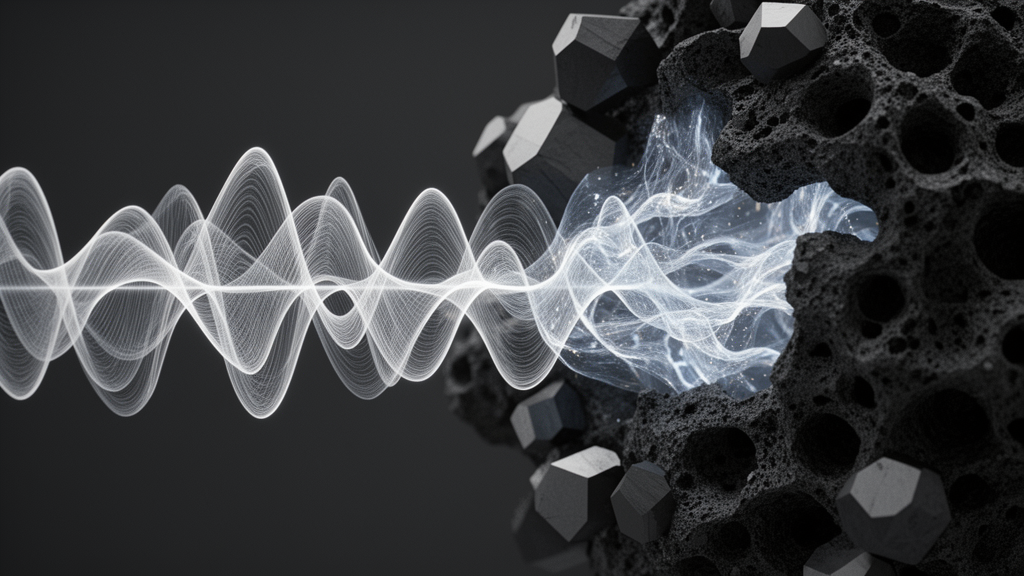
An optimized carbonized hydrochar material synthesized through a template-free hydrothermal-pyrolysis process demonstrated superior microwave absorption performance, recording a minimum reflection loss of -48.6 dB at 16.8 GHz. The work establishes interface engineering between structurally distinct carbon domains of identical chemical composition as an effective route for designing lightweight and broadband electromagnetic wave absorbing materials.

Tailoring interfacial structures has emerged as a promising approach for engineering advanced microwave absorbers, yet the functional contribution of isomeric heterogeneous interfaces has remained insufficiently understood. To address this fundamental gap, the research team designed a template-free fabrication methodology that combines hydrothermal treatment with subsequent pyrolysis.

Microstructural characterization confirmed the successful formation of numerous internal boundaries dividing graphitic and amorphous-carbon domains throughout the carbonized hydrochar samples. While these adjacent domains possess an identical chemical composition, they exhibit distinctly different degrees of structural order. The resulting isomeric phase boundaries provide active sites that facilitate substantial interfacial polarization and promote local charge accumulation under applied electromagnetic fields, thereby directly contributing to the attenuation of incoming microwave radiation.

The researchers determined that the density of these isomeric heterogeneous interfaces can be systematically controlled by adjusting the pyrolysis temperature during processing. By tuning thermal conditions, the team established a clear structure-property relationship connecting synthesis temperature, interfacial boundary concentration, and overall microwave absorption capability.

Among the evaluated preparations, the optimized specimen designated as CH-710 exhibited the most pronounced microwave absorption properties. At an absorber matching thickness of 2.08 mm, the CH-710 material attained a minimum reflection loss of -48.6 dB at a frequency of 16.8 GHz, alongside an effective absorption bandwidth spanning 5.96 GHz. These measured performance metrics confirm that tailoring structural order boundaries within carbonized hydrochars delivers strong attenuation alongside broad frequency coverage while maintaining a relatively thin physical profile.

The authors concluded that isomeric heterogeneous interface engineering represents a viable and scalable design strategy for next-generation microwave absorption technologies.

Subject of Research: Isomeric heterogeneous interface engineering in carbonized hydrochars for microwave absorption

Article Title: Isomeric heterogeneous interfaces in carbonized hydrochars for enhanced microwave absorption

Article References: ullah, F., Ahmad, N., Alansari, A., & Ma, W. (2026). Isomeric heterogeneous interfaces in carbonized hydrochars for enhanced microwave absorption. Journal of Materials Science. https://doi.org/10.1007/s10853-026-14063-2

Image Credits: AI Generated

DOI: 10.1007/s10853-026-14063-2

Keywords: carbonized hydrochars, microwave absorption, isomeric heterogeneous interfaces, hydrothermal-pyrolysis, reflection loss, graphitic carbon, amorphous carbon, interfacial polarization, charge accumulation, effective absorption bandwidth, pyrolysis temperature, CH-710, broadband microwave absorbers, template-free synthesis, matching thickness, electronic materials

News Source: Denise Maddox. (November 13, 2026). Carbonized Hydrochars With Isomeric Heterogeneous Interfaces Achieve Strong Microwave Absorption. Scienmag.


Tags: amorphous carbonbroadband microwave absorberscarbonized hydrocharsCH-710charge accumulationeffective absorption bandwidthelectronic materialsgraphitic carbonhydrothermal-pyrolysisinterfacial polarizationisomeric heterogeneous interfacesmatching thicknessmicrowave absorptionpyrolysis temperaturereflection losstemplate-free synthesis
Share12Tweet7Share2ShareShareShare1

Related Posts

Betel leaf quantum dots enable rapid fingerprint detection

Betel leaf quantum dots enable rapid fingerprint detection

November 15, 2026
New Computational Methods Narrow Price Bounds While Preserving Maximum Business Revenues

New Computational Methods Narrow Price Bounds While Preserving Maximum Business Revenues

November 15, 2026

Adaptive Kriging Framework Reduces Structural Reliability Evaluations by Twenty-Five Percent

November 15, 2026

Participatory Poster Design Translates Youth Flood Experiences into Local Disaster Risk Communication

November 15, 2026

POPULAR NEWS

  • Adaptive Kriging Framework Reduces Structural Reliability Evaluations by Twenty-Five Percent

    Adaptive Kriging Framework Reduces Structural Reliability Evaluations by Twenty-Five Percent

    29 shares
    Share 12 Tweet 7
  • Super-Resolution MRI Enhances Preoperative Prediction of Cervical Cancer Vascular Invasion

    29 shares
    Share 12 Tweet 7
  • Participatory Poster Design Translates Youth Flood Experiences into Local Disaster Risk Communication

    29 shares
    Share 12 Tweet 7
  • Standardized Frequency Filter Optimization Reduces Motion Sickness in Autonomous Vehicle Simulations

    29 shares
    Share 12 Tweet 7

About

We bring you the latest biotechnology news from best research centers and universities around the world. Check our website.

Follow us

Recent News

Betel leaf quantum dots enable rapid fingerprint detection

New Computational Methods Narrow Price Bounds While Preserving Maximum Business Revenues

Automated Synthesis Route Produces High Molar Activity Carbon-11 Phosgene from Carbon Dioxide

Subscribe to Blog via Email

Enter your email address to subscribe to this blog and receive notifications of new posts by email.

Join 87 other subscribers
  • Contact Us

Bioengineer.org © Copyright 2023 All Rights Reserved.

Welcome Back!

Login to your account below

Forgotten Password?

Retrieve your password

Please enter your username or email address to reset your password.

Log In
No Result
View All Result
  • Homepages
    • Home Page 1
    • Home Page 2
  • News
  • National
  • Business
  • Health
  • Lifestyle
  • Science

Bioengineer.org © Copyright 2023 All Rights Reserved.