

• HOME
  • NEWS
  • EXPLORE
    • CAREER
      • Companies
      • Jobs
    • EVENTS
    • iGEM
      • News
      • Team
    • PHOTOS
    • VIDEO
    • WIKI
  • BLOG
  • COMMUNITY
    • FACEBOOK
    • INSTAGRAM
    • TWITTER
Wednesday, October 28, 2026
BIOENGINEER.ORG
No Result
View All Result
  • Login
  • HOME
  • NEWS
  • EXPLORE
    • CAREER
      • Companies
      • Jobs
        • Lecturer
        • PhD Studentship
        • Postdoc
        • Research Assistant
    • EVENTS
    • iGEM
      • News
      • Team
    • PHOTOS
    • VIDEO
    • WIKI
  • BLOG
  • COMMUNITY
    • FACEBOOK
    • INSTAGRAM
    • TWITTER
No Result
View All Result
Bioengineer.org
No Result
View All Result
Home NEWS Science News Biology

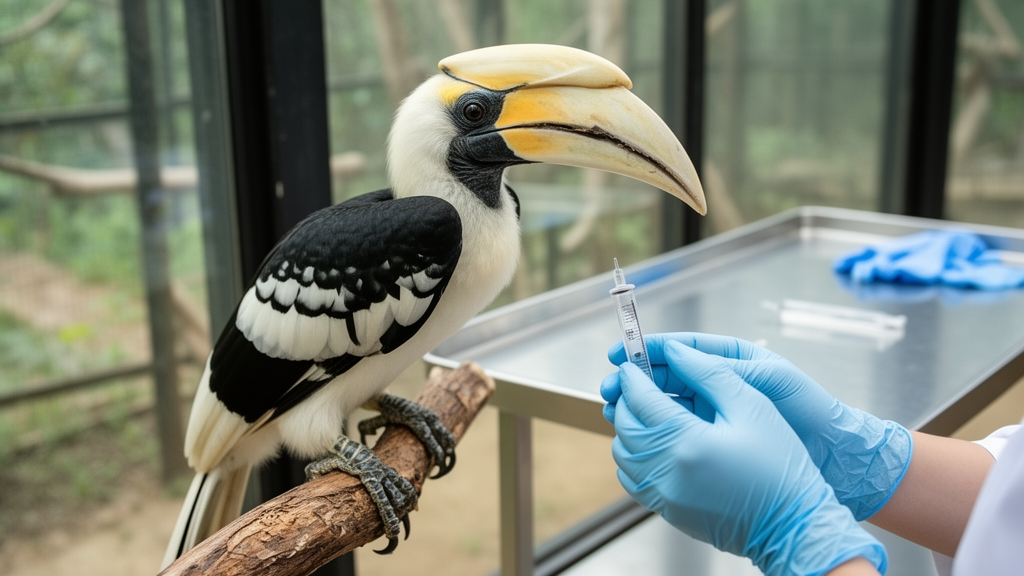
Captivity reshapes gut microbiome and antibiotic resistance genes in oriental pied hornbills, study finds

by
October 28, 2026
in Biology
Reading Time: 2 mins read
0
Captivity reshapes gut microbiome and antibiotic resistance genes in oriental pied hornbills, study finds

Captivity reshapes gut microbiome and antibiotic resistance genes in oriental pied hornbills, study finds

Share on FacebookShare on TwitterShare on LinkedinShare on RedditShare on Telegram

A new study reports that captivity reshapes the gut microbiome of Oriental Pied Hornbills. A new study of Oriental Pied Hornbills (Anthracoceros albirostris) reports that zoo-housed and rescue-rehabilitated individuals carry gut microbial communities that differ sharply from those of wild birds, and that managed birds show altered levels of antibiotic resistance genes. The work, published in the journal Animal Microbiome, used shotgun metagenomic sequencing to compare fecal microbiomes across the three groups.

The gut microbiome is essential for host nutrition, immunity, and environmental adaptation, yet its response to captivity in wild birds remains poorly understood, the authors note. To address that gap, the team compared fecal samples from wild, zoo-housed, and rescue-rehabilitated hornbills, reading the full genetic content of the microbial communities rather than targeting only a single marker gene. That shotgun approach allowed the researchers to profile not just which bacteria were present, but also the functional pathways and antibiotic resistance genes those microbes carried.

The clearest signal emerged in diversity. Wild birds showed the highest alpha diversity, meaning their guts hosted the richest mix of microbial species. Zoo-housed birds sat at the opposite end of the spectrum with the lowest diversity, while rescue-rehabilitated birds fell in between, displaying an intermediate pattern. The three groups differed in alpha diversity, with wild birds highest, zoo-housed birds lowest, and rescue-rehabilitated birds intermediate.

Beyond diversity, the three groups carried distinctly different bacterial profiles. Wild hornbills were enriched in Lactobacillus, Enterococcus, and Akkermansia. Managed birds, by contrast, showed higher abundances of Streptococcus, Weissella, Clostridium, and Ruminococcus. The shift indicates that managed birds carried a different set of bacterial genera at higher abundance than wild birds.

The differences extended into function. When the researchers examined KEGG pathways, standardized catalogs of the metabolic and cellular processes microbes can perform, the profiles of the three groups diverged as well. In other words, the KEGG pathway profiles of the three groups differed, indicating differences in the functional potential of their gut microbial communities.

Perhaps the most consequential finding involved the resistome, the collection of antibiotic resistance genes carried by gut microbes. The study found that ARG classes also differed among the three groups, and the title of the paper states that captivity enriches for these genes.

The authors conclude that these findings indicate zoo housing and rescue rehabilitation reshape the gut microbiome and resistome of Oriental Pied Hornbills.

Subject of Research: How captivity reshapes the gut microbiome and antibiotic resistance genes of Oriental Pied Hornbills

Article Title: Captivity reshapes the gut microbiome and enriches for antibiotic resistance genes in the oriental pied hornbill

Article References: Li, X., Jiang, T., Zhong, Y., Wei, X., Li, X., Zeng, P., Qin, J., Chen, Y., Wu, J., You, Z., Qin, Y., Luo, Z., Yang, D., & Yu, T. (2026). Captivity reshapes the gut microbiome and enriches for antibiotic resistance genes in the oriental pied hornbill. Animal Microbiome. https://doi.org/10.1186/s42523-026-00637-7

Image Credits: AI Generated

DOI: 10.1186/s42523-026-00637-7

Keywords: Oriental Pied Hornbill, gut microbiome, captivity, antibiotic resistance genes, shotgun metagenomics, zoo-housed birds, wildlife rehabilitation, Animal Microbiome, resistome, alpha diversity, conservation, reshapes

News Source: Morgan Morrow. (October 28, 2026). Captivity reshapes gut microbiome and antibiotic resistance genes in oriental pied hornbills, study finds. Scienmag.
Tags: alpha diversityAnimal Microbiomeantibiotic resistance genescaptivityConservationGut microbiomeOriental Pied Hornbillreshapesresistomeshotgun metagenomicswildlife rehabilitationzoo-housed birds
Share12Tweet7Share2ShareShareShare1

Related Posts

Laboratory Generations of Sugarcane Parasitoid Wasp Lose Fitness Within Ten Generations

Laboratory Generations of Sugarcane Parasitoid Wasp Lose Fitness Within Ten Generations

October 28, 2026
Prophages Shape Virulence, Not Resistance, in Staphylococcus aureus Genomes

Prophages Shape Virulence, Not Resistance, in Staphylococcus aureus Genomes

October 28, 2026

TREX1 enzyme shields tumors by destroying immune-activating DNA fragments

October 28, 2026

Evolutionary Feature Optimization Sharpens Latent Learning in Endoscopy Images

October 28, 2026

POPULAR NEWS

  • Systematic review maps end-of-life psychosocial and spiritual needs in physical disability

    Systematic review maps end-of-life psychosocial and spiritual needs in physical disability

    29 shares
    Share 12 Tweet 7
  • Text Message Campaign Reached Only a Third of Patients Overdue for Colorectal Cancer Screening

    29 shares
    Share 12 Tweet 7
  • FOXO1 Emerges as Candidate Regulator and Biomarker in Hip Dysplasia

    29 shares
    Share 12 Tweet 7
  • Regulators, developers and clinicians in Shenzhen voice concerns over medical AI governance

    29 shares
    Share 12 Tweet 7

About

We bring you the latest biotechnology news from best research centers and universities around the world. Check our website.

Follow us

Recent News

Systematic review maps end-of-life psychosocial and spiritual needs in physical disability

Text Message Campaign Reached Only a Third of Patients Overdue for Colorectal Cancer Screening

FOXO1 Emerges as Candidate Regulator and Biomarker in Hip Dysplasia

Subscribe to Blog via Email

Enter your email address to subscribe to this blog and receive notifications of new posts by email.

Join 85 other subscribers
  • Contact Us

Bioengineer.org © Copyright 2023 All Rights Reserved.

Welcome Back!

Login to your account below

Forgotten Password?

Retrieve your password

Please enter your username or email address to reset your password.

Log In
No Result
View All Result
  • Homepages
    • Home Page 1
    • Home Page 2
  • News
  • National
  • Business
  • Health
  • Lifestyle
  • Science

Bioengineer.org © Copyright 2023 All Rights Reserved.
