HOUSTON ― Vijay Goradia, a Houston-based businessman, philanthropist, and cancer survivor, has donated $10 million to The University of Texas MD Anderson Cancer Center to speed translational research and clinical trials. An initial allocation of $3.5 million will fund the institution’s clinical trial of a CD70-targeted chimeric antigen receptor (CAR) natural killer (NK) cell therapy for patients with renal cell carcinoma (RCC), developed by Katy Rezvani, M.D., Ph.D., professor of Stem Cell Transplantation and Cellular Therapy.
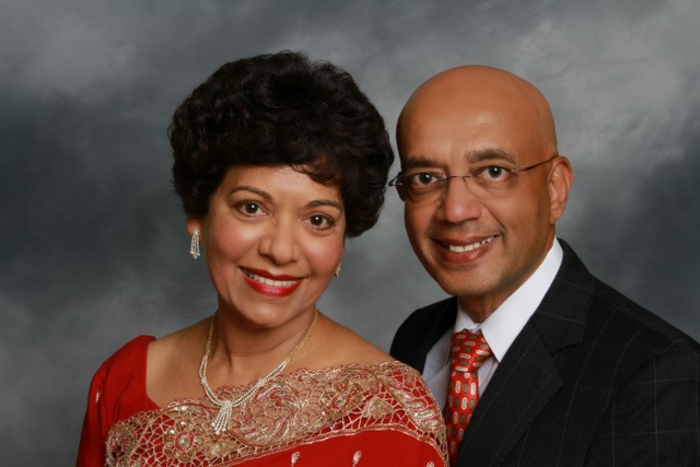
Credit: Courtesy of Vijay Goradia
HOUSTON ― Vijay Goradia, a Houston-based businessman, philanthropist, and cancer survivor, has donated $10 million to The University of Texas MD Anderson Cancer Center to speed translational research and clinical trials. An initial allocation of $3.5 million will fund the institution’s clinical trial of a CD70-targeted chimeric antigen receptor (CAR) natural killer (NK) cell therapy for patients with renal cell carcinoma (RCC), developed by Katy Rezvani, M.D., Ph.D., professor of Stem Cell Transplantation and Cellular Therapy.
“We are focused on supporting the innovation and commercialization of groundbreaking research,” said Goradia, who also serves as a member of the MD Anderson Cancer Center Board of Visitors’ Executive Committee. “There is so much impactful work happening at MD Anderson. Our first step was to fund Dr. Rezvani’s incredible work in CAR NK cells. She has had some success in treating blood cancers, but now she is working on finding treatments for solid tumors, including renal cancer. We felt this was something worth supporting and we are very excited. We are very hopeful.”
Goradia, a kidney cancer survivor, and his wife, Marie, established the Vijay and Marie Goradia Cancer Fund at MD Anderson through this transformational gift. Their hope is to not only expedite innovation coming from MD Anderson but to invest in the continued success of such research. The remainder of the gift will support additional therapeutics across the research enterprise.
“The generosity of the Goradia family will be felt by cancer patients and their families for decades to come,” said Peter WT Pisters, M.D., president of MD Anderson. “Future translational and therapeutic discoveries that will be supported by this fund, including the CD70 CAR NK trial, will not only expand our efforts in targeting the disease, but also may generate financial benefits to support promising research in the years ahead.”
A true game changer
Renal cell carcinoma is the most common form of kidney cancer. Each year, RCC accounts for approximately 79,000 new cancer cases and 14,000 deaths in the U.S, according to the National Institutes of Health (NIH). While initial treatment with surgery for localized tumors can be curative, about 30% of patients develop metastatic disease, which currently is considered incurable because most of these tumors resist available chemotherapies.
Rezvani has led extensive translational research at MD Anderson to develop and expand the power of NK cells. These tumor-destroying immune cells serve as a first defense against malignancy, but cancer cells can make themselves invisible. By genetically modifying the NK cells with CARs, which are special receptors designed to bind to specific proteins on the surface of cancer cells, the NK cells can better find and eliminate target cancer cells. Rezvani’s laboratory then multiplies the number of CAR NK cells, growing them in large numbers before infusing them into patients.
“This research has the potential to become a viable treatment in a fairly short period of time,” said Rezvani. “I am grateful to Vijay and the entire Goradia family for their support and generosity as well as their belief in the science. This is the right place, the right time, and the right opportunity for such a transformational investment that may have such a grand impact in so many patients’ lives.”
The clinical trial will be a Phase I/II study that will test the safety, feasibility, persistence, and antitumor activity of off-the-shelf cord blood-derived CAR NK cells targeting CD70 and armored with IL-15 for patients with RCC. While this study is directed specifically at RCC, CD70 also is present in other malignancies, including mesothelioma, lung, and bladder cancers, suggesting there may be potential applications in other cancer types.
“MD Anderson has long been a leader in cancer research, diagnosis and treatment and we are inspired by the institution’s efforts to bring cutting-edge research and innovation to patients in need,” said Sapphira Goradia, executive director of the Vijay and Marie Goradia Charitable Foundation. “The Marie and Vijay Goradia Charitable Foundation is dedicated to expanding access to quality health care and we hope this investment will support the acceleration of more effective and affordable cancer treatments.”
Inspiring innovation
Philanthropy has been ingrained in Goradia’s DNA. From his humble beginnings in Mumbai, India, Goradia has made a concerted effort to help others. And he is not stopping anytime soon.
“We are all hoping for the same end result, Making Cancer History®,” he said. “And that cannot happen without meaningful research being done by very smart, talented, committed people. Our hope is that MD Anderson remains at the forefront by attracting very capable and talented people to come and join its already very capable research faculty.”
Goradia said this cannot be accomplished by one, 10 or even 100 philanthropists. It is going to take more.
“We have the format. My hope is that other donors who are interested in funding groundbreaking research and innovation may want to replicate this whole idea,” he said. “We can do this over and over again. Together, let’s end cancer.”
– 30 –
About MD Anderson
The University of Texas MD Anderson Cancer Center in Houston ranks as one of the world’s most respected centers focused on cancer patient care, research, education and prevention. The institution’s sole mission is to end cancer for patients and their families around the world. MD Anderson is one of only 53 comprehensive cancer centers designated by the National Cancer Institute (NCI). MD Anderson is No. 1 for cancer in U.S. News & World Report’s “Best Hospitals” rankings and has been named one of the nation’s top two hospitals for cancer since the rankings began in 1990. MD Anderson receives a cancer center support grant from the NCI of the National Institutes of Health (P30 CA016672).
© 2023 The University of Texas MD Anderson Cancer Center