Credit: HSE University
Scientists at HSE University have learned that disagreeing with the opinion of other people leaves a ‘trace’ in brain activity, which allows the brain to later adjust its opinion in favour of the majority-held point of view. The article was published in Scientific Reports.
We often change our beliefs under the influence of others. This social behavior is called conformity and explains varios components of our behaviour, from voting at elections to fashion trends among teenagers.
Brain research has recently well informed about short-term effects of social influence on decision making. If our choice coincides with the point of view of the people who are important to us, this decision is reinforced in the brain’s “pleasure” centres involved in the larger dopaminergic system responsible for learning, motor activity and many other functions. Conversely, in instances of disagreement with others, the brain signals that a ‘mistake’ has been made and triggers conformity.
However, there is little study of how social influence affects brain activity once some time has passed after we have formed an opinion and learned of the opinion held by others. HSE neuroscientists decided to study whether the opinion of others causes long-term changes in brain activity. The scientists used magnetoencephalography (MEG), a unique method that allows you to see in detail activity of the human brain during information processing, and it has a temporal resolution higher than that of traditional fMRI.
At the beginning of the experiment, 20 female participants rated the degree to which they trusted strangers whose faces were depicted in a series of photographs. They then were informed about the collective opinion of a large group of peers on whether to trust these strangers. Sometimes the opinion of the group contradicted the opinion of the participants, and sometimes it coincided with it. After half an hour, the subjects were asked to reassess their trust to the same strangers.
The study showed that the participants changed their opinion about a stranger under the influence of their peers in about half of the cases. In addition, changes occurred in their brain activity: scientists discovered ‘traces’ of past disagreements with peers. When the subjects again saw the face of a stranger, after a split second, their brain signaled that last time their personal opinion did not coincide with the assessment given by their peers. Most likely, the fixation of this signal allows the brain to predict possible conflicts in the future arising from disagreements in order to avoid them, and this probably occurs subconsciously.
It is interesting that an area such as the superior parietal cortex, an area of the brain responsible for retrieving memories, is involved in coding the signal of past disagreements with the group. It is likely that the faces of strangers, about whom the brain encountered a difference of opinion, are remembered better than others.
Thus, the opinions of others not only influence our behavior, but also cause long-term changes in the way our brains work. Apparently, the brain not only quickly adjusts to the opinions of others, but also begins to perceive information through the eyes of the majority in order to avoid social conflicts in the future.
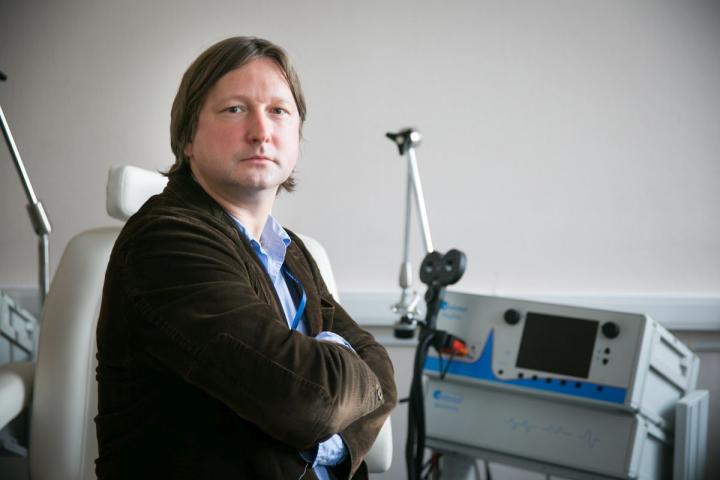
‘Our study shows the dramatic influence of others’s opinion on how we perceive information,’ says HSE University Professor Vasily Klucharev, one of the authors of the study. ‘We live in social groups and automatically adjust our opinions to that of the majority, and the opinion of our peers can change the way our brain processes information for a relatively long time.’
‘It was very interesting to use modern methods of neuro-mapping and to see traces of past conflicts with the opinion of the group in the brain’s activity,’ adds Aleksei Gorin, a PhD student at HSE University. ‘The brain absorbs the opinion of others like a sponge and adjusts its functions to the opinion of its social group.’
###
Once the paper is published, it will be available to view online at http://www.
EMBARGOED until 8 February 2021, 05:00 US Eastern time / 10:00 London time (GMT).
Media Contact
Liudmila Mezentseva
[email protected]
Related Journal Article
http://dx.