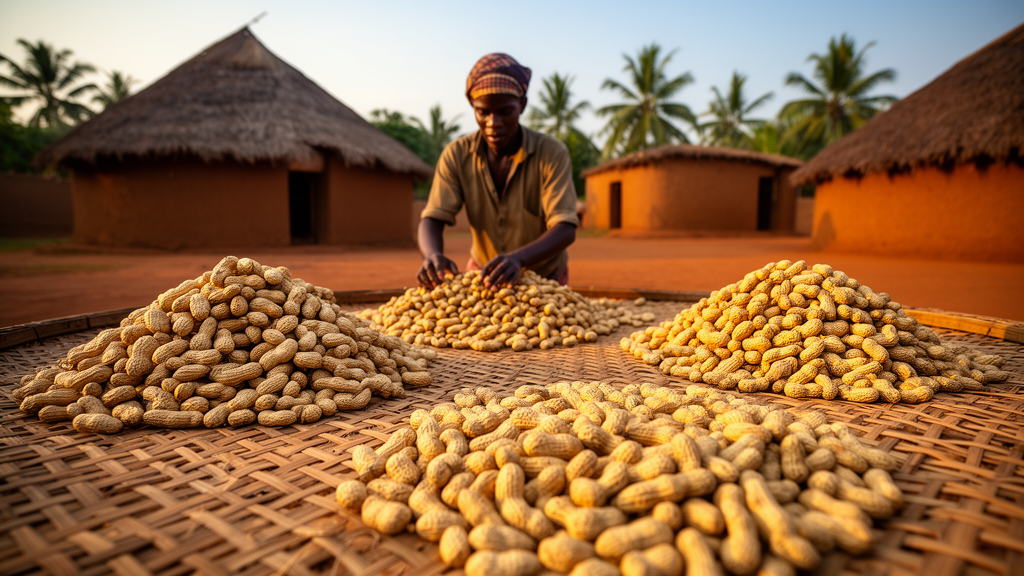
Researchers in Cameroon have identified a significant link between specific agricultural production systems and the levels of aflatoxin B1 contamination in peanut kernels, with the highest risks observed in highly monetized farming models. The study, published in the journal Food Safety and Risk, evaluated 90 raw peanut samples collected from producers in the Adamawa, Centre, and North regions of the country. By analyzing these samples using enzyme-linked immunosorbent assay (ELISA) techniques, the team determined that the type of production system strongly influences the concentration of this potent carcinogen, which poses a substantial health threat to consumers across various age groups.
The investigation focused on four distinct peanut production systems, each characterized by different agronomic practices and economic structures. System 1 represented low-resource production, System 2 involved subsistence farming with integrated crops like maize and tubers, System 3 was a semi-intensive integrated system with cotton, and System 4 consisted of highly monetized traditional peanut production. The results revealed a stark contrast in contamination frequencies across these systems. While System 1 showed a 57.17% contamination rate, System 4, the highly monetized model, recorded a 100% frequency of aflatoxin B1 presence in the sampled kernels.
The average concentrations of aflatoxin B1 varied dramatically depending on the production system, highlighting the impact of farming methods on food safety. In the low-resource System 1, the mean concentration was 3.57 micrograms per kilogram. System 2 recorded a slightly higher average of 4.14 micrograms per kilogram, while System 3 had the lowest average at 2.49 micrograms per kilogram. In sharp contrast, the highly monetized System 4 exhibited a mean concentration of 26.37 micrograms per kilogram, a level significantly above the regulatory limits set by international food safety authorities such as the European Food Safety Authority (EFSA).
Regulatory compliance was a critical aspect of the analysis, with the study comparing measured levels against standards from the EFSA, the China National Center for Food Safety Risk Assessment (CFSA), and the FAO-WHO Codex Alimentarius. Overall, 76.66% of the 90 samples tested positive for aflatoxin B1, and 60% of the samples exceeded the EFSA limit of 2 micrograms per kilogram. In System 4, every single sample exceeded the EFSA standard, while 56.66% also surpassed the stricter limits set by CFSA and Codex Alimentarius for oilseeds. This widespread non-compliance suggests that current farming practices in certain high-value production systems are not effectively controlling mycotoxin contamination.
The study further examined the agronomic factors associated with contamination levels exceeding 2 micrograms per kilogram, identifying several key variables that influence aflatoxin presence. The peanut variety played a decisive role, with the Manipintar variety showing a particularly high rate of contamination, where 61.1% of its samples exceeded the 2 microgram per kilogram threshold. Conversely, varieties such as Peau-lisse and Siksa generally remained below this level. Fertilization practices also had a significant impact; samples from fields where no fertilizer was used had an 86.1% rate of exceeding the contamination threshold, indicating that soil management is a critical factor in reducing fungal growth.
Post-harvest handling and the use of phytosanitary products were also found to be influential. Growers who applied phytosanitary products saw a much lower rate of high contamination, with only 16.7% of their samples exceeding 2 micrograms per kilogram. The type of storage bag and drying methods also showed trends, although the effects were less pronounced than those of variety and fertilization. These findings underscore the necessity for careful management of both cultivated varieties and specific agronomic practices to minimize the risk of aflatoxin B1 accumulation in peanut kernels before they reach the consumer.
To assess the human health implications, the researchers estimated the daily intake of aflatoxin B1 for different age groups, including infants, toddlers, children, adolescents, and adults. Using deterministic models and data on average peanut consumption in Cameroon, the estimated daily intake ranged from 1.40 to 150.02 nanograms per kilogram of body weight per day. These estimates provide a baseline for understanding how different demographics are exposed to the toxin through their dietary habits.
The study calculated the Margin of Exposure (MOE) to determine the level of risk associated with this exposure, using a benchmark dose of 0.17 micrograms per kilogram per day. The MOE values ranged from 9.54 to 5539.72 across the different systems and age groups. According to the Joint FAO/WHO Expert Committee on Food Additives (JECFA), a public health concern is raised when MOE values fall below 10,000. Since all calculated MOE values in this study were well below this threshold, the results indicate a significant potential danger to the health of populations dependent on peanuts from these production systems, particularly for younger age groups with lower body weights.
Furthermore, the researchers estimated the risk of hepatocellular carcinoma, or liver cancer, associated with the consumption of these contaminated peanuts. The estimated cancer risk ranged from 0.06 to 6.89 cases per 100,000 people per year. This risk was highest for infants in System 4 and lowest for adults in System 3. The calculation incorporated the prevalence of hepatitis B surface antigen (HBsAg) in Cameroon, as the combination of aflatoxin exposure and hepatitis B infection is known to synergistically increase the risk of liver cancer. The findings suggest that even at the lower end of the risk spectrum, the potential for cancer development is a serious concern for public health officials.
The study highlights the urgent need for tailored mitigation strategies that address the specific challenges of each production system. The high contamination levels in the highly monetized System 4, despite its economic value, suggest that current practices are insufficient to ensure food safety. The researchers recommend the development of risk management strategies that include the promotion of resistant peanut varieties, improved fertilization practices, and better post-harvest handling techniques. By integrating these measures, it may be possible to reduce aflatoxin levels to comply with global standards and protect the health of consumers in Cameroon and other regions with similar agricultural profiles.
Future research should consider cumulative risk assessments from multiple mycotoxins and the specific impact on populations with chronic hepatitis B and C infections, which could further exacerbate the health burden associated with aflatoxin exposure.
In conclusion, the study provides a comprehensive analysis of aflatoxin B1 contamination in Cameroonian peanuts, linking specific agricultural practices to significant health risks. The findings emphasize the importance of monitoring and regulating peanut production to ensure food safety. By understanding the factors that contribute to contamination, stakeholders can implement targeted interventions to reduce the risk of aflatoxin exposure and its associated health consequences, such as liver cancer, for the population.
Peanuts serve an essential ecological and nutritional function in arid and tropical regions due to their capacity to fix atmospheric nitrogen and mitigate soil erosion, yet peanut kernels provide an exceptionally favorable substrate for the toxigenic fungi Aspergillus flavus and Aspergillus parasiticus. Globally, mycotoxins represent the primary food-related contaminant hazard, exceeding the risks associated with agrochemical residues, heavy metals, and food additives. Chronic exposure to aflatoxins accounts for an estimated 5 to 28 percent of all hepatocellular carcinoma diagnoses worldwide, with more than 80 percent of these liver cancer cases concentrated in low-income countries where dietary mycotoxin intake frequently coincides with endemic hepatitis B and hepatitis C viral infections.
Cameroon ranks as the world’s tenth largest peanut producer, yielding crops under diverse agronomic conditions that drive substantial variations in post-harvest quality. To evaluate these dynamics, researchers gathered composite samples measuring between 0.5 and 1 kilogram from individual farms between January and March 2024, capturing conditions five to six months into the post-harvest storage period. In the laboratory, kernels were milled to a particle size of 820 to 850 micrometers before undergoing quantitative enzyme-linked immunosorbent assay testing calibrated to a detection limit of 1 microgram per kilogram. In statistical distributions, contamination ranges spanned from undetectable levels up to 57.13 micrograms per kilogram, with median values reaching 31.04 micrograms per kilogram in the highly monetized production system.
The health risk model integrated a national per capita consumption baseline of 0.0364 kilograms per day, evaluating body weights from 3.2 kilograms for infants to 64.83 kilograms for adults. The epidemiological potency calculation incorporated Cameroon’s 12.6 percent hepatitis B surface antigen prevalence, using baseline potency benchmarks of 0.3 cancer cases per 100,000 people annually per nanogram per kilogram of body weight per day in antigen-positive populations and 0.01 cases in uninfected groups. Notably, statistical testing demonstrated that cropping architecture such as monoculture versus polyculture did not significantly affect contamination probabilities above the 2 microgram threshold, whereas field rotation following previous crops like cassava, sweet potato, yam, and soybean exerted a decisive influence on kernel contamination.
Subject of Research: Aflatoxin B1 occurrence and risk estimation to human health associated with agricultural practices in peanut production systems
Article Title: Aflatoxin B1 occurrence and risk estimation to human health associated with agricultural practices in peanut production systems
Article References: Ntsoli, P. G., Bedine, M. A. B., Kouam, I. D., Miague, G. A. M., Titti, R. W., & Yaouba, A. (2025). Aflatoxin B1 occurrence and risk estimation to human health associated with agricultural practices in peanut production systems. Food Safety and Risk, 13(1), Article 4. https://doi.org/10.1186/s40550-025-00127-9
Image Credits: AI Generated
DOI: 10.1186/s40550-025-00127-9
Keywords: Aflatoxin, occurrence, risk, estimation, human, health, associated, agricultural, practices, peanut, production, systems
News Source: Alan Morgan. (November 13, 2026). Cameroon Peanut Study Links Farming Practices to Aflatoxin Risk. Scienmag.