The Lundbeck Foundation has announced today the recipients of The Brain Prize 2023, the world’s largest award for outstanding contributions to neuroscience.
Credit: University of Cambridge
The Lundbeck Foundation has announced today the recipients of The Brain Prize 2023, the world’s largest award for outstanding contributions to neuroscience.
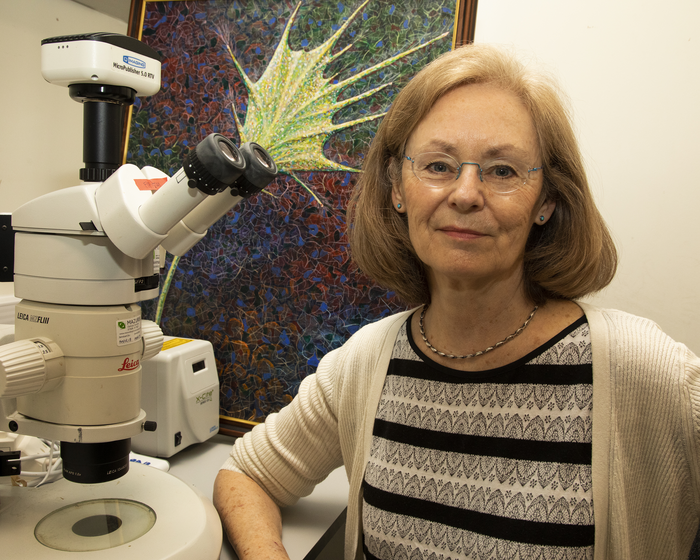
Professor Christine Holt shares the award with two other neuroscientists, Professor Erin Schuman at the Max Planck Institute for Brain Research, and Professor Michael Greenberg at Harvard Medical School.
A profound aspect of our nervous system is that during development and adulthood our brains are subject to extensive change, known as neural plasticity. Collectively, the scientists have made significant advances in unveiling the cellular and molecular mechanisms that enable the brain to develop, and to restructure itself in response to external stimuli as it adapts, learns, and even recovers from injury.
“Receiving the Brain Prize is an honour beyond my wildest dreams, and I’m absolutely delighted. It’s an incredible recognition of the work that we have been doing over the last forty years,” said Christine Holt, Professor of Developmental Neuroscience in the Department of Physiology, Development and Neuroscience at the University of Cambridge.
The Brain Prize, which is considered the world’s most significant prize for brain research, includes approximately €1.3 million to be shared by the three recipients. The prize is awarded annually by the Danish Lundbeck Foundation to researchers who have made highly original and influential discoveries in brain research.
“Our work has revealed the surprisingly fast and precise mechanism by which brains ‘wire-up’ during development, and actively maintain their wiring throughout life,” said Holt.
She added: “This provides key insights into the causes of neurodevelopmental and neurodegenerative diseases. Fundamental knowledge of this sort is essential for developing clinical therapies in nerve repair.”
The brain is an extraordinarily complex organ made up of billions of individual cells – called neurons – that are wired together in very precise ways. This organisation underlies our ability to sense and interact with the outside world.
If the brain wiring connections fail to form, or form incorrectly, then serious neurological deficits may result – such as blindness. Similarly, if the connections fail to be maintained, as occurs in many neurodegenerative diseases – such as dementia – then important neurological function may be lost.
Holt’s work on the developing brain revealed that each neuron sends out a long ‘wire’ – called an axon – that navigates a remarkable journey to its own specific target in the brain. When an axon first grows out from a neuron it is tipped with a specialised growth cone, which finds its way using guidance cues – much like reading signposts along a road.
Holt found that an important aspect of this navigation system is the autonomy of growth cones in reading and responding to guidance cues. The growth cone contains all the machinery necessary to make the new proteins the axons need to steer along the right pathway. She also found that proteins are continuously made in our axons every day – an important process enabling the developing and adult brain to be shaped by experience.
Other laboratories around the world are now looking at how mutations in these proteins affect the growth and survival of axons. The hope is that new therapies can be developed for treating neurodevelopmental and neurodegenerative diseases.
“It is such a great honour to share the prize with Erin Schuman and Mike Greenberg. Their beautiful work has been an inspiration to me over the years. It’s been an exciting journey of discovery that may eventually lead to advances in therapies for neurodegenerative disease and neural repair. Thank you most sincerely to the Lundbeck Foundation,’’ said Holt.
‘‘In order to establish appropriate neural connections during development or to adapt to new challenges in adulthood through learning and memory, brain circuits must be remodeled, and the new patterns of connectivity maintained; processes that require the synthesis of new proteins for those connections,” said Professor Richard Morris, Chair of The Brain Prize Selection Committee.
He added: “The Brain Prize winners of 2023, Michael Greenberg, Christine Holt, and Erin Schuman have revealed the fundamental principles of how this enigmatic feature of brain function is mediated at the molecular level. Together, they have made ground-breaking discoveries by showing how the synthesis of new proteins is triggered in different neuronal compartments, thereby guiding brain development and plasticity in ways that impact our behavior for a lifetime.’’
The Brain Prize is the world’s largest neuroscience research prize, awarded each year by the Lundbeck Foundation. The Brain Prize recognises highly original and influential advances in any area of brain research, from basic neuroscience to applied clinical research. Recipients of The Brain Prize may be of any nationality and work in any country in the world. Since it was first awarded in 2011 The Brain Prize has been awarded to 44 scientists from 9 different countries.
Brain Prize recipients are presented with their award by His Royal Highness, The Crown Prince of Denmark, at a ceremony in the Danish capital, Copenhagen.