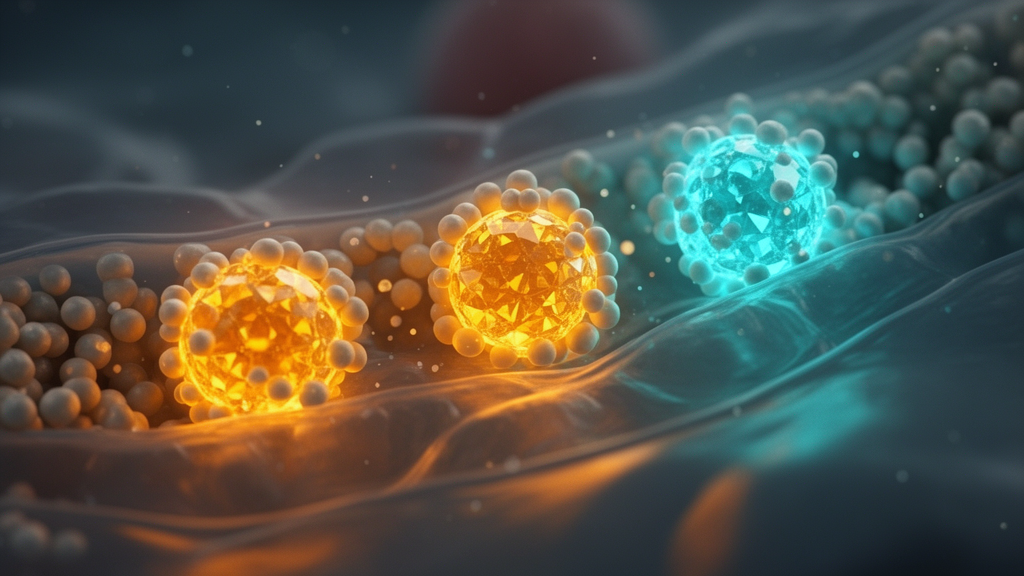
A comprehensive review evaluating cadmium selenide semiconductor quantum dots has established that their diagnostic utility in oncology depends fundamentally on dynamic nano-bio interfacial interactions rather than purely on intrinsic optical and electronic metrics. Published in Chemical Physics Impact, the review conducts an in-depth assessment across literature indexed between January 2000 and August 2026, analyzing how quantum confinement, surface defect chemistry, biomolecular conjugation, and protein corona evolution jointly govern analytical accuracy. The authors highlight that while cadmium selenide quantum dots possess exceptionally narrow emission bandwidths, high quantum yields, broad excitation windows, and strong resistance to photobleaching, clinical translation requires treating these nanomaterials as integrated systems where interface engineering and biological context dictate real-world diagnostic performance.
The physical behavior of cadmium selenide nanocrystals originates from quantum confinement effects that manifest when physical dimensions become comparable to or smaller than the exciton Bohr radius. At the atomic scale, cadmium selenide crystallizes predominantly into either the cubic zinc blende or hexagonal wurtzite polymorphic phases, generating distinct electronic environments and surface energetics across differing facet distributions. Because surface atoms constitute an increasingly substantial fraction of the total crystal volume at nanometer dimensions, localized surface states, lattice strain, dangling bonds, and atomic vacancies exert a profound influence on carrier recombination pathways. Time-resolved photoluminescence decay analyses across nanocrystals measuring 2.20, 3.73, and 6.50 nanometers demonstrate non-monotonic weighted average lifetimes of approximately 5.6, 6.3, and 3.9 nanoseconds, showing that exciton relaxation cannot be predicted solely by particle diameter or simplified quantum-size descriptions.
A critical divergence identified in the review concerns the functional separation between engineering quantum dots as pure fluorescent emitters versus interfacial charge-transfer components. In traditional optical bioimaging, diagnostic utility requires high radiative recombination efficiency alongside minimal spectral drift, intermittency, and blinking phenomena. In contrast, photoelectrochemical biosensing architectures demand that photogenerated electron-hole pairs separate rapidly and transfer across accepting interfaces before radiative or non-radiative recombination can occur. Consequently, surface passivation chemistries optimized solely to preserve high emission intensity can inadvertently diminish photoelectrochemical signal transduction by creating physical barriers that increase electronic tunneling distances, demonstrating that chemical stabilization strategies must be matched explicitly to the operative transduction mechanism.
When entering physiological environments, the biological identity of cadmium selenide platforms is determined primarily by the outermost functional molecular layer rather than the inorganic semiconductor core. Surface functionalization dictates colloidal stability, interfacial charge distribution, and aqueous dispersibility, while providing chemical anchor sites for targeting moieties such as antibodies and peptides. Experimental imaging of unmodified cadmium selenide nanocrystals interacting with Allium cepa roots demonstrates concentration-dependent tissue adsorption and surface accumulation, underscoring how an unpassivated nanocrystal surface drives non-specific interfacial interactions. This emphasizes why engineered polymeric encapsulations, hydrophilic spacers, and controlled ligand shells are essential to prevent spontaneous colloidal instability and unpredictable biointerfacial association under complex physiological conditions.
The review emphasizes that biomolecular conjugation must move beyond conventional coupling efficiency to account for spatial organization, molecular orientation, and target accessibility. While chemical conjugation often relies on covalent coupling, electrostatic attraction, or affinity-based immobilization, increasing the density of anchored bioreceptors frequently produces steric crowding that impairs functional binding. Because biological receptors possess anisotropic binding domains, random immobilization chemistries often mask active binding sites, resulting in reduced analytical sensitivity despite high quantitative ligand attachment. Furthermore, high surface curvature on spherical nanocrystals alters interaction geometries relative to planar substrates, requiring controlled surface spacing and oriented immobilization to maintain target accessibility within crowded molecular environments.
Upon contact with complex physiological fluids such as serum or plasma, engineered nanomaterials spontaneously acquire a dynamic layer of nonspecifically adsorbed biomolecules known as the protein corona. Formed through competitive adsorption involving proteins, lipids, and metabolites, this evolving biological coating alters targeting specificity by physically masking immobilized recognition ligands. Investigations into albumin interactions with water-soluble quantum dots confirm that protein association substantially alters the surrounding molecular interaction network. Consequently, diagnostic evaluations that characterize conjugates only under pristine buffer conditions fail to predict analytical performance in biological matrices, necessitating systematic evaluation of hydrodynamic diameter, background binding, and retained analyte recognition before and after biological matrix exposure.
In photoelectrochemical sensing architectures, cadmium selenide quantum dots serve as light-absorbing and charge-modulating platforms, converting target recognition events into quantifiable photocurrents. Several operational modalities illustrate varying degrees of analytical reliability, including single-output signal suppression, ratiometric readouts, and dual-polarity switching platforms. For example, a metal-organic framework composite combining MIL-101(Cr) with cadmium selenide enabled dual-signal detection of alpha-fetoprotein across a dynamic range of 0.1 to 300 nanograms per milliliter, achieving detection limits of 0.082 nanograms per milliliter in anodic mode and 0.054 nanograms per milliliter in cathodic mode in human serum. Such internally referenced, potential-switchable polarities provide built-in validation checks that significantly reduce analytical false positives compared to traditional single-channel signal-off immunosensors.
Electrochemiluminescent and optical multiplexing configurations expand diagnostic capacity by allowing simultaneous interrogation of multiple oncological markers within unified assays. Electrochemiluminescent systems utilizing cysteine-capped cadmium selenide quantum dots alongside ruthenium complexes on graphene oxide-chitosan matrices achieved simultaneous detection of CA15-3 and CA72-4 with detection limits of 9.2 and 89 micro-units per milliliter and analytical recoveries between 96.5 and 108 percent. Concurrently, optical encoding approaches using cadmium selenide and zinc sulfide core-shell quantum dots embedded within polymer microspheres yielded nine distinct optical codes for a four-marker immunoassay encompassing CA125, CA19-9, CA72-4, and carcinoembryonic antigen, demonstrating how spectrally distinct nanocrystals facilitate high-throughput multiparametric screening.
Optical amplification strategies further improve diagnostic sensitivity by tailoring the local photonic environment surrounding the nanocrystals. By coupling cadmium selenide quantum dots with gold nanorods across an optimized silica spacer of approximately 22 nanometers, researchers achieved a 3.30-fold enhancement in fluorescence intensity relative to isolated quantum dots. Localized electromagnetic fields generated by the metallic nanostructures modify the local density of optical states, selectively accelerating radiative decay rates and band-edge emission while suppressing off-resonant trap-state losses. Complementary synthetic advances, such as microwave-assisted heating, demonstrate rapid and reproducible particle size control, providing the structural uniformity necessary to avoid spectral cross-talk across multiplexed bioimaging panels.
Translating cadmium selenide platforms into clinical utility introduces distinct safety and validation requirements based on the exposure route. For ex vivo circulating serum assays and in vitro biopsy staining, primary constraints involve reagent shelf life, batch reproducibility, matrix interference, and responsible handling of heavy-metal waste streams. Conversely, systemic in vivo imaging requires comprehensive toxicological profiling addressing oxidative degradation, core dissolution, and long-term metal retention. While small rodent models show efficient renal clearance for hydrophilic quantum dots with final hydrodynamic diameters below approximately 5.5 nanometers, primate studies using phospholipid-encapsulated core-shell nanocrystals reveal persistent cadmium accumulation in liver, spleen, and kidneys over 90 days despite the absence of acute histological abnormalities, proving that short-term tolerability cannot substitute for long-term clearance verification.
To accelerate responsible clinical translation, the authors call for strict adherence to standardized reporting and diagnostic validation frameworks. Methodological guidelines such as the Minimum Information Reporting in Bio-Nano Experimental Literature (MIRIBEL) framework should be expanded to include release criteria for finished diagnostic reagents, encompassing between-batch precision, baseline drift, and calibration slope retention. Furthermore, clinical accuracy evaluations must adopt established standards, such as the Standards for Reporting Diagnostic Accuracy Studies (STARD 2015) and TRIPOD+AI guidelines for predictive modeling, ensuring that sensitivity and specificity are benchmarked against blinded patient cohorts and reference gold standards rather than relying solely on record laboratory detection limits.
Subject of Research: Semiconductor quantum dot platforms for cancer biomarker detection and bioimaging
Article Title: CdSe quantum dot platforms for tumor biomarker detection and bioimaging: nano–bio interfaces, signal transduction, and translational challenges
Article References: Owida, H. F. A., Ibrahim Mohammad, S., Vasudevan, A., Priya, G. P., Thakur, K. K., Joshi, V., Saxena, R., Eshmetov, R., Nurislomova, L., & Mohebi, S. (2026). CdSe quantum dot platforms for tumor biomarker detection and bioimaging: nano–bio interfaces, signal transduction, and translational challenges. Chemical Physics Impact, 13, Article 101205. https://doi.org/10.1016/j.chphi.2026.101205
Image Credits: AI Generated
DOI: 10.1016/j.chphi.2026.101205
Keywords: cadmium selenide, quantum dots, tumor biomarkers, bioimaging, photoelectrochemical biosensing, electrochemiluminescence, nano-bio interfaces, protein corona, molecular recognition, multiplex imaging, carcinoembryonic antigen, alpha-fetoprotein, bioconjugation, plasmonic enhancement, nanomedicine translation, analytical validation, toxicology
News Source: Katie Riggs. (November 26, 2026). Cadmium Selenide Quantum Dot Diagnostic Platforms Face Critical Biological Interface Challenges. Scienmag.