Registered nurses caring for severe burn trauma experience a distinct spillover of occupational exposure into their personal domestic routines, marked by high fire-related vigilance and an interconnected triad of sleep disruption, social strain, and coping difficulties, according to an exploratory cross-sectional investigation conducted at a major tertiary referral burn center in Riyadh, Saudi Arabia. Published in the journal Burns Open, the study evaluated the complete eligible nursing workforce of the center to observe how daily clinical immersion in critical burn care corresponds with home routines, psychological boundaries, and personal habits. The investigators observed that heightened vigilance surrounding fire, cooking, and household electrical appliances represented the most intensely endorsed occupational consequence across the staff, operating largely independently of general emotional distress. Simultaneously, self-reported sleep impairment, social life constraints, and maladaptive coping behaviors demonstrated statistically significant co-occurrence, highlighting how institutional and physical job demands penetrate private recovery periods without completely destabilizing interpersonal family foundations.
The investigation was contextualized within the substantial clinical demands of burn treatment in Saudi Arabia, where pediatric scalds, household flame incidents, and complex electrical injuries regularly require protracted inpatient admissions and intensive surgical management at specialized regional referral hubs. Operating as a national referral facility managing complex cases from across the Kingdom, the Riyadh burn center exposes its nursing personnel to severe procedural trauma, labor-intensive wound debridement, rigorous infection-control protocols, and prolonged therapeutic relationships with patients enduring profound physical pain and bodily disfigurement. The study surveyed a total census of forty-seven eligible registered nurses employed for at least one month in the unit, achieving an exhaustive one hundred percent response rate. The demographic composition reflected broader Gulf Cooperation Council healthcare workforce patterns, comprising forty-six female nurses and one male nurse, with roughly twenty percent estimated to be Saudi nationals and the remainder internationally recruited expatriates primarily from South and Southeast Asia. Furthermore, over seventy percent of the cohort worked rotating shift schedules.
To interpret the pathways connecting workplace exposures with off-duty behaviors, the research team drew upon three established psychological frameworks: the Job Demands-Resources model, secondary traumatic stress models, and classical fear-generalization paradigms. Under the Job Demands-Resources perspective, chronic physical and emotional demands deplete cognitive energy and impair nocturnal physiological recovery through a health-impairment pathway, whereas interpersonal and organizational resources buffer against professional burnout via motivational mechanisms. Complementary secondary traumatic stress principles suggest that continuous empathic engagement with suffering patients fosters intrusive thoughts, hyperarousal, and emotional exhaustion that hinder restful sleep and interpersonal engagement outside hospital walls. Finally, the authors incorporated fear-learning theory as an interpretive framework, positing that daily professional immersion in the horrific destructive consequences of fire, scalding fluids, and electrical currents could conceptually extend conditioned caution toward benign household stimuli, prompting nurses to perceive standard domestic heating and cooking apparatuses through a lens of acute hazard awareness.
Because existing psychometric inventories rarely assess home hazard behaviors alongside routine nursing strain, the investigators designed an integrated twenty-five-item online questionnaire structured into six distinct operational sections to minimize respondent burden among active shift workers. The instrument captured demographic profiles, self-reported sleep disruption patterns across six unique items, six dimensions of social and personal functioning, five specific fire-related vigilance behaviors, and seven separate coping mechanisms split into adaptive and maladaptive subscales. Internal consistency analyses demonstrated acceptable reliability for the sleep disruption domain with a Cronbach’s alpha of 0.76, the social impact domain at 0.77, the fire-related vigilance domain at 0.83, and the adaptive coping subscale at 0.72, whereas the three-item maladaptive coping subscale showed lower internal consistency at 0.54. Methodological adjustments were applied to reverse-worded statements and an unintentional administrative duplication of a work-schedule disruption statement was isolated and excluded from primary composite calculations after demonstrating high internal concordance.
Fire-related vigilance emerged as the single most pronounced finding in the investigation, generating the highest domain composite mean of 3.97 on a five-point agreement scale and displaying substantial detachment from general measures of psychological distress. An overwhelming 93.6 percent of surveyed nurses agreed or strongly agreed that they exercised heightened caution when cooking at home, while 89.4 percent reported elevated daily awareness of burn hazards, and 78.7 percent acknowledged double-checking domestic electrical appliances excessively. Affective manifestations were likewise prevalent across the workforce, with 66.0 percent reporting feelings of anxiety when operating burn-risk appliances and 63.8 percent experiencing distinct anxiety around open flames. Despite these prominent behavioral and emotional elevations, vigilance scores did not significantly correlate with sleep disruption, social strain, or coping subscales, indicating that home safety hyper-awareness represents a normative occupational adaptation rather than a clinical indicator of generalized psychiatric impairment or personal decompensation.
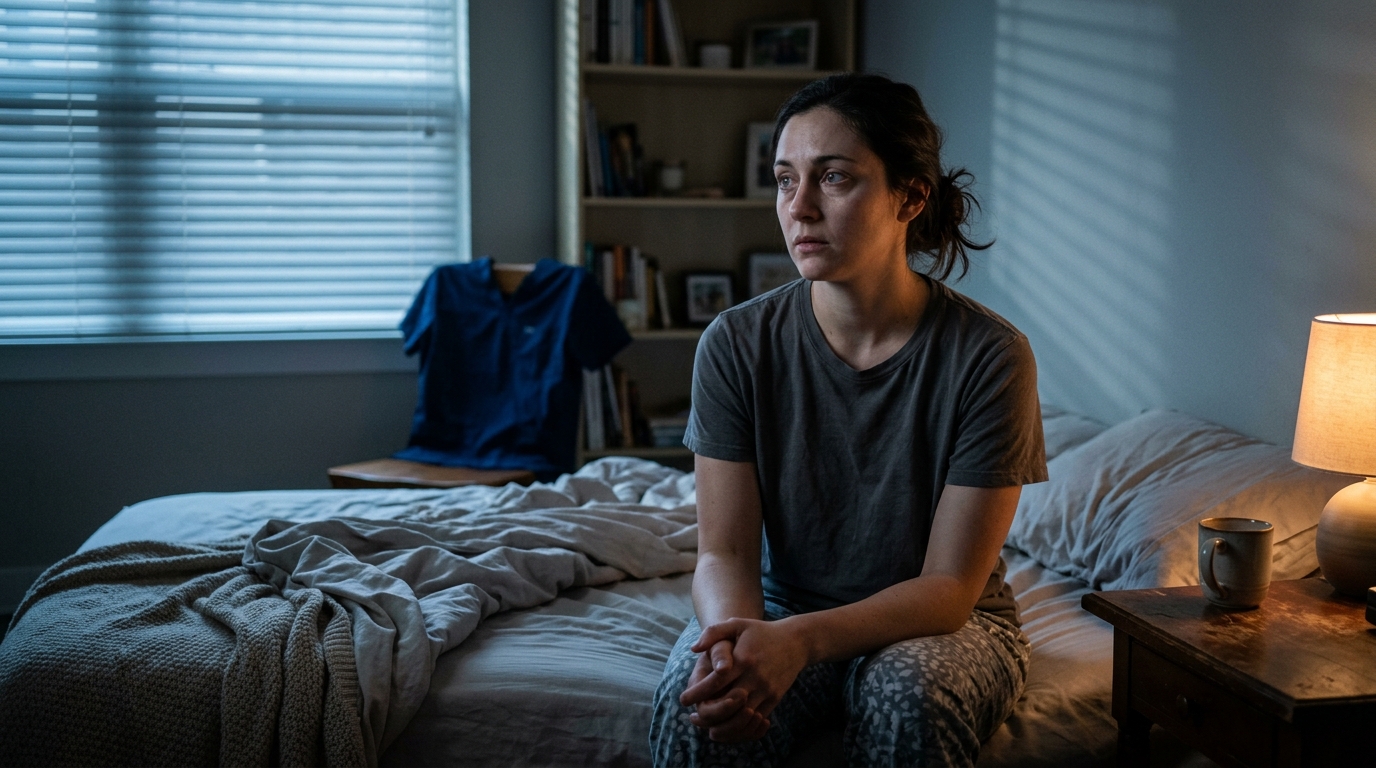
Sleep patterns across the nursing cohort demonstrated widespread subclinical disturbance, characterized by an overall composite mean of 2.86, with work-schedule disruption endorsed by 46.8 percent of participants, sleep-onset difficulties reported by 40.4 percent, and frequent nocturnal awakenings experienced by 34.0 percent. Only 21.3 percent of the nurses agreed that they felt well-rested on most mornings, yet reliance on pharmacological sleep aids remained comparatively low at 17.0 percent, and only 17.0 percent indicated that work-related thoughts actively kept them awake. Notably, exploratory group comparisons indicated that sleep disruption was descriptively greatest among newly appointed nurses with zero to five years of burn-unit experience, averaging 3.10, compared to a mean of 2.36 among senior nurses with eleven or more years of tenure. Although this tenure variance yielded an unadjusted one-way analysis of variance p-value of 0.039, it did not remain statistically significant following false-discovery-rate adjustment using the Benjamini-Hochberg procedure, establishing it as an exploratory hypothesis.
Social and leisure activities exhibited measurable constraints, resulting in a domain composite mean of 2.70, with acute physical and emotional exhaustion causing 40.4 percent of nurses to cancel scheduled social plans and 34.0 percent to report insufficient time or energy for interpersonal engagements. Difficulty articulating the graphic clinical realities of specialized burn care to non-healthcare acquaintances was endorsed by 23.4 percent of participants, suggesting subtle experiential boundaries between hospital shifts and civilian community networks. Nevertheless, these occupational pressures did not manifest as comprehensive relational breakdown: 68.1 percent of participants explicitly disagreed that burn-unit duties damaged their family relationships, and 63.8 percent rejected feeling isolated or interpersonally withdrawn. These observations suggest that while prolonged shifts and emotional fatigue frequently restrict discretionary recreational engagements and personal hobbies, the primary domestic support structures of the workforce remain fundamentally intact and resilient against occupational wear.
Analysis of coping profiles revealed a clear predominance of positive strategies over destructive behaviors, with the four-item adaptive coping subscale averaging 3.44 compared to 2.49 for maladaptive behaviors. Seeking emotional support from family and friends was the most widely endorsed adaptive approach at 66.0 percent, followed by peer and supervisory support at 48.9 percent, while regular exercise and spending time in nature were each endorsed by 44.7 percent of respondents. In contrast, coping through alcohol or substance use was virtually non-existent at 4.3 percent agreement, aligning with cultural prohibitions across Saudi Arabia. Correlation analyses revealed robust statistical linkages among non-vigilance domains: sleep disruption correlated positively with social impairment at r = 0.62 and with maladaptive coping at r = 0.42, while social impact displayed a strong positive correlation with maladaptive coping at r = 0.68 and an inverse relationship with adaptive strategies at r = -0.42.
Qualitative insights extracted from twenty-four substantive open-ended narrative responses complemented the empirical measurements through reflexive thematic analysis, generating four distinct experiential themes that illustrated how clinical realities permeating daily life are perceived by bedside staff. The first theme revealed persistent psychological weight extending beyond hospital gates, with nurses describing intrusive memories and hearing phantom monitor alarms during nighttime rest. The second theme framed heightened safety vigilance as a protective professional transformation, wherein nurses channeled acute hazard awareness into educating relatives and community members on burn prevention and first-aid measures. The third theme captured deep clinical empathy for pediatric and adult suffering during painful wound debridement, which directly amplified domestic anxiety regarding the safety of loved ones around gas cylinders and kitchen appliances. Finally, the fourth theme expressed urgent requests for institutional recognition, enhanced dressing-team staffing levels, mental-health support systems, and scheduling incentives.
Notwithstanding these detailed observations, the study authors underscored substantial methodological limitations inherent to an exploratory, single-center cross-sectional survey design that preclude causal or temporal deductions regarding cumulative trauma. The small sample size of forty-seven participants restricted statistical power to detecting only large effect sizes, and none of the tenure or age comparisons survived rigorous false-discovery-rate correction across twenty-five inferential tests. Furthermore, the cross-sectional format cannot rule out survivor bias or healthy-worker retention effects, wherein nurses vulnerable to chronic sleep disturbances or acute emotional distress may systematically transfer out of high-acuity burn nursing over time. The absence of a matched comparison cohort from intensive care or general medical wards prevents definitive attribution of these behavioral patterns uniquely to burn care rather than hospital nursing generally, highlighting the necessity for prospective multicenter investigations employing standardized psychometric instruments to validate these foundational findings.
Subject of Research: Occupational spillover of burn-unit nursing on sleep, social routines, and fire vigilance
Article Title: Working in a burn unit and nurses' daily-life routines: an exploratory cross-sectional survey at a tertiary referral burn Center in Riyadh, Saudi Arabia
Article References: Alamri, I. S., Al Muabbadi, B., & Janakiraman, K. (2026). Working in a burn unit and nurses' daily-life routines: an exploratory cross-sectional survey at a tertiary referral burn Center in Riyadh, Saudi Arabia. Burns Open, Article 100518. https://doi.org/10.1016/j.burnso.2026.100518
Image Credits: AI Generated
DOI: 10.1016/j.burnso.2026.100518
Keywords: burn unit nursing, occupational health, fire-related vigilance, sleep disruption, shift work, job demands-resources model, secondary traumatic stress, coping strategies, compassion fatigue, Riyadh burn center, Saudi Arabia healthcare, cross-sectional survey, reflexive thematic analysis, work-life balance, nursing workforce, fear generalization, pediatric burn trauma
News Source: Ophelia Keating. (November 28, 2026). Burn Unit Nurses Experience Heightened Home Vigilance and Linked Sleep Strain. Scienmag.