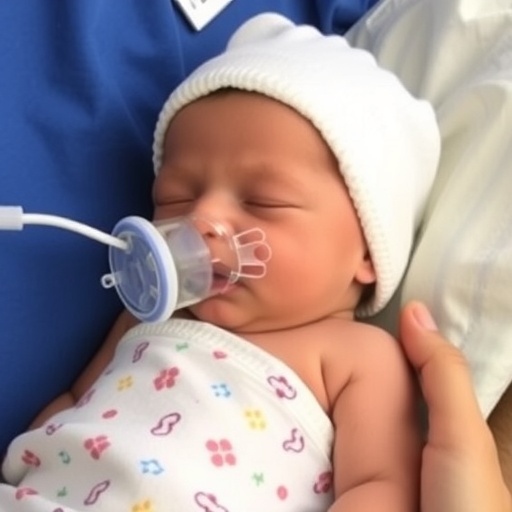
In a groundbreaking study poised to transform neonatal care, researchers have unveiled a pioneering approach that dramatically mitigates the devastating effects of bronchopulmonary dysplasia (BPD) in preterm infants. The novel structured implementation of a bubble continuous positive airway pressure (bubble-CPAP) program promises not only to improve survival rates but also to enhance long-term respiratory outcomes for the most vulnerable newborns. This monumental advancement brings hope to families and clinicians navigating the perilous journey of premature birth complications.
Bronchopulmonary dysplasia remains a pervasive and severe chronic lung disease primarily impacting preterm infants who require respiratory support. Despite significant advances in neonatal medicine, BPD continues to impose long-lasting respiratory morbidity, developmental delays, and even mortality. The condition emerges from a confluence of factors including immature lung development, exposure to mechanical ventilation, and inflammation, which synergistically cause injury to the fragile pulmonary architecture. For decades, neonatal intensive care units worldwide have sought effective respiratory strategies to minimize these insults without compromising oxygen delivery.
The newly developed bubble-CPAP program centers on a non-invasive ventilation technique that provides continuous positive airway pressure through the use of a water column to generate consistent and gentle pressure oscillations. Unlike traditional mechanical ventilation, bubble-CPAP offers a more physiologic stabilization of airway patency, enhancing alveolar recruitment and facilitating better gas exchange. The distinct oscillatory nature of bubble-CPAP also mimics aspects of natural breathing, reducing the risk of ventilator-induced lung injury—a critical consideration in immature lungs that are highly susceptible to damage.
What sets this study apart is its structured, protocol-driven implementation of bubble-CPAP across multiple neonatal intensive care units, emphasizing standardized training, monitoring, and adherence to evidence-based guidelines. The research team meticulously designed the program to ensure consistency in device setup, pressure titration, and patient selection criteria, thereby minimizing variability that often hinders successful respiratory management in real-world settings. This systematic framework proved instrumental in optimizing respiratory support and reducing the incidence of BPD.
Extensive clinical data reveal that infants managed under this structured bubble-CPAP protocol exhibited significantly lower rates of moderate to severe bronchopulmonary dysplasia compared to historical controls receiving conventional respiratory therapies. Beyond the raw statistics, the program demonstrated a remarkable ability to diminish the duration of respiratory support needed and reduce the necessity for invasive ventilation, both of which are closely linked to adverse pulmonary outcomes. These findings suggest a paradigm shift in which non-invasive respiratory modalities take precedence over more harmful interventions.
Delving into the mechanistic underpinnings, the oscillatory pressure waves delivered by bubble-CPAP contribute to improved secretion clearance and reduced airway resistance, thereby decreasing inflammation and tissue injury. This gentle stimulation fosters enhanced surfactant distribution and promotes more uniform lung expansion, crucial determinants of pulmonary function in preterm infants. Moreover, by circumventing the traumatic impact of endotracheal intubation, bubble-CPAP reduces the likelihood of infection and ventilator-associated complications.
The implications of this research extend far beyond neonatal respiratory care. Reduction in BPD incidence translates into fewer chronic respiratory illnesses during childhood and adulthood, with far-reaching improvements in quality of life and decreased healthcare burdens. Families spared from the sequelae of chronic lung disease face less emotional and financial strain, underscoring the societal significance of this intervention. Furthermore, the reproducible nature of the program ensures its scalability and adoption across diverse healthcare settings globally.
One of the remarkable aspects of this initiative is the interdisciplinary collaboration involved, integrating neonatologists, respiratory therapists, nurses, and biomedical engineers. Such synergy allowed for the refinement of device interfaces and the development of robust training curricula, ensuring optimal program delivery. Continuous quality improvement measures embedded within the protocol enabled ongoing assessment and adaptation, fostering a culture of excellence in neonatal respiratory support.
The study also offers critical insights into patient selection criteria, identifying preterm infants most likely to benefit from bubble-CPAP. Parameters such as gestational age, birth weight, and initial respiratory status were systematically evaluated to tailor interventions appropriately. This personalized approach mitigates unnecessary interventions and optimizes resource utilization in busy neonatal care units.
While the results are promising, the authors acknowledge the necessity for ongoing longitudinal follow-up to ascertain long-term pulmonary and neurodevelopmental outcomes. Future studies are encouraged to explore adjunct therapies that may synergize with bubble-CPAP, including pharmacologic agents that modulate inflammation or enhance lung maturation. Additionally, emerging technologies such as real-time respiratory monitoring and artificial intelligence-guided ventilation adjustments hold potential to further refine the approach.
In an era where technological innovation is accelerating at an unprecedented pace, this bubble-CPAP program exemplifies how marrying cutting-edge science with meticulous clinical implementation can yield transformative health benefits. It serves as a beacon of hope amid the challenges posed by preterm birth, a condition that affects millions globally. As neonatal intensive care units embrace this paradigm, the cumulative impact on infant survival and health could be monumental.
The ethical dimension of reducing invasive respiratory support cannot be overstated. By prioritizing non-invasive methods that preserve the integrity of the developing lung, the program aligns with the core principle of “do no harm.” Parental involvement and education were integral to the program’s success, fostering trust and adherence to care protocols. This holistic model exemplifies patient-centered innovation in neonatal medicine.
In summary, the structured implementation of a bubble-CPAP program signifies a major leap forward in the fight against bronchopulmonary dysplasia in preterm infants. Its rigorous design, clinical efficacy, and adaptability herald a new standard of care that could redefine respiratory management paradigms. With widespread adoption, this innovation has the power to rewrite the narrative of prematurity-related pulmonary complications and illuminate the path toward healthier futures for our tiniest patients.
Subject of Research: Structured implementation of a bubble-CPAP program to reduce bronchopulmonary dysplasia in preterm infants
Article Title: Structured implementation of a bubble-CPAP program to reduce bronchopulmonary dysplasia in preterm infants
Article References:
Aly, H., Aziz, H., Nandakumar, V. et al. Structured implementation of a bubble-CPAP program to reduce bronchopulmonary dysplasia in preterm infants.
Pediatr Res (2025). https://doi.org/10.1038/s41390-025-04635-4
Image Credits: AI Generated
DOI: 10.1038/s41390-025-04635-4
Tags: bronchopulmonary dysplasia preventionbubble continuous positive airway pressureimproving survival rates in newbornsinnovative neonatal therapieslong-term respiratory outcomesmanagement of preterm lung diseaseneonatal care advancementsneonatal intensive care strategiesnon-invasive ventilation techniquespreterm infant respiratory supportreducing preterm infant mortalitystructured implementation of bubble-CPAP