A brief hands-on basic life support training intervention significantly improved chest compression performance and provider confidence among individuals who had previously undergone dispatcher-assisted CPR simulation, according to findings from a quasi-experimental follow-up study. The post-training evaluation demonstrated substantial gains in compression depth, full recoil, and high-quality cardiopulmonary resuscitation metrics when participants were re-evaluated six months after their initial simulation trials.
The research addressed a recognized gap in bystander resuscitation care, where dispatcher-assisted cardiopulmonary resuscitation—delivered via telephone or video guidance—frequently yields suboptimal compression quality despite facilitating immediate intervention. Investigators evaluated whether pairing prior dispatcher-assisted CPR exposure with an additional concise training session could overcome these persistent quality limitations.
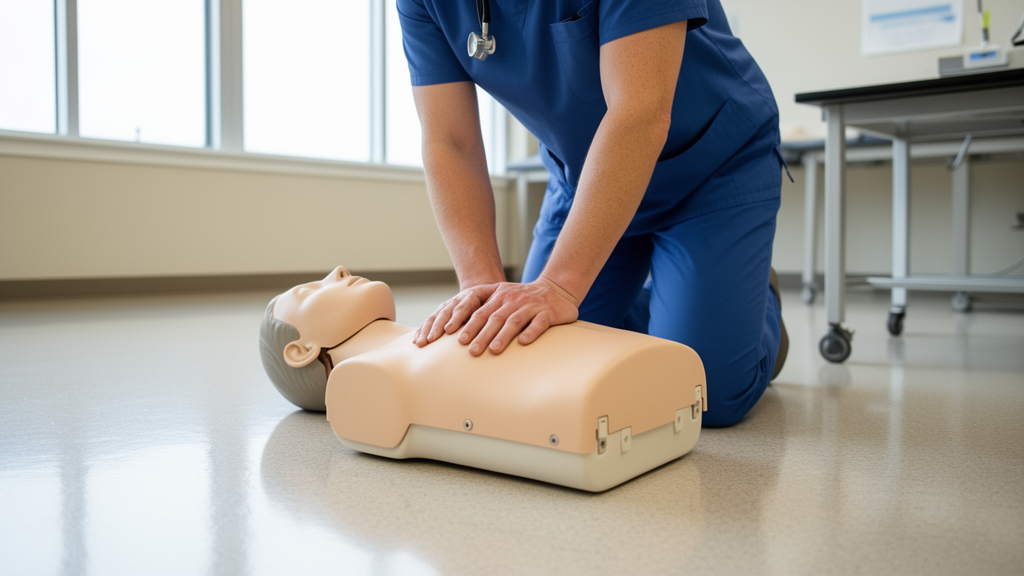
The investigation was structured as a quasi-experimental follow-up trial enrolling 40 participants divided into 20 pairs from an earlier randomized dispatcher-assisted CPR simulation study. All participant pairs had completed an initial baseline assessment during the prior trial. Approximately six months later, following the administration of a brief basic life support training session, the cohort completed a repeat dispatcher-assisted CPR assessment using a sensor-equipped manikin connected to SkillReporter software.
Researchers focused on primary objective metrics of chest compression quality, evaluating compression depth, rate, chest recoil, overall high-quality CPR performance, and high-quality chest compression fraction. Following the educational session, pair-level median compression depth rose from 3.6 centimeters to 5.1 centimeters (p < 0.001), while the proportion of compressions achieving correct depth surged from 1 percent at baseline to 67 percent (p < 0.001). Furthermore, compressions with complete chest wall recoil increased from 85 percent to 95 percent (p = 0.007).
Marked improvements were also documented across broader execution metrics, with the median volume of high-quality CPR compressions increasing from 2 to 507 compressions (p < 0.001) and the high-quality chest compression fraction rising from 0 percent to 57 percent (p = 0.001). Among secondary outcomes, the time required to initiate chest compressions declined from 100 seconds to 74 seconds (p < 0.001), while self-reported participant confidence doubled from a median score of 4 out of 10 to 8 out of 10 (p < 0.001).
In contrast to the improvements in depth and recoil, the researchers observed no statistically significant changes in hand position accuracy or correct compression rate between the baseline and post-training assessments. The authors concluded that brief hands-on basic life support training offers meaningful educational value as an adjunct to dispatcher-assisted programs, demonstrating that even concise subsequent instruction can yield measurable improvements in simulated resuscitation mechanics compared with baseline dispatcher guidance alone.
Subject of Research: Chest compression performance following brief basic life support training
Article Title: Incremental improvement in chest compression performance following brief BLS training after dispatcher-assisted CPR exposure
Article References: Saenpan, K., Thanuk, P., Tangpaisarn, T., Phungoen, P., & Sriphrom, S. (2026). Incremental improvement in chest compression performance following brief BLS training after dispatcher-assisted CPR exposure. BMC Emergency Medicine. https://doi.org/10.1186/s12873-026-01792-5
Image Credits: AI Generated
DOI: 10.1186/s12873-026-01792-5
Keywords: cardiopulmonary resuscitation, basic life support, dispatcher-assisted CPR, chest compression depth, compression recoil, compression rate, compression fraction, bystander CPR, video-assisted CPR, telephone-assisted CPR, SkillReporter, resuscitation simulation, manikin assessment, CPR quality metrics, time to CPR initiation, hand position accuracy, emergency medical dispatch
News Source: Ophelia Keating. (November 11, 2026). Brief CPR Training Improves Compression Quality After Prior Dispatcher Simulation. Scienmag.