In a groundbreaking advancement for both military and civilian infrastructure, researchers have developed state-of-the-art glass windows capable of shielding against electromagnetic pulses (EMPs). These ultra-wideband devices stand as a solution to a growing vulnerability in our increasingly electronic-dependent society. EMPs are high-energy-dimensional electromagnetic radiation beams, capable of incapacitating electrical and electronic systems via sources such as nuclear explosions or high-power EMP devices. The pressing need for effective protective measures against these threats has spurred innovation in EMP-shielded glass technology.
Empirical investigations into EMP shielding have revealed several promising materials, yet a conclusive solution maintaining both transparency and blocking broad spectrum frequencies had remained elusive. Traditional technology often compromises optical clarity to achieve necessary shielding standards, leaving a gap in practical application for transparent structures. However, a team of researchers from Seoul National University of Science and Technology (SeoulTech) and their U.S. counterparts, led by Professor Chang Won Jung, has successfully bridged this gap with their novel creation of EMP-shielded glass using advanced metal mesh films.
Their research, published on December 1, 2025, in “Engineering Science and Technology, an International Journal,” marks a significant milestone in protective technology. The researchers focused on a variety of metal mesh film configurations, including square grids, symmetric hexagons, asymmetric hexagons, cross dipoles, and double square loops. Notably, the asymmetric hexagonal mesh structure emerged as the most effective, providing enhanced shielding against EMPs while maintaining high optical transparency. This design helps safeguard sensitive electronic equipment housed within government facilities, hospitals, and transportation systems without using excessive resources or complex active structures.
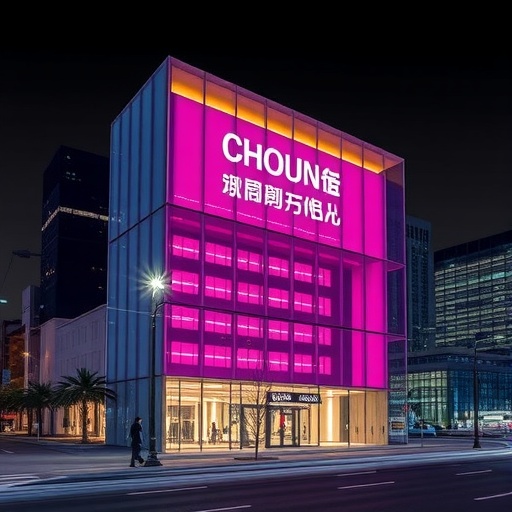
One of the notable aspects of this research is its innovative integration into architectural designs. The proposed EMP-shielded windows operate passively, requiring no external power supplies, which enhances their appeal for practical deployment in modern buildings. Building environments that incorporate advanced technologies frequently attract threats; thus, addressing the security of these infrastructures is paramount. The study emphasizes not only the functionality of these windows but also their aesthetic contribution to architectural design.
Empirical analyses conducted by the team established that their metal mesh-enhanced glass could achieve shielding effectiveness beyond 60 dB for civilian use and upwards of 80 dB for military-grade standards. These benchmarks reveal the glass window’s capabilities in safeguarding vital infrastructures and communication networks from unforeseen electromagnetic disturbances, thus reinforcing its practical utility across various applications.
Prof. Jung highlighted the paramount achievement, noting, “The strong EMP shielding performance across an ultra-wide frequency range while preserving optical transparency illustrates a leap forward. Historically, achieving over 60 dB shielding for civilian use—and 80 dB for military applications—while maintaining transparency has been exceedingly rare.” The dual focus on transparency and protective capability reflects an understanding that security measures need not compromise beauty.
The potential applications for this advanced glass technology are extensive, including in critical environments such as data centers, airports, research facilities, and government establishments. These locations house intricate electronic systems, making them particularly vulnerable to EMP attacks. Integrating this protective technology can vastly improve the resilience of these infrastructures, ensuring operational continuity in the event of electromagnetic hazards.
Additionally, as today’s society leans toward smart technologies and interconnected systems, the implications of employing protective measures over delicate electronic devices can extend to maintaining national security. Buildings designed with these EMP-shielded windows can reflect on a larger scale the balance between contemporary urban architecture and advanced defense strategies. Thus, the proposed technology signifies more than mere glass; it represents a method of fortifying our collective technological future.
Furthermore, this initiative is woven into broader discussions about resilience against invisible electromagnetic threats. As we navigate through an era characterized by dependence on electronics, expanding our understanding of protective measures is imperative. The technology proposed offers a foundational approach to achieving safety against these threats without compromising the visual aesthetic and usability of buildings and structures.
In the long term, the vision laid out by this research team contributes to a more robust infrastructure landscape within urban developments and smart cities. By embedding protective technology seamlessly within architectural frameworks, institutions can achieve an enhanced sense of security while advancing structural integrity. Such innovative approaches underpin the importance of recognizing and responding to evolving threats in our interconnected world.
In conclusion, the novel EMP-shielded glass technology heralds a new frontier in building design and protective measures. This development not only addresses a crucial need for security in our technology-dependent society but does so through a lens of design elegance and efficiency. The collaboration between innovative researchers not only signifies a step forward in engineering but also a commitment to fortifying the future against electromagnetic interference and unforeseen threats.
Subject of Research: Development of EMP-shielded glass windows using metal mesh films
Article Title: Ultra-wideband EMP-shielded glass windows using metal mesh films for civilian and military infrastructure
News Publication Date: 1-Dec-2025
Web References: https://doi.org/10.1016/j.jestch.2025.102235
References: DOI: 10.1016/j.jestch.2025.102235
Image Credits: Chang Won Jung from SeoulTech
Keywords
Electromagnetic pulses, EMP shielding technology, metal mesh films, architectural applications, transparent windows, military technology, civilian infrastructure, electromagnetic interference, smart cities, resilience.
Tags: advanced protective measures against EMPsbreakthrough research in building materialscivilian building safetyelectromagnetic pulse protectionEMP-shielded glass technologyhigh-energy electromagnetic radiation shieldingmetal mesh film innovationsmilitary infrastructure advancementsoptical clarity in shieldingSeoul National University of Science and Technologytransparent windows