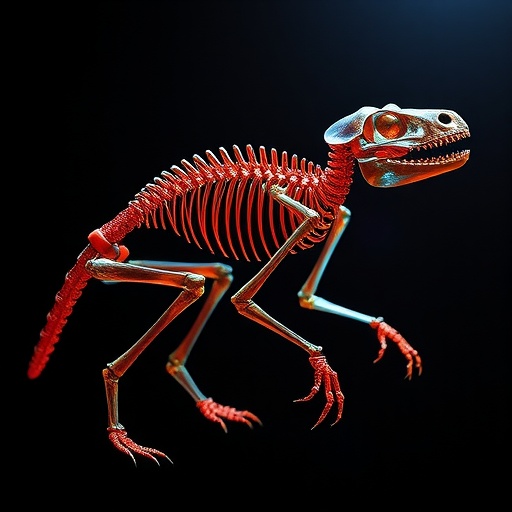
A groundbreaking study from the University of St Andrews has unveiled a pivotal evolutionary development that sheds new light on the genesis of all animals possessing a backbone, encompassing mammals, fish, reptiles, and amphibians. Published in BMC Biology, this research explores an exceptional pattern in gene evolution tied to the origin and diversification of vertebrates, potentially rewriting our understanding of animal complexity.
At the heart of all multicellular life lies a sophisticated network of cellular communication called signalling pathways. These pathways enable cells to coordinate their activities during embryonic development and organ formation. The proteins that operate at the terminal points of these signalling pathways act as critical regulators, akin to traffic controllers guiding cellular responses and managing gene expression precisely. Their functionality underpins not only normal development but also the etiology of numerous diseases, as well as the pharmacological mechanisms of many drugs.
This landmark study focused on the genes encoding these critical signalling output proteins in species representing evolutionary milestones: the invertebrate sea squirt (Ciona), an ancient vertebrate lamprey, and a frog. Sea squirts, as close relatives to vertebrates but lacking backbones themselves, serve as a compelling biological outgroup, allowing researchers to pinpoint the genetic changes that occurred during the transition from invertebrates to vertebrates. Lampreys, among the earliest branches of vertebrates, provide insight into early vertebrate features, helping to localize the evolutionary timing of these modifications.
Employing state-of-the-art long-molecule DNA sequencing, a technology capable of reading lengthy stretches of DNA in single reads, the team achieved unprecedented resolution in characterizing the diverse transcripts arising from individual genes. This approach revealed a previously hidden diversity in the forms of proteins produced from key transcription factor genes involved in intercellular signalling. Notably, this technique had never before been applied to the genes expressed in these critical species, making this study a first in vertebrate developmental genomics.
The analysis revealed a striking increase in isoform diversity — distinct versions of proteins arising from a single gene through alternative splicing and other regulatory mechanisms — in the vertebrate species lamprey and frog compared to the invertebrate sea squirt. This elevated diversity in signalling output proteins is particularly compelling because it implies enhanced complexity and functional versatility in cell communication among vertebrates, likely contributing to their expanded repertoire of cell types, tissues, and organs.
Such complexity in protein isoforms suggests that vertebrates evolved an intricate system at the molecular level for finely tuning cellular outcomes during development. This molecular diversification might have allowed vertebrates to develop novel cell lineages and organ systems, supporting structural and functional innovations including the formation of a backbone, complex nervous systems, and sophisticated immune responses.
Professor David Ferrier, the lead author from the School of Biology at St Andrews, expressed his excitement about the findings. He noted the remarkable distinctiveness of these particular genes compared to others studied, emphasizing that the expanded variety of protein forms might underpin the cellular diversity fundamental to vertebrate biology. This discovery opens new avenues for research into how these protein variants operate differently within developmental processes.
Beyond evolutionary biology, understanding the complexity and regulation of these transcription factor isoforms has major implications for biomedical science. Given that signalling pathways are prime targets in cancer, congenital disorders, and other diseases, insights into isoform diversity could facilitate the development of precision therapies that better manipulate these pathways to restore healthy cellular function.
The study thus bridges a critical gap in evolutionary developmental biology by linking molecular changes to the broader emergence of vertebrate complexity. It provides a molecular narrative explaining how vertebrates evolved the capacity for greater cellular differentiation, which is central to the diversity of form and function observed across vertebrate species today.
The implications extend into the realm of genetic and genomic medicine, where uncovering how alternative splicing and isoform diversity contribute to precise gene regulation may unlock new methods to combat diseases rooted in signalling dysfunction. These findings reinforce the importance of exploring not just the genes themselves but the multi-layered regulatory machinery that governs their expression and resultant protein diversity.
This research underscores the unparalleled power of long-read sequencing technologies in deciphering complex genomic phenomena that were previously elusive with traditional methods. The detailed landscape of isoform diversity depicted by this study sets a precedent for future investigations across a range of organisms and developmental stages.
In summary, by uncovering an evolutionary expansion in the production of diverse protein isoforms specifically in key transcription factors at the invertebrate-to-vertebrate transition, this study provides a profound insight into the molecular evolutions that have shaped the vertebrate lineage. It highlights a crucial element of the evolutionary puzzle explaining vertebrate emergence and paves the way for novel explorations into development, disease, and evolution.
Subject of Research: Cells
Article Title: Long‑read sequencing reveals increased isoform diversity in key transcription factor effectors of intercellular signalling at the invertebrate‑vertebrate transition
News Publication Date: 2-Feb-2026
Web References: http://dx.doi.org/10.1186/s12915-026-02522-w
Image Credits: Shunsuke Sogabe
Keywords: Evolutionary biology
Tags: cellular communication in multicellular organismsembryonic development and gene expressionevolution of vertebrate signaling pathwaysevolutionary biology of vertebratesgene regulation in vertebratesimplications of vertebrate evolution on diseasespivotal discoveries in evolutionary milestonessignificance of signaling pathways in developmentvertebrate ancestor research findingsvertebrate complexity and signaling proteinsvertebrate evolutionary milestones researchvertebrate gene evolution breakthroughs