A groundbreaking new study published in Nature Communications sheds unprecedented light on the intricate web of socioeconomic disparities impacting mortality worldwide over the last three decades. The research, conducted by Peng, Xu, Hales, and colleagues, offers a comprehensive decomposition of cross-country inequalities in death rates attributed to an astonishing 288 causes and 84 associated risk factors from 1990 through 2021. This expansive analysis unveils not only the stark variation in health outcomes tied to economic and social determinants but also the multifactorial nature of mortality inequalities that have persisted or shifted amid rapid global changes.
Mortality inequality between countries has long been recognized as a pressing global health challenge, yet dissecting the precise components that drive these differences has proven complex. The team harnessed advanced statistical methods and large-scale health databases to disentangle how specific causes of death contribute individually and cumulatively to disparities across nations with different socioeconomic profiles. This innovative approach marks one of the most detailed examinations to date, moving beyond aggregate mortality figures to pinpoint the nuanced interplay of cause-specific mortality and risk exposures.
Central to the study’s methodology is the decomposition technique employed to parse overall inequality in mortality rates into contributions from distinct causes and risk factors. By leveraging harmonized global epidemiological datasets spanning over three decades, the researchers could quantify how much variance in death rates was explained by diseases such as ischemic heart disease, respiratory infections, and cancers versus socioeconomic-related risk factors like air pollution, smoking, and unsafe water. This method offers a granular perspective on the drivers of health inequities, enabling targeted policy responses.
One of the study’s most startling revelations lies in the persistence of certain causes of death as disproportionate contributors to inequality between high-income and low-income countries. While some infectious diseases have diminished globally, non-communicable diseases (NCDs) including cardiovascular diseases and diabetes have emerged as dominant forces exacerbating disparities. The epidemiological transition is evident—with risk factors such as obesity and tobacco use contributing heavily to widening mortality gaps, particularly as lifestyle changes accompany economic development.
Equally noteworthy is the identification of emergent risk factors that disproportionately affect lower socioeconomic populations, further entrenching inequality. For instance, exposure to ambient air pollution remains a significant mortality determinant in many low- and middle-income countries, amplifying respiratory illnesses and cardiovascular risks. Unlike high-income countries where regulatory frameworks have reduced pollution levels, populations in emerging economies continue to bear considerable exposure, highlighting an environmental dimension to social inequality.
The scope and resolution of data analyzed enabled a nuanced exploration of how multiple risk factors interact synergistically or additively to influence mortality outcomes. The interplay between nutritional deficiencies, occupational hazards, and unsafe living conditions in under-resourced regions forms a complex matrix of vulnerability. This multifactorial risk landscape complicates public health interventions, underscoring the need for integrated strategies that address overlapping determinants rather than isolated causes.
Temporal trends uncovered by the study reveal both hopeful improvements and daunting challenges. Some causes of death associated with poverty, such as diarrheal diseases and neonatal disorders, have declined substantially, reflecting progress in sanitation, healthcare access, and maternal-child health initiatives. Yet, the rise in mortality from chronic diseases linked to changing socioeconomic conditions presents a dual challenge. Nations are grappling with the double burden of infectious and chronic diseases, which contributes to uneven mortality gains and sustained inequality.
The researchers also probed the role of health system strength and social policies in mediating these inequalities. Countries with robust universal healthcare coverage, comprehensive vaccination campaigns, and social safety nets showed relative resilience against mortality disparities. Conversely, regions plagued by political instability, inadequate infrastructure, and social exclusion experienced exacerbated health inequalities. This finding emphasizes that socioeconomic inequalities in mortality are not merely biological or behavioral phenomena but systemic issues rooted in governance and equity.
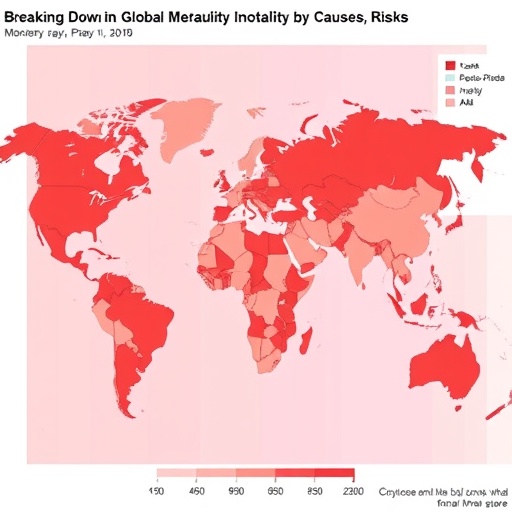
A key contribution of the study is its fine-grained geographic dissection, illuminating regional heterogeneities that are masked in global averages. Sub-Saharan Africa and South Asia, for instance, continue to suffer from high burdens of infectious diseases and maternal mortality, while Eastern Europe and Central Asia face increasing mortality from cardiovascular diseases and alcohol-related conditions. These patterns underscore the localized nature of social determinants and the necessity for tailored interventions aligned with regional disease burdens.
From a methodological perspective, the study sets a gold standard for integrating multidimensional datasets across causes and risk factors. The comprehensive framework developed can serve as a model for future epidemiological investigations seeking to unravel complex health inequalities at scale. Furthermore, the transparency and reproducibility of the analytical pipeline facilitate ongoing monitoring and enable policymakers to track progress toward health equity targets over time.
In the context of the COVID-19 pandemic, which has entrenched and even widened global health inequalities, insights from this extensive decomposition are especially timely. The findings provide actionable intelligence for prioritizing resources and mitigating the disproportionate impacts of current and future health crises on vulnerable populations. Understanding the foundations of pre-existing inequalities is crucial for designing resilient health systems capable of equitable responses.
Moreover, the study’s comprehensive cataloging of 84 risk factors spotlights potentially modifiable determinants of mortality inequality that span environmental, behavioral, and socioeconomic domains. Strategies aimed at reducing tobacco use, improving air quality, expanding vaccination coverage, and enhancing nutrition could yield significant dividends in addressing mortality inequities across nations. These actionable insights equip decision-makers with evidence to craft multifaceted policies aiming for sustainable health improvements.
The longitudinal dimension of the study—from 1990 to 2021—captures the evolution of mortality inequality alongside profound socioeconomic transformations including globalization, urbanization, and climate change. This temporal depth allows for evaluation of past interventions’ effectiveness and identification of emerging threats requiring urgent attention. The ability to disentangle shifting drivers also supports more agile and anticipatory health policy adaptations as global contexts continue to evolve.
Ultimately, the study’s revelations speak to the urgency of integrating health equity as a core principle in global development agendas. The complex mosaic of mortality inequality detailed here reflects the broader social inequalities that permeate societies worldwide. Bridging these gaps necessitates concerted action across sectors—health, environment, education, economy—to foster conditions where health and longevity are attainable regardless of one’s socioeconomic circumstances.
As global leaders convene to discuss post-pandemic recovery and sustainable development goals, this research offers a vital evidence base to guide equitable health investments. By illuminating the specific contributions of diseases and risks to mortality disparities, the study empowers global and national stakeholders to prioritize interventions that promise the greatest impact on reducing health inequalities. The path towards a fairer, healthier future lies in harnessing such rigorous data-driven insights to dismantle longstanding barriers to health equity.
In conclusion, Peng and colleagues’ research transcends traditional epidemiological analyses by providing an unparalleled decomposition of global mortality inequalities with extraordinary resolution and scope. Their findings highlight the dynamic complexity of health disparities shaped by intersecting socioeconomic and environmental factors. As health inequity remains a profound challenge of the 21st century, this study provides both a roadmap and a clarion call for action grounded in comprehensive, scientifically robust evidence.
Subject of Research: Cross-country socioeconomic inequality in mortality analyzed by 288 causes of death and 84 risk factors from 1990 to 2021
Article Title: Decomposition of cross-country socioeconomic inequality in mortality by 288 causes of death and 84 risk factors from 1990 to 2021
Article References:
Peng, D., Xu, R., Hales, S. et al. Decomposition of cross-country socioeconomic inequality in mortality by 288 causes of death and 84 risk factors from 1990 to 2021. Nat Commun (2026). https://doi.org/10.1038/s41467-026-70877-3
Image Credits: AI Generated
Tags: cause-specific mortality analysiscross-country health disparitiesdecomposition of mortality inequalityglobal health inequality researchglobal mortality inequalityhealth outcome disparities by income levellongitudinal mortality study 1990-2021multifactorial mortality risksrisk factors for death ratessocioeconomic determinants of mortalitysocioeconomic disparities in healthstatistical methods in epidemiology