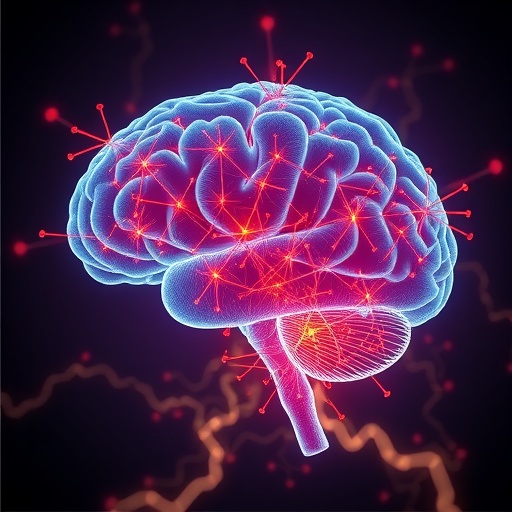
Like a sudden flash illuminating a dark room, each firing neuron in our brain demands an immediate surge of energy—an intrinsic metabolic cost fundamental to brain function. Dr. Bistra Iordanova, an assistant professor of bioengineering at the University of Pittsburgh, has spent much of her career probing the intricate relationship between neural activity and brain metabolism. However, as she delved deeper into the mechanisms underlying brain function across the aging spectrum, she encountered a vexing challenge: the profound complexity of the brain’s metabolic processes and how they shift with age remain largely unexplored. Existing models fell short, and the vast crisscrossing of biochemical pathways defied simple interpretation.
Her search for clarity led to an interdisciplinary partnership with Dr. Liang Zhan, an associate professor of electrical and computer engineering. Together, they embarked on an ambitious journey—one that integrates cutting-edge neuro-metabolic data with sophisticated computational architecture. Their project, funded by a five-year, $3.3 million R01 grant from the National Institutes of Health, aims to unravel a multiscale, mechanistic model of how age-specific metabolic dynamics influence cognition and brain network integrity. This pioneering effort, dubbed “Multiscale Models of Age-Specific Neurometabolic Coupling,” seeks to transcend traditional research paradigms and build a holistic theory explaining the metabolic underpinnings of cognitive aging.
Traditionally, investigations into neurodegenerative diseases such as Alzheimer’s have fixated on amyloid plaques and cerebral blood flow disruptions as pathological hallmarks. While these elements undeniably hold significance, Iordanova and Zhan’s approach is refreshingly granular and comprehensive. Instead of merely observing vascular factors or protein aggregates, they focus on the metabolic substrates—glucose, lactate, creatine—and their fluxes within neuronal circuits, crucial determinants of neuronal health and activity. These metabolites function like currency, fueling synaptic communication and plasticity. However, aging progressively impairs the brain’s metabolic processing capacities, forcing neurons to reconfigure their energy use—a phenomenon not yet fully understood but potentially pivotal to the onset of cognitive deficits.
This metabolic adaptation, or its failure, may be a critical juncture that precipitates dementia. Genetics, lifestyle, and environmental factors contribute varying degrees of vulnerability to such metabolic shifts, implying that personalized metabolic profiles could one day inform therapeutic interventions. But before practical applications arise, a Herculean challenge must be met: analyzing and interpreting the massive, heterogeneous datasets derived from multiple biological scales. Here, the collaboration between Iordanova and Zhan becomes instrumental, blending expertise in experimental neurobiology with advanced computational modeling and graph theory.
The research strategy spans micro to macro realms of brain architecture. At the nanoscale, two-photon microscopy will enable real-time visualization of red blood cell velocity alongside neural activity and lactate dynamics within mouse models exhibiting late-onset Alzheimer’s pathology. This high-resolution method captures the intimate dance between blood supply and metabolic demand, offering insights into cellular-level neurovascular coupling. Scaling up, wide-field imaging techniques will map mitochondrial bioenergetics across cortical networks, charting how energy production propagates spatially and temporally through interconnected neural assemblies.
At the largest scale, the project will incorporate functional magnetic resonance imaging (fMRI) data from both animal models and human subjects to discern whole-brain connectivity patterns influenced by metabolic states. This cross-species, multilevel integration is imperative since structural and functional disparities exist between mouse and human brains. Yet, understanding commonalities in metabolic vulnerabilities that transcend species is key to bridging laboratory findings with clinical relevance.
With the multi-layered empirical data amassed, Dr. Zhan’s proficiency in network science becomes vital. Applying graph theory, he will construct computational models that intertwine cellular metabolism, network topology, and cognitive function. Such synthetic representations allow for simulations of various metabolic perturbations and their cascading effects on neural communication, enabling predictions about disease progression or risk trajectories. Importantly, these models may unearth biomarkers reflecting early metabolic breakdown, preceding overt cognitive symptoms.
Beyond modeling, the collaboration’s translational aspirations shine through. As Iordanova comments, while Alzheimer’s has been “cured” numerous times in mouse models, human clinical reality remains grim. The disconnect underscores the necessity of refining cross-species methodologies to identify conserved metabolic pathways that can inform precision medicine approaches. By dissecting how genetics, sex differences, aging, and metabolism converge, their work aspires to tailor timely interventions mitigating cognitive decline well before irreversible damage accrues.
What’s more, the serendipitous union of an engineering mind and a biological scientist epitomizes the power of interdisciplinary collaboration. Each field’s distinct language and methodologies once posed a barrier, yet the willingness to bridge these divides is proving invaluable for tackling neuroscience’s complex puzzles. Their successful partnership serves as a clarion call for greater integration across scientific domains, highlighting that transformative insights often emerge at disciplinary intersections.
In sum, this monumental endeavor promises to redefine the scientific understanding of brain metabolism’s role in aging and dementia. By meticulously charting the metabolic terrain from cellular machinery to holistic brain networks, the research team aims to illuminate novel pathways for early detection and personalized treatment of cognitive disorders. As metabolic inefficiency emerges as a silent orchestrator of neurodegeneration, decoding its secrets could usher in an era where interventions are no longer reactionary but preemptive, based on an individual’s unique metabolic landscape.
The project also benefits from contributions by co-investigators Alberto Vazquez, Tao Jin, Alex Poplawsky, Nicholas Fitz, and Rebecca Deek, encompassing expertise across bioengineering, medicine, and public health at the University of Pittsburgh. Backed by funding from the National Institute on Aging spanning 2026 to 2030, the endeavor is positioned to break new ground in aging neuroscience and propel forecast-driven neurotherapeutics.
This holistic, data-driven, and interdisciplinary approach represents a paradigm shift, powering a future where metabolic markers become essential diagnostics and metabolic modulation a key therapeutic avenue. As brain energy metabolism is unmasked as both a sentinel and target of neurodegenerative disease, it charts a promising pathway away from symptom management toward root-cause intervention. Through visionary modeling and tenacious collaboration, the brain’s metabolic mysteries may soon illuminate long-sought answers to aging’s greatest cognitive challenges.
Subject of Research:
Neuro-metabolic coupling and brain aging with a focus on metabolism’s role in cognition and Alzheimer’s Disease.
Article Title:
Unraveling the Brain’s Metabolic Code: New Multiscale Models Illuminate Aging and Cognitive Decline
News Publication Date:
Information not provided.
Web References:
https://reporter.nih.gov/search/9TRKgjW2kEWeaQoJls0-CQ/project-details/11116485
https://www.engineering.pitt.edu/people/faculty/bistra-iordanova/
https://www.engineering.pitt.edu/people/faculty/liang-zhan/
References:
Not explicitly provided beyond project and principal investigator links.
Image Credits:
Tom Altany / University of Pittsburgh
Keywords:
Brain metabolism, aging, neurodegeneration, Alzheimer’s Disease, glucose metabolism, lactate, creatine, neurovascular coupling, two-photon microscopy, mitochondrial function, brain network modeling, multiscale computational neuroscience, translational research.
Tags: age-specific neurometabolic couplingbiochemical pathways in brain agingbioengineering in brain researchbrain metabolism and cognitive declinebrain network integrity and metabolismcognitive aging mechanismscomputational models of brain functioninterdisciplinary brain researchmultiscale modeling of brain agingneural activity energy demandneuro-metabolic data integrationNIH-funded neuroengineering projects