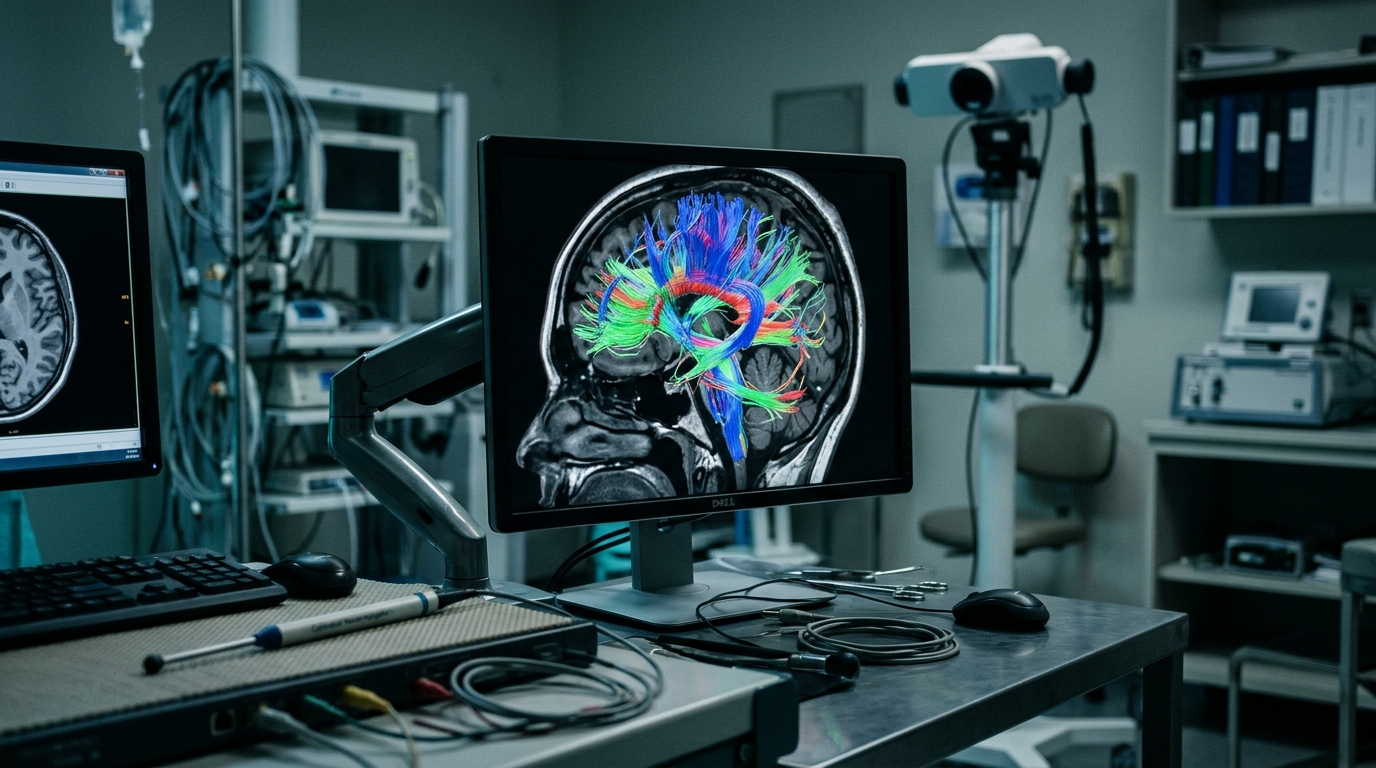
A retrospective cohort study published in the Chinese Neurosurgical Journal demonstrates that stereo-electroencephalography (SEEG) guided radiofrequency thermocoagulation (RF-TC) induces significant alterations in functional connectivity and network properties within the epileptogenic zone. The research, conducted by Danyi Shen, Lanling Zhou, Nianshun Liao, Sixun Yu, Xin Chen, and Haifeng Shu, investigated the electrophysiological mechanisms underlying the therapeutic effects of RF-TC in patients with medically refractory epilepsy. By analyzing resting-state SEEG data before and after the procedure, the team identified specific frequency band changes that correlate with clinical outcomes, offering a potential electrophysiological marker for evaluating treatment response.
The study focused on seventeen patients with focal drug-resistant epilepsy who underwent SEEG monitoring and subsequent RF-TC at the Western Theater Command General Hospital between July 2019 and November 2021. The cohort included eight women and nine men, with a mean age of 26.8 years at the time of the procedure. The researchers selected patients who had at least 15 minutes of SEEG data recorded both before and after RF-TC and completed a minimum of six months of follow-up. This selection process ensured that the analysis captured immediate post-procedural network changes while allowing sufficient time to assess clinical seizure control.
Functional connectivity was estimated using imaginary coherence (iCoh), a metric that minimizes volume conduction artifacts by ignoring zero-time latency signals. The analysis covered five frequency bands: delta (0–4 Hz), theta (4–8 Hz), alpha (8–14 Hz), beta (14–30 Hz), and gamma (30–80 Hz). The researchers defined ‘within-connectivity’ as the mean iCoh between electrode contacts located within the same functional zone, either the epileptogenic zone (EZ) or the non-epileptogenic zone (NEZ). ‘Between-connectivity’ was defined as the mean iCoh between contacts within a designated zone and all other sampled contacts across the remaining brain regions. This approach allowed for a detailed examination of how RF-TC affected local and long-range network interactions.
Graph theory indicators were also employed to characterize network properties, including clustering coefficient, eigenvector centrality, nodal betweenness centrality, and edge betweenness centrality. These metrics provide insights into the structural and functional organization of the brain network. For instance, betweenness centrality identifies nodes or edges that lie on the shortest paths between other nodes, highlighting critical hubs in the network. The analysis utilized an undirected contact-by-contact imaginary coherence matrix, processed using the Brain Connectivity Toolbox and custom Matlab scripts. This comprehensive methodological framework enabled the researchers to quantify both the strength and topology of functional connections before and after RF-TC.
The primary finding was a significant reduction in both within and between connectivity in the alpha band within the epileptogenic zone following RF-TC. Specifically, within connectivity decreased with a p-value of 0.0116, and between connectivity decreased with a p-value of 0.0264. In contrast, no significant changes in functional connectivity were observed in the non-epileptogenic zone in any frequency band.
Graph theory analysis revealed further network-level changes independent of specific brain regions. Across all patients, eigenvector centrality increased significantly in the alpha band after RF-TC (p = 0.0278), while both edge betweenness (p = 0.0154) and node betweenness (p = 0.0122) decreased in the same frequency band. These changes indicate a reconfiguration of the network hierarchy, where certain nodes become more central while the overall path efficiency through specific edges and nodes is reduced. However, when analyzing the epileptogenic and non-epileptogenic zones separately, no significant changes in these graph metrics were observed in the epileptogenic zone. Surprisingly, the non-epileptogenic zone showed a significant increase in eigenvector centrality in both the theta (p = 0.0055) and alpha (p = 0.0463) bands, suggesting a compensatory or maladaptive response in distant brain regions.
The relationship between these network changes and clinical outcomes was also examined. Ten of the seventeen patients showed clinical improvement, defined as at least a 50% reduction in seizure frequency or seizure freedom persisting for a specified duration. In patients who did not improve clinically, within connectivity decreased significantly in both the theta (p = 0.0341) and alpha (p = 0.0439) bands. Additionally, edge betweenness (p = 0.0418) and node betweenness (p = 0.0354) were significantly reduced in the theta band in this non-improvement group. Conversely, in patients who experienced clinical improvement, the clustering coefficient increased significantly in the gamma band (p = 0.0298). This ‘re-clustering’ may reflect a restorative process where the brain enhances local efficiency and functional segregation after the pathological network is disrupted.
A key distinction emerged in the alpha-band within-connectivity of the epileptogenic zone. Patients without clinical improvement exhibited a greater decrease in this metric compared to those who improved (p = 0.0021). This finding suggests that a more pronounced reduction in local connectivity within the epileptogenic zone may be associated with a lack of therapeutic benefit. If the intervention is too localized to sequester the primary epileptogenic core, persistent pathological activity may continue to perturb the global functional architecture, leading to a collapse of network synchrony rather than a therapeutic stabilization.
The alpha frequency band, traditionally associated with maintaining a stable brain state and thalamocortical gating, showed the most significant changes in this study. The reduction in alpha-band connectivity in non-responders indicates a general loss of phase-locking stability, which may characterize a chaotic network state. In contrast, the increase in gamma-band clustering coefficient in responders suggests that successful RF-TC may facilitate a more organized functional segregation, enhancing local information processing. These frequency-specific changes align with previous research indicating that different oscillatory bands play distinct roles in epileptic network dynamics and seizure termination.
The study highlights the potential of functional connectivity and graph theory analysis as tools for evaluating the immediate efficacy of RF-TC. The reduction in alpha-band internal connectivity within the epileptic lesion provides early electrophysiological feedback, serving as a potential indicator for assessing clinical response and prognosis. However, the authors note that the study has limitations, including a small sample size and the focus on short-term effects. The propagation zone and irritative zone, which are part of the broader epilepsy network, were not separately analyzed. Future research with larger cohorts and long-term follow-up is needed to determine whether these network metrics can reliably predict long-term clinical outcomes.
The findings contribute to the growing understanding of RF-TC as a network-level intervention rather than a purely focal lesioning tool. The ability to quantify these changes using resting-state SEEG data opens new avenues for personalized medicine in epilepsy care. As the field continues to evolve, integrating network analysis into clinical practice could enhance the precision and efficacy of minimally invasive treatments for drug-resistant epilepsy.
Subject of Research: Functional connectivity changes after SEEG-guided radiofrequency thermocoagulation in epilepsy
Article Title: Alteration of functional connectivity and network properties after stereo-electroencephalography guided radiofrequency thermocoagulation
Article References: Shen, D., Zhou, L., Liao, N., Yu, S., Chen, X., & Shu, H. (2026). Alteration of functional connectivity and network properties after stereo-electroencephalography guided radiofrequency thermocoagulation. Chinese Neurosurgical Journal, 12(1), Article 9. https://doi.org/10.1186/s41016-026-00428-8
Image Credits: AI Generated
DOI: 10.1186/s41016-026-00428-8
Keywords: epilepsy, radiofrequency thermocoagulation, functional connectivity, graph theory, SEEG, alpha band, neuroscience, clinical outcome, Alteration, functional, connectivity, network
News Source: Kendall Mcintyre. (November 8, 2026). Brain Network Shifts Reveal RF-TC Efficacy in Epilepsy. Scienmag.