In a groundbreaking study published in Nature Communications in 2026, researchers Gao, Gu, Ding, and colleagues have unveiled novel insights into the intricate relationship between brain structure and function, revealing how their coupling evolves across development, influences behavior, and is shaped by genetic factors. This pioneering work provides an unprecedented window into the brain’s organizational principles, establishing a critical link between the physical architecture of neural connections and the dynamic activity patterns that underlie cognition and behavior.
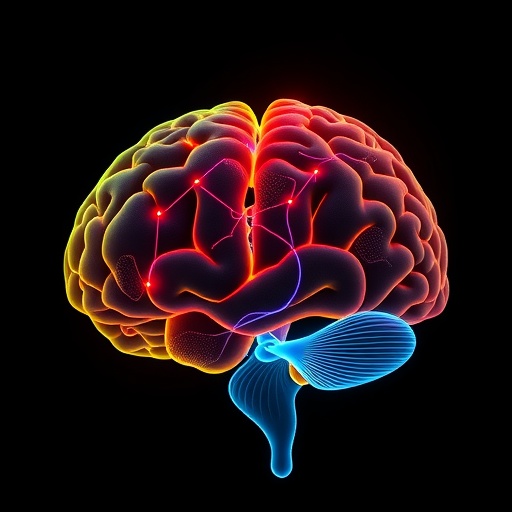
The human brain, an interconnected network of billions of neurons, exhibits complex gradients of both structural and functional attributes. Structural gradients pertain to the physical properties and connectivity strengths among brain regions, while functional gradients map the patterns of synchronized neural activation during rest or task performance. Previously, these two domains were often investigated separately; however, the novel paradigm introduced by Gao et al. emphasizes their coupling—how functional activity patterns align or diverge along structural pathways—to shed light on fundamental neural processes.
This study meticulously charts the developmental trajectory of this functional-structural gradient coupling, showing that as the brain matures from childhood through adolescence into adulthood, there is a progressive refinement in how functional dynamics adhere to underlying structural scaffolds. Early in life, functional organization exhibits more diffuse and less spatially coherent patterns relative to the stringent anatomical wiring. Over time, however, functional connectivity increasingly respects the brain’s physical infrastructure, reflecting a finely tuned optimization process driven by learning and maturation.
Central to this discovery is the application of advanced neuroimaging methodologies, including high-resolution diffusion tensor imaging (DTI) and resting-state functional magnetic resonance imaging (rs-fMRI). These techniques allowed the authors to derive continuous gradients that capture subtle shifts in white matter integrity and functional synchronization along spatial axes spanning the cortex. By employing cutting-edge computational modeling, the study quantifies the degree of congruence between gradients derived from each modality, effectively mapping a functional-structural coupling index across development.
An intriguing dimension of the research lies in its behavioral correlations. The authors demonstrate that individuals exhibiting stronger alignment between functional and structural gradients tend to perform better on cognitive tasks related to executive functioning, memory, and social cognition. This finding implies that the maturation of this coupling is not merely an epiphenomenon but may underpin the emergence of complex cognitive abilities by facilitating efficient communication among brain regions.
Further enriching the study, genetic analyses revealed that the observed coupling patterns are substantially heritable, suggesting that genetic variation plays a significant role in shaping the brain’s architecture-function interplay. By integrating genomics data with neuroimaging metrics, the researchers identified specific gene clusters implicated in neurodevelopmental pathways and synaptic plasticity mechanisms, underscoring the biological underpinnings of gradient coupling. This genetic linkage opens new avenues for understanding individual differences in brain network organization and the genetic basis of neuropsychiatric disorders.
The implications of this work stretch beyond basic neuroscience, offering potential applications in personalized medicine. Given that altered functional-structural coupling has been implicated in conditions ranging from autism spectrum disorder to schizophrenia, mapping these gradients in patients could contribute to early diagnosis, prognosis, and targeted intervention strategies. Tailoring treatments based on an individual’s unique brain gradient profile might markedly improve outcomes in neurodevelopmental and neurodegenerative diseases.
Methodologically, the authors’ multifaceted approach sets a new standard in integrative neuroimaging research. Combining diffusion and functional imaging data with behavioral phenotyping and genomic profiling in large cohorts represents a formidable technical challenge, surmounted through rigorous harmonization protocols and sophisticated statistical models. This holistic strategy enabled the study to capture the complexity of brain organization at multiple biological scales, providing a comprehensive framework for future explorations.
The findings also resonate with developmental neurobiology theories positing that the brain’s form and function co-evolve through experience-dependent plasticity mechanisms. The progressive alignment of functional gradients to structural frameworks observed in this study may reflect the brain’s self-organizing principle, wherein repeated neural activity sculpts white matter pathways and vice versa. This bidirectional interplay likely facilitates the fine-tuning of cognitive abilities and behavioral repertoires throughout life.
Moreover, the study highlights regional heterogeneity in gradient coupling patterns. While primary sensory and motor areas exhibit relatively stable and high coupling across development, association cortices involved in higher-order functions show more dynamic changes. This spatial variability aligns with hierarchical processing models of the brain and illuminates how distinct cortical circuits mature differentially to support complex integrative tasks.
Intriguingly, environmental factors and experience-dependent inputs may modulate gradient coupling alongside genetic influences, although this aspect warrants further investigation. The authors speculate that enriched environments, educational interventions, or even specific training regimens might enhance the functional-structural alignment, thereby boosting cognitive performance. These insights suggest exciting prospects for neuroplasticity-oriented therapies.
The research team also delved into cross-species comparisons, noting that some gradient architectures and coupling dynamics appear evolutionarily conserved, while others exhibit human-specific features linked to advanced cognitive capacities. Such comparative analyses offer critical clues about the neural substrates underlying uniquely human traits like language and abstract reasoning, highlighting the broader evolutionary context of brain organization.
On a technical note, the quantification of gradient coupling employed metrics derived from manifold learning algorithms, which reduce complex connectivity data into low-dimensional gradient spaces. This innovative application of machine learning facilitates the extraction of meaningful continuous gradients that capture the brain’s spatial organization better than traditional discrete parcellation schemes. This methodological advance opens new frontiers in connectomics and computational neuroscience.
The study’s sample included a large, developmentally diverse cohort drawn from population-based datasets, ensuring robustness and generalizability of the findings. Longitudinal analyses further supported causal interpretations, evidencing how individual trajectories in functional-structural coupling predict changes in cognitive and behavioral outcomes over time. Such prospective designs are crucial for disentangling developmental mechanisms from cross-sectional associations.
As the field moves forward, integrating multimodal gradient analyses with cellular-level data and neurochemical profiling could provide even deeper insights into the neurobiological substrates of brain function. The framework proposed by Gao et al. thus lays the groundwork for multiscale integrative neuroscience that bridges molecular, cellular, and systems levels, ultimately enriching our understanding of the human brain’s complexity.
In sum, this landmark study reframes our conception of brain architecture by emphasizing the pivotal role of gradient coupling in development, behavior, and genetics. By revealing how functional dynamics map onto structural networks in a continuous, graded fashion, the research unifies disparate strands of neuroscience into a cohesive model. Its innovative approach and far-reaching implications promise to catalyze new research trajectories and inspire novel clinical applications, heralding a new era in brain science.
Subject of Research: Brain functional-structural gradient coupling and its relation to development, behavior, and genetics.
Article Title: Brain functional-structural gradient coupling reflects development, behavior and genetic influences.
Article References:
Gao, S., Gu, Z., Ding, S. et al. Brain functional-structural gradient coupling reflects development, behavior and genetic influences. Nat Commun (2026). https://doi.org/10.1038/s41467-026-71719-y
Image Credits: AI Generated
Tags: adolescent brain developmentbrain behavior genetics linkbrain gradient couplingbrain maturation and connectivitycognitive function and brain architecturedevelopmental changes in brain connectivitydynamic brain activity patternsfunctional gradients in neurosciencegenetic influences on brain structureneural connectivity developmentstructural gradients in brain networksstructural-functional brain relationship