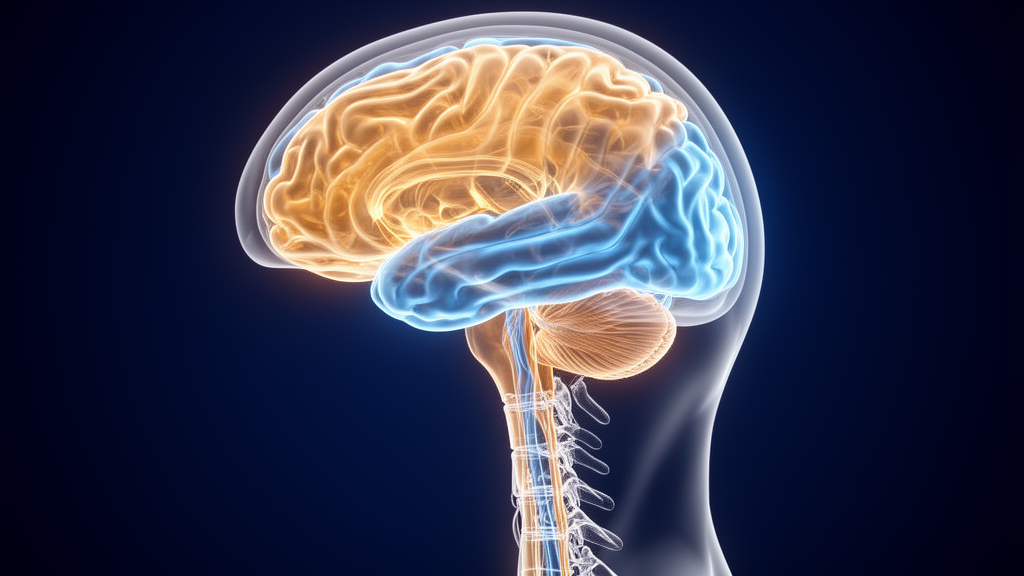
A new study published in BMC Medical Imaging reports that patients with mild to moderate chronic low back pain (cLBP) exhibit increased resting-state brain entropy (BEN) in several key regions associated with pain processing. The research, led by Yi Lin and colleagues, utilized resting-state functional magnetic resonance imaging (rs-fMRI) to examine neural pathophysiological mechanisms in a cohort of 49 cLBP patients and 31 healthy controls. By analyzing both local brain activity and distant network connectivity, the team aimed to characterize aberrant neural activity in individuals with milder forms of the condition, an area that has been insufficiently addressed in previous neuroimaging literature.
The participants included 22 males and 27 females in the patient group, with ages ranging from 37 to 75 years, while the healthy control group consisted of 13 males and 18 females, aged between 35 and 72 years.
Using BEN analysis, the researchers found that cLBP patients displayed significantly elevated entropy in specific brain regions, including the thalamus, midcingulate cortex (MCC), cerebellum, postcentral gyrus, and lingual gyrus. These findings were statistically significant, with voxel p-values less than 0.005 and cluster p-values less than 0.05 after GRF correction.
Further analysis revealed that the increased BEN in the midcingulate cortex was positively correlated with anxiety scores among the patients. The spatial pattern of these BEN differences showed significant convergence with a large-scale meta-analytic pain map derived from Neurosynth, reinforcing the relevance of the identified regions to the broader pain network and validating the findings against established neuroimaging data.
In addition to local activity, the study employed seed-based functional connectivity (FC) analysis to examine how different brain regions communicate with one another. When seeding the analysis in the right thalamus, the researchers observed reduced connectivity with the cerebellum and parahippocampal gyrus in cLBP patients compared to healthy controls.
To assess the diagnostic potential of these neural markers, the team evaluated the capability of both BEN and FC features to distinguish cLBP patients from healthy controls using machine learning algorithms. Both sets of features effectively classified the two groups, suggesting that the observed brain entropy and connectivity changes could serve as potential biomarkers for the condition.
The researchers also conducted gene expression analysis to explore the molecular correlates of the observed BEN alterations. Gene enrichment analysis indicated that the spatial gene-expression pattern associated with the BEN abnormalities was enriched for the MAPK signaling pathway and the regulation of monoatomic ion transport.
The study concludes that BEN is a potential biomarker of localized neural dysregulation in mild to moderate cLBP, characterized by heightened regional entropy, disrupted thalamo-cerebellar connectivity, and significant emotional comorbidity.
Subject of Research: Neuroimaging analysis of brain entropy and connectivity in chronic low back pain
Article Title: Increased resting-state brain entropy (BEN) in mild to moderate chronic low back pain
Article References: Lin, Y., Wang, L., Hu, H., Jia, Y., Zhang, L., Chang, D., Liu, P., Song, D., Wang, Z., Ding, Z., & Yu, L. (2026). Increased resting-state brain entropy (BEN) in mild to moderate chronic low back pain. BMC Medical Imaging. https://doi.org/10.1186/s12880-026-02877-0
Image Credits: AI Generated
DOI: 10.1186/s12880-026-02877-0
Keywords: chronic low back pain, brain entropy, functional connectivity, neuroimaging, fMRI, pain processing, biomarkers, thalamus, midcingulate cortex, MAPK signaling, Increased, resting-state
News Source: Cassandra Pierce. (November 10, 2026). Brain Entropy Markers Identified in Mild Chronic Back Pain. Scienmag.