In a groundbreaking advancement poised to revolutionize assistive technology for individuals with severe paralysis, researchers have demonstrated that a person with amyotrophic lateral sclerosis (ALS) can now communicate, work, and navigate the digital world independently using a brain-computer interface (BCI) directly from their home. This innovative system, detailed in a recent Nature Medicine publication, transcends the traditional confines of laboratory settings, enabling practical, long-term use without the constant presence of researchers.
Developed through a collaborative effort between UC Davis, Brown University, and the Mass General Brigham Neuroscience Institute, the BCI system integrates sophisticated decoding algorithms capable of translating neural signals into text via speech BCI and facilitating precise cursor control via movement BCI. This dual-functionality framework empowers users with full personal computer interaction, dramatically enhancing accessibility and independence.
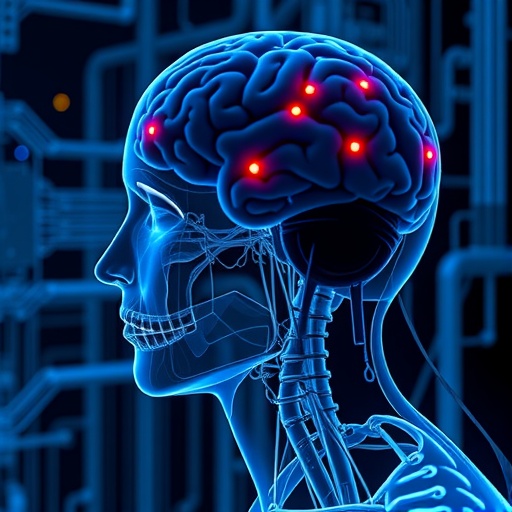
The core mechanism behind this technology hinges on intracortical microelectrode arrays surgically implanted into the brain region responsible for speech coordination, specifically the left precentral gyrus. These arrays capture high-resolution neural activity through 256 electrodes, making it possible to decode attempted speech and motor commands with unprecedented accuracy and speed. The system thus bridges the gap between neural intention and digital communication.
Historically, brain-computer interfaces have operated primarily within tightly controlled research environments, requiring expert intervention for setup and operation. This new study marks a critical shift, overcoming the barriers of autonomous at-home use and sustained performance reliability. The interface maintained stable, accurate function for nearly two continuous years, underscoring its robustness for daily living.
Casey Harrell, a 47-year-old man living with ALS-induced tetraparesis and severe dysarthria, serves as the study’s pioneering participant. Since the surgical implantation of the BCI device in 2023, Harrell has independently operated the system for over 3,800 hours. During this time, he communicated more than 183,000 sentences, comprising nearly two million words, with an average typing speed of 56 words per minute—a landmark achievement in neural speech decoding.
The system’s remarkable 99% word accuracy was consistently maintained even during periods of faster speech attempts. Harrell’s subjective feedback reflected a 92% satisfaction rate with sentence accuracy, emphasizing the technology’s efficacy in capturing naturalistic communication. By leveraging both speech decoding and cursor navigation, Harrell interacts with emails, web browsers, and messaging platforms, effectively reclaiming digital autonomy despite paralysis.
This research signifies a profound transformation in the assistive device domain. According to co-principal investigator and neurosurgeon David Brandman, the success of this system represents a threshold crossed in clinical neuroscience, where BCIs transition from experimental setups to practical tools enhancing quality of life for patients. Brandman’s role in both the surgical implantation and ongoing trial oversight cements the translational impact of this work.
Co-senior author Sergey Stavisky highlighted continuous improvements crucial to the system’s usability. Initially, Harrell required researcher assistance to operate the neuroprosthesis, but iterative refinements now allow for seamless, independent use. This progression underscores the potential for clinical adoption of BCIs as standard assistive technologies for individuals with speech and motor impairment.
Lead author Nicholas Card emphasized the technology’s reliability under real-world conditions. Harrell’s ability to engage in extended communication sessions exceeding 12 hours exemplifies the system’s robustness and user-friendliness. This real-time operation in a home environment starkly contrasts with the tailored, supervised settings most BCIs currently necessitate, paving the way for broader dissemination.
Beyond immediate communication gains, the continuous brain recordings amassed during this trial, totaling thousands of hours of single-neuron resolution data, offer unprecedented opportunities for neuroscientific inquiry. Researchers aim to leverage this extensive dataset to deepen understanding of how the human brain encodes speech, ultimately informing the development of next-generation neural interfaces with enhanced functionality.
The BrainGate2 clinical trial, spearheaded at UC Davis with Brandman as the principal investigator, is actively recruiting participants, signaling ongoing efforts to refine and expand the applicability of intracortical BCIs. The dedication of trial participants like Harrell is acknowledged as fundamental to the advances achieved to date, highlighting a collaborative paradigm between patients and scientists.
This work opens a promising horizon for those affected by ALS, spinal cord injuries, and other debilitating neurological disorders. By restoring natural communication and enabling full computer control, intracortical BCIs may soon become transformative tools that restore autonomy and enrich lives, altering perceptions of disability and technological potential.
Collectively, this study represents a milestone in neural prosthetics and clinical neuroscience, demonstrating that sustained, accurate, and independent use of an implanted brain-computer interface is not only feasible but remarkably effective. Its implications for medical technology, patient care, and neuroscience research are profound and far-reaching.
Subject of Research: Brain-computer interface enabling long-term independent communication and cursor control for individuals with severe paralysis
Article Title: Long-term independent use of an intracortical brain–computer interface for speech and cursor control
News Publication Date: 15-Jun-2026
Web References:
https://www.nature.com/articles/s41591-026-04414-6
Image Credits: Regents of the University of California, Davis
Keywords: Neurology, Prosthetics, Neural prosthetics, Neurological disorders, Amyotrophic lateral sclerosis
Tags: assistive technology for paralysisbrain-computer interface for ALSdigital accessibility for disabledhigh-resolution neural activity recordinghome-use brain-computer systemindependent communication for ALS patientsintracortical microelectrode arraysleft precentral gyrus brain implantlong-term brain-computer interface usemovement control via BCIneural signal decoding algorithmsspeech decoding brain-computer interface