If you reward a monkey with some juice, it will learn which hand to move in response to a specific visual cue – but only if the cerebellum is functioning properly. So say neuroscientists at the University of Pittsburgh School of Medicine and Columbia University, who recently published findings in Nature Communications that show the brain region plays a crucial role in reward-based learning.
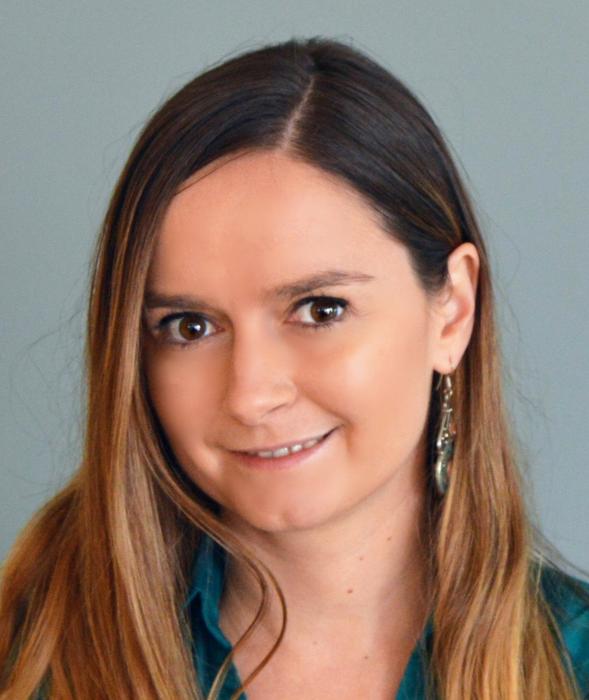
Credit: Andreea Bostan
If you reward a monkey with some juice, it will learn which hand to move in response to a specific visual cue – but only if the cerebellum is functioning properly. So say neuroscientists at the University of Pittsburgh School of Medicine and Columbia University, who recently published findings in Nature Communications that show the brain region plays a crucial role in reward-based learning.
The cerebellum, which lies at the base of the skull behind the junction of the larger cerebrum and spinal cord, is well known for its role in regulating movement, balance and coordination, said co-lead investigator Andreea Bostan, Ph.D., research assistant professor in Pitt’s Department of Neurobiology. Although it accounts for about 10 percent of the brain’s mass, the cerebellum contains nearly 80 percent of the brain’s neurons.
“A longstanding assumption about cerebellar function has been that it only controls how we move. However, we now know that there are parts of the cerebellum that are connected and appear to have evolved along with areas of the cerebrum that control how we think,” Bostan said. “Because the cerebellum uses information about errors to gradually refine movement, another assumption has been that it likely contributes to cognitive functions in a similar way.”
To better understand the role of the cerebellum in cognition, members of the team trained monkeys to move either their left or right hand depending on what image they see on a screen. They get a sip of juice if they act correctly, eventually learning to associate specific visual cues with the appropriate movement to get a reward.
The research team identified the portion of the cerebellum that is interconnected with a region of the prefrontal cortex known to be involved in the learning new visuomotor associations. In a previous study, co-lead investigator Naveen Sendhilnathan, Ph.D., of Columbia University showed that in this posterior lateral region of the cerebellum, the activity of neurons called Purkinje cells changes to reflect the process of learning visuomotor associations according to reward outcomes. To find out if this region contributes to learning, monkeys received before performing the tasks either a saline placebo or a drug that temporarily blocked the activity of the posterior lateral cerebellum.
When presented with a symbol that they had already learned to associate with a certain movement, the monkeys correctly performed the task. If given saline, the monkeys could learn a novel visual-motor association after 50-70 tries. But when they got the blocking agent, they struggled to learn the new association, even if the same symbol was repeatedly shown until they got it right and were rewarded.
So “when you inactivate this cerebellar region, you impair new learning,” Bostan said. “It’s much slower, happens over many more trials, and the performance does not get to the same level. This is a concrete example of the cerebellum using reward information to shape cognitive function in primates.”
She added that posterior lateral cerebellum inactivation didn’t cause changes in how the movements were performed, and inactivation of other cerebellar regions did not impair learning.
“Our research provides clear evidence that the cerebellum is not only important for learning how to perform skillful actions, but also for learning which actions are most valuable in certain situations,” Bostan said. “It helps explain some of the non-motor difficulties in people with cerebellar disorders.”
The study team included Michael E. Goldberg, M.D., of Columbia University, and Peter L. Strick, Ph.D., of the University of Pittsburgh Department of Neurobiology.
This work was supported by the Keck, Zegar Family, and Dana foundations; National Eye Institute grants R24 EY-015634, R21 EY-020631, R01EY-017039, and P30 EY-019007; NIH Office of the Director grant P40OD010996; and National Institute of Neurological Disorders and Stroke grant R01NS113078.
Journal
Nature Communications
DOI
10.1038/s41467-024-46281-0
Article Title
A cerebro-cerebellar network for learning visuomotor associations
Article Publication Date
21-Mar-2024