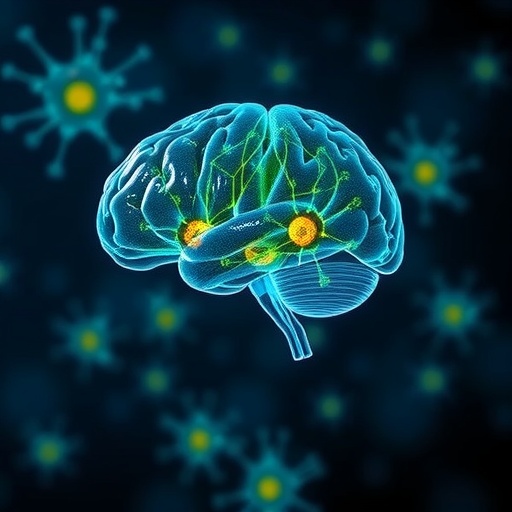
In a groundbreaking study published in the journal Neuron, researchers from The Jackson Laboratory (JAX) and the University of Pennsylvania (UPenn) have uncovered a pivotal neurological mechanism that may redefine our understanding of endurance training. While the conventional view has long held that muscles alone drive improvements in endurance, this new research illuminates the essential role of the brain—specifically, a cluster of neurons in the hypothalamus—in orchestrating the body’s adaptive response to exercise.
For decades, the scientific consensus emphasized the peripheral adaptations of muscles: increased mitochondrial density, enhanced capillary networks, and changes in muscle gene expression were considered the primary drivers of improved stamina. However, the JAX-UPenn team has demonstrated that the activity of particular hypothalamic neurons post-exercise is crucial to these adaptations, effectively acting as a neurological command center that mediates endurance gains.
The neurons in question are located in the ventromedial hypothalamus and are characterized by the expression of a protein known as steroidogenic factor-1 (SF1). Using real-time neuronal activity tracking in mice, the researchers observed a striking pattern: these SF1 neurons exhibited a surge of activation lasting approximately one hour immediately following a running session. This post-exercise neuronal activation was not only consistent but also intensified with ongoing endurance training over several weeks.
Intrigued by these findings, the researchers applied optogenetics—a sophisticated technique that enables precise control of neural activity using light—to manipulate SF1 neuron function after exercise sessions. When the activity of these neurons was artificially suppressed for just 15 minutes after running, the mice failed to exhibit their usual endurance improvements, despite rigorous treadmill training. Conversely, artificially stimulating these neurons post-exercise enhanced endurance gains beyond normal levels, pointing to a causal relationship.
This discovery challenges a key dogma in exercise physiology and neurobiology: that improvements in endurance are solely a result of muscular adaptations to consistent physical effort. Instead, it introduces a model where brain circuits dynamically regulate and possibly initiate the molecular signaling pathways in muscles necessary for endurance enhancement. The neuronal activation seems to act as a critical trigger, modulating gene expression patterns within muscle cells that facilitate structural and metabolic remodeling.
Further investigations revealed that training-induced plasticity occurs not only in muscular tissue but also within the SF1 neuron network itself. The number of synaptic connections among these neurons doubled in exercised mice compared to sedentary controls, suggesting exercise-induced neural remodeling that reinforces their post-run activity. This hints at a feedback loop where endurance training strengthens the neural circuits that, in turn, drive further stamina improvements through peripheral muscle signaling.
The functional importance of this circuit was underscored by voluntary running behavior assessments. Typically, mice will engage in extensive voluntary running on wheels. However, when SF1 neurons were silenced, the animals demonstrated a marked reduction in voluntary exercise. They would briefly engage but lacked the sustained capacity and motivation to continue. This behavioral shift indicates that these neurons may also influence neurological pathways governing motivation and endurance-related decision-making, integrating physiological recovery with behavioral drive.
Molecular analyses showed that blocking SF1 neuron activity impaired the usual upregulation of exercise-responsive genes in muscle tissue. This gene expression is essential to the remodeling processes that enhance oxygen delivery, energy metabolism, and muscle fiber composition—hallmarks of improved endurance capacity. Without the brain’s neural cue, muscle tissue does not initiate these critical transcriptional programs, highlighting the brain’s commanding role in systemic exercise adaptation.
The researchers hypothesize that SF1 neurons serve as a central mediator linking exercise-induced peripheral signals with long-term physiological remodeling. Their activity post-exercise may integrate metabolic cues, stress responses, and hormonal signals to coordinate the body’s comprehensive adaptive strategy. This neural orchestration ensures that muscle tissue remodeling aligns with the body’s broader metabolic state and recovery needs, optimizing endurance enhancements.
Beyond basic science implications, this work points toward exciting translational potential. Targeting the neural pathways activated after physical exertion could open new avenues for therapeutic interventions. For individuals with mobility impairments, chronic diseases, or age-related decline who cannot engage in intensive exercise, modulating this hypothalamic circuit might mimic the benefits of endurance training, preserving muscle function and brain health.
Co-senior author Erik Bloss of JAX emphasized the paradigm-shifting nature of their findings: “The realization that muscle rebuilding requires active participation of specific brain neurons redefines our understanding of how exercise works. It elevates the brain from a passive observer to an essential coordinator in physical conditioning.” The team’s future research aims to elucidate the molecular messengers transmitted by SF1 neurons that influence muscle adaptation and to explore pharmacological or genetic approaches to modulate this system.
Lauren Lepeak, another contributor from JAX, noted the broader implications for neuroscience and metabolism: “This circuit represents a novel integrative node where neural, endocrine, and muscular systems converge to regulate physical performance and adaptation. Understanding this may pave the way for strategies that enhance human healthspan via targeted neural interventions.”
As endurance training remains a cornerstone recommendation for preventing cardiovascular disease, metabolic syndrome, and cognitive decline, uncovering this brain-to-muscle connection offers a transformative perspective. The compelling evidence that hypothalamic SF1 neurons are indispensable for exercise-mediated endurance gains not only challenges existing models but also sparks a new frontier in exercise science, neurobiology, and medicine.
Subject of Research: Animals
Article Title: Exercise-induced activation of ventromedial hypothalamic steroidogenic factor-1 neurons mediates improvements in endurance
News Publication Date: 12-Feb-2026
Web References: http://dx.doi.org/10.1016/j.neuron.2025.12.033
Keywords: Health and medicine, Physical exercise, Neuroscience, Cell biology
Tags: brain cells and endurance trainingbrain-muscle communication endurancecentral nervous system adaptation exercisehypothalamic neurons role in exercisehypothalamus regulation physical performanceneurological command center for enduranceneurological mechanisms of staminaneuronal activation post-exercisereal-time neuronal tracking exerciseSF1 neuron activity runningsteroidogenic factor-1 neurons enduranceventromedial hypothalamus exercise response