• HOME
  • NEWS
  • EXPLORE
    • CAREER
      • Companies
      • Jobs
    • EVENTS
    • iGEM
      • News
      • Team
    • PHOTOS
    • VIDEO
    • WIKI
  • BLOG
  • COMMUNITY
    • FACEBOOK
    • INSTAGRAM
    • TWITTER
Sunday, November 22, 2026
BIOENGINEER.ORG
No Result
View All Result
  • Login
  • HOME
  • NEWS
  • EXPLORE
    • CAREER
      • Companies
      • Jobs
        • Lecturer
        • PhD Studentship
        • Postdoc
        • Research Assistant
    • EVENTS
    • iGEM
      • News
      • Team
    • PHOTOS
    • VIDEO
    • WIKI
  • BLOG
  • COMMUNITY
    • FACEBOOK
    • INSTAGRAM
    • TWITTER
No Result
View All Result
Bioengineer.org
No Result
View All Result
Home NEWS Science News Health

Boundary-Aware Self-Training Improves Semi-Supervised MRI Segmentation Accuracy Across Benchmark Datasets

by
November 21, 2026
in Health, Technology
Reading Time: 2 mins read
0
Boundary-Aware Self-Training Improves Semi-Supervised MRI Segmentation Accuracy Across Benchmark Datasets

Boundary-Aware Self-Training Improves Semi-Supervised MRI Segmentation Accuracy Across Benchmark Datasets

Share on FacebookShare on TwitterShare on LinkedinShare on RedditShare on Telegram

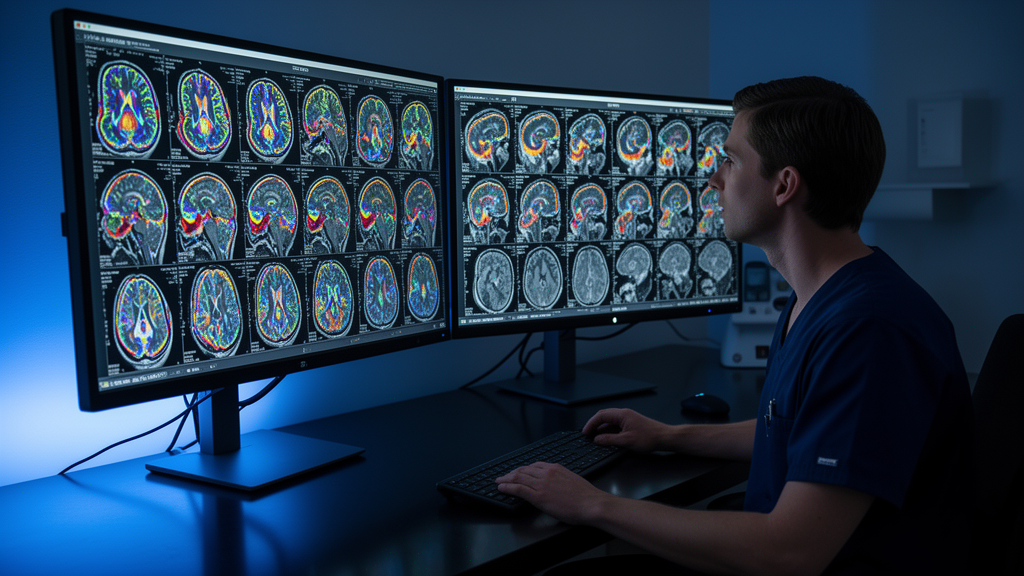
Researchers have introduced a boundary-aware self-training technique designed to improve semi-supervised magnetic resonance imaging segmentation within a bidirectional copy-paste framework.

The study authors characterized this recurring spatial reliability gap as boundary supervision discrepancy. When boundary learning is intensified prematurely, unreliable boundary pseudo-labels pose a substantial risk of amplifying erroneous supervision signals throughout the learning process. An analysis across five existing semi-supervised frameworks revealed that boundary pseudo-label error rates were 2.50 to 9.31 times higher than corresponding foreground-interior error rates, demonstrating that the discrepancy represents a widespread challenge rather than an issue confined strictly to bidirectional copy-paste.

To address this imbalance, the proposed framework employs a structured stabilize-first, emphasize-later design that prevents the amplification of inaccurate boundary supervision. The method stabilizes generated pseudo-labels by merging class-probability predictions from both teacher and student network components. This collaborative prediction step establishes a more dependable baseline before the system progressively increases the contribution of boundary-weighted cross-entropy loss during iterative training.

In addition to stabilizing pseudo-labels, the architecture restricts auxiliary boundary supervision strictly to labeled-source regions.

The researchers validated the approach across three distinct benchmark collections: the Automated Cardiac Diagnosis Challenge dataset, the left atrium dataset, and the PROMISE12 dataset. Performance evaluations examined multiple complementary metrics, including the Dice similarity coefficient, the Jaccard index, the 95th-percentile Hausdorff distance, and average surface distance to track overlap accuracy and boundary precision simultaneously.

Under experimental conditions utilizing 10 percent labeled data on the cardiac challenge benchmark, the proposed technique increased the Dice coefficient from 88.96 percent to 89.84 percent. More notably, it reduced the 95th-percentile Hausdorff distance from 3.84 to 2.49 when compared directly with standard bidirectional copy-paste baseline performance.

Crucially, the system delivered these boundary improvements while leaving the underlying inference architecture completely unchanged.

Subject of Research: Semi-supervised magnetic resonance imaging segmentation and boundary supervision discrepancy

Article Title: Boundary-aware self-training for semi-supervised MRI segmentation with bidirectional copy–paste

Article References: Xiao, L., Xi, Q., & Wang, J. (2026). Boundary-aware self-training for semi-supervised MRI segmentation with bidirectional copy–paste. Biomedical Engineering Letters. https://doi.org/10.1007/s13534-026-00636-2

Image Credits: AI Generated

DOI: 10.1007/s13534-026-00636-2

Keywords: semi-supervised learning, medical image segmentation, magnetic resonance imaging, boundary supervision discrepancy, self-training, bidirectional copy-paste, pseudo-labels, Automated Cardiac Diagnosis Challenge, ACDC dataset, left atrium dataset, PROMISE12 dataset, Hausdorff distance, Dice similarity coefficient, Jaccard index, average surface distance, anatomical boundary segmentation, teacher-student predictions, boundary-weighted cross-entropy

News Source: Ophelia Keating. (November 21, 2026). Boundary-Aware Self-Training Improves Semi-Supervised MRI Segmentation Accuracy Across Benchmark Datasets. Scienmag.


Tags: ACDC datasetanatomical boundary segmentationAutomated Cardiac Diagnosis Challengeaverage surface distancebidirectional copy-pasteboundary supervision discrepancyboundary-weighted cross-entropyDice similarity coefficientHausdorff distanceJaccard indexLeft Atrium datasetmagnetic resonance imagingmedical image segmentationPROMISE12 datasetpseudo-labelsself-trainingsemi-supervised learningteacher-student predictions
Share12Tweet7Share2ShareShareShare1

Related Posts

Illness Perceptions Drive Student Self-Medication in Semi-Rural Nigerian University Study

Illness Perceptions Drive Student Self-Medication in Semi-Rural Nigerian University Study

November 22, 2026
Organ Donor Study Links Fatal Asthma to Widespread Mucosal Immune Dysregulation

Organ Donor Study Links Fatal Asthma to Widespread Mucosal Immune Dysregulation

November 22, 2026

Adding Canakinumab to Chemoradiotherapy Yields Favorable Survival in Stage III Lung Cancer

November 22, 2026

Multitask Vision-Language Model Interprets Ultrasound Cine Loops Across Diagnostic and Surgical Workflows

November 22, 2026

POPULAR NEWS

  • Adding Canakinumab to Chemoradiotherapy Yields Favorable Survival in Stage III Lung Cancer

    Adding Canakinumab to Chemoradiotherapy Yields Favorable Survival in Stage III Lung Cancer

    29 shares
    Share 12 Tweet 7
  • Dual Drug-Device Platform Enables Safe Intraoperative Photodynamic Therapy for Glioblastoma

    29 shares
    Share 12 Tweet 7
  • Multitask Vision-Language Model Interprets Ultrasound Cine Loops Across Diagnostic and Surgical Workflows

    29 shares
    Share 12 Tweet 7
  • Engineered Vaccine Platforms Transform Disease Prevention and Targeted Immunotherapy Across Clinical Applications

    29 shares
    Share 12 Tweet 7

About

We bring you the latest biotechnology news from best research centers and universities around the world. Check our website.

Follow us

Recent News

Illness Perceptions Drive Student Self-Medication in Semi-Rural Nigerian University Study

Organ Donor Study Links Fatal Asthma to Widespread Mucosal Immune Dysregulation

Adding Canakinumab to Chemoradiotherapy Yields Favorable Survival in Stage III Lung Cancer

Subscribe to Blog via Email

Enter your email address to subscribe to this blog and receive notifications of new posts by email.

Join 89 other subscribers
  • Contact Us

Bioengineer.org © Copyright 2023 All Rights Reserved.

Welcome Back!

Login to your account below

Forgotten Password?

Retrieve your password

Please enter your username or email address to reset your password.

Log In
No Result
View All Result
  • Homepages
    • Home Page 1
    • Home Page 2
  • News
  • National
  • Business
  • Health
  • Lifestyle
  • Science

Bioengineer.org © Copyright 2023 All Rights Reserved.