Researchers in Botswana have reported a significant burden of pre-frailty among adults living with HIV who are effectively managed on antiretroviral therapy. The study, published in AIDS Research and Therapy, utilized standardized criteria to assess frailty status in a large cohort of virally suppressed participants. The findings indicate that frailty prevalence was low but pre-frailty was common in this cohort. This observation suggests a critical window for early intervention strategies aimed at preserving healthy aging among people living with HIV in sub-Saharan Africa.
The research was conducted as a cross-sectional study between January 2020 and January 2021 in Gaborone, Botswana. The study population consisted of adults aged 39 years and older who were currently receiving antiretroviral therapy. The investigators focused on a well-managed cohort, specifically those who had achieved viral suppression. By focusing on this specific demographic, the study aims to provide data from a high-performing setting in sub-Saharan Africa, a region where the majority of people living with HIV reside but where data on frailty remains limited.
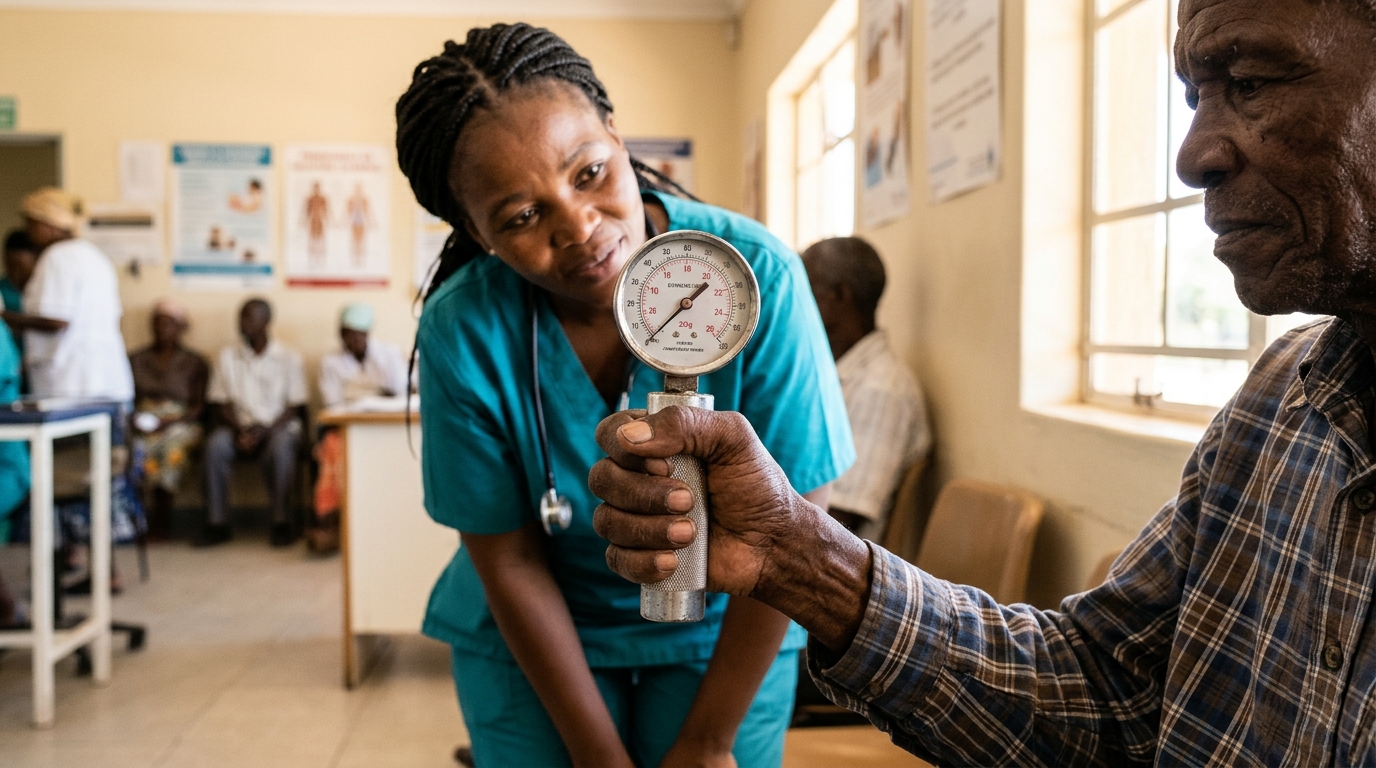
To determine frailty status, the researchers applied Fried’s phenotype criteria. This method categorizes individuals into three distinct groups: frail, pre-frail, and non-frail. By using these standardized criteria, the study ensures that its findings are comparable to other global research on frailty in people living with HIV.
The study included 976 participants, with 52% identifying as male and a median age of 51 years.
The results revealed that only 3% of the participants were classified as frail, indicating that severe frailty is not the dominant condition in this well-managed group. However, 43% of the participants were classified as pre-frail. This finding supports the notion that frailty screening should be integrated into routine HIV care to identify those who may benefit from early support.
The researchers used modified Poisson regression with robust standard errors to estimate risk ratios for frailty, adjusting for various sociodemographic, clinical, and laboratory variables. The analysis revealed that higher age, lower income, shorter height, and elevated albumin-creatinine ratio (ACR) were significantly associated with frailty. In the adjusted models, having an income above BWP1000 per month, which is approximately USD 75, was found to be protective, with an adjusted risk ratio of 0.75. This suggests that higher socioeconomic status may play a role in mitigating the risk of frailty.
Conversely, a higher albumin-creatinine ratio was associated with an increased risk of frailty, with an adjusted risk ratio of 1.06.
The study concludes that while frailty prevalence is low in this cohort of virally suppressed individuals, the commonality of pre-frailty indicates a need for proactive health management. The findings support the integration of frailty screening and inflammation monitoring into standard HIV care protocols. This study contributes globally comparable data from a high-performing setting in sub-Saharan Africa, offering valuable insights into the challenges and opportunities of healthy aging for people living with HIV in the region.
Subject of Research: Prevalence and determinants of frailty and pre-frailty in a cohort of virally suppressed adults living with HIV in Botswana.
Article Title: High pre-frailty burden among people living with HIV in Botswana
Article References: Ponatshego, P. L., Molebatsi, K., Lockman, S., Youssouf, N., Lapuente, E., Zhang, A., Guo, T., Montano, M., & Mosepele, M. (2026). High pre-frailty burden among people living with HIV in Botswana. AIDS Research and Therapy. https://doi.org/10.1186/s12981-026-00944-8
Image Credits: AI Generated
DOI: 10.1186/s12981-026-00944-8
Keywords: HIV, Frailty, Pre-frailty, Botswana, Aging, Antiretroviral therapy, Public health, Sub-Saharan Africa, Chronic disease, Healthcare, High, burden
News Source: Beatrice Stafford. (November 7, 2026). Botswana HIV Study Finds High Pre-Frailty Rates. Scienmag.