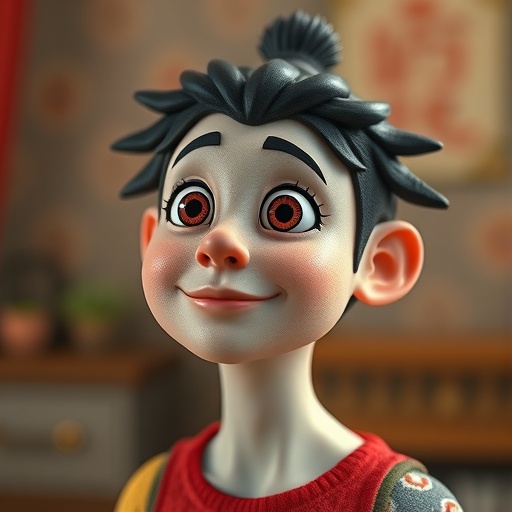
In the rapidly evolving field of animation, the quest for enhanced realism has taken a significant leap forward with the advent of artificial intelligence technologies. Researchers are increasingly turning to generative adversarial networks (GANs) to refine character animation, introducing methods that promise to revolutionize the gaming and film industries. GANs, which consist of a pair of neural networks—the generator and the discriminator—compete against each other to produce images that are almost indistinguishable from real-world counterparts. This sophisticated process enables improved texture, motion dynamics, and expressive facial features in animated characters.
The latest research conducted by Wibowo, Manongga, and Hendry dives deep into the intricacies of implementing GANs in the realm of character animation. Their comparative method study contrasts traditional animation techniques with those enhanced by GANs, revealing not only the benefits but also the challenges associated with integrating AI into creative processes. The findings suggest that utilizing GANs can significantly reduce the labor-intensive aspects of character design while simultaneously elevating the overall aesthetic quality of animations.
One of the primary advantages of using GANs in this context is their ability to learn from vast datasets of real human movement and facial expressions. This learning allows GANs to generate animations that mimic realistic human behavior more accurately than earlier techniques. The study highlights how GANs can analyze thousands of motion capture data points, enabling them to produce fluid movements that resonate with audiences, thereby heightening emotional engagement in animated narratives.
In exploring the technical framework behind these advancements, the research dissects the architecture of GANs, which involves a generator that creates new data instances and a discriminator that evaluates them against real data. This adversarial training not only sharpens the capabilities of both networks over time but establishes a feedback loop that enhances the final output quality. Consequently, animation studios can leverage this technology to experiment with diverse character designs and lifelike movements that were previously unimaginable.
Moreover, the ability of GANs to produce high-quality output at an accelerated pace can streamline production timelines significantly. As outlined in the study, animators often face tight deadlines and escalating demand for content. By adopting GANs, studios can harness the efficiency of AI to create complex animations rapidly, allowing artists to focus on more creative elements of the production. This symbiotic relationship between human creativity and machine learning positions the animation industry on the cusp of a breakthrough era.
However, the implementation of GANs is not without its hurdles. The researchers detail the importance of dataset quality and diversity, which are crucial for the effectiveness of GANs in generating realistic animations. Poor-quality or biased datasets can lead to skewed results, producing animations that lack authenticity or fail to resonate with specific audiences. This challenge underscores the necessity for ongoing improvements in data curation and ethical considerations when utilizing AI technologies for creative purposes.
Additionally, the study stresses that while GANs can enhance realism, the artistic direction remains in the hands of animators. The technology should complement human intuition and vision, rather than replace it. The researchers advocate for a collaborative approach, where artists and AI tools work in tandem to create compelling narratives and unique visual styles. This partnership is essential to overcome the limitations of GANs, providing a balanced perspective between innovation and artistic integrity.
The exploration of GANs in animation also opens up discussions surrounding intellectual property rights and the ownership of AI-generated content. As these technologies advance, questions arise about who holds the creative rights to works produced with AI assistance. The implications of such technologies on the creative industry could lead to new frameworks for copyright, prompting a reevaluation of existing legal structures in light of AI contributions.
In summary, the research conducted by Wibowo and colleagues illustrates the transformative potential of generative adversarial networks in character animation. By enhancing the realism of animations, GANs can significantly impact storytelling and audience engagement in film and video games. As the study demonstrates, while challenges related to dataset integrity and creative ownership persist, the combination of AI technology and human artistry presents an opportunity to redefine the boundaries of animated storytelling.
Looking ahead, the integration of GANs into animation is just the beginning. As technology continues to advance, future iterations of GANs will likely become more sophisticated, offering even greater potential for enhancing realism and artistic expression. This evolution could pave the way for entirely new genres of animation, characterized by previously unattainable levels of detail and emotional depth.
In conclusion, as the animation industry embraces these innovations, it finds itself at a pivotal crossroads. The potential for enhancing character realism with GANs promises not only to revolutionize production processes but also to enrich the storytelling experience for audiences worldwide. The collaborative efforts of artists and AI will undoubtedly shape the future of animation, unlocking possibilities that inspire creativity and push the boundaries of imagination.
In light of these advancements, the animation community will need to embrace ongoing research and development in generative models. The findings presented by Wibowo, Manongga, and Hendry are a significant step forward in understanding how AI can be harnessed to create more realistic and engaging animated characters. This foundational work sets the stage for future explorations that will continue to refine and enhance the art of animation.
As we navigate this new landscape, it will be essential for educators, professionals, and emerging talents in the field to stay informed about the evolving capabilities of AI in animation. This awareness will not only equip animators with the tools they need to thrive in a rapidly changing industry but also inspire a fresh wave of creative thinking that leverages technology for artistic growth.
The journey toward integrating GANs into animation represents a unique fusion of technology and art, where both domains can learn from and enhance each other. As this ongoing research unfolds, it has the power to not only reshape how animations are created but also how audiences perceive and experience animated content.
Ultimately, the future of animation lies at the intersection of creativity and technology, where generative adversarial networks can play a pivotal role. As artists and AI continue to collaborate, we can expect an exciting era of animation that is richer, more immersive, and profoundly influenced by the capabilities of machine learning.
Subject of Research: Enhancing character animation realism through generative adversarial networks (GANs)
Article Title: Enhancing character animation realism with generative adversarial networks (GANs): a comparative method study.
Article References:
Wibowo, M.C., Manongga, D., Hendry, H. et al. Enhancing character animation realism with generative adversarial networks (GANs): a comparative method study.
Discov Artif Intell 5, 398 (2025). https://doi.org/10.1007/s44163-025-00501-8
Image Credits: AI Generated
DOI: https://doi.org/10.1007/s44163-025-00501-8
Keywords: Generative Adversarial Networks, Character Animation, Realism, Artificial Intelligence, Animation Production
Tags: advancements in animation technologyAI in gaming and filmchallenges of AI in creative processescharacter animation techniquescomparative studies in animation techniquesenhancing realism in character animationfacial expression synthesis using GANsgenerative adversarial networks in animationintegrating AI into artistic workflowslabor reduction in character designmotion dynamics in animated charactersrealistic texture generation in animation