


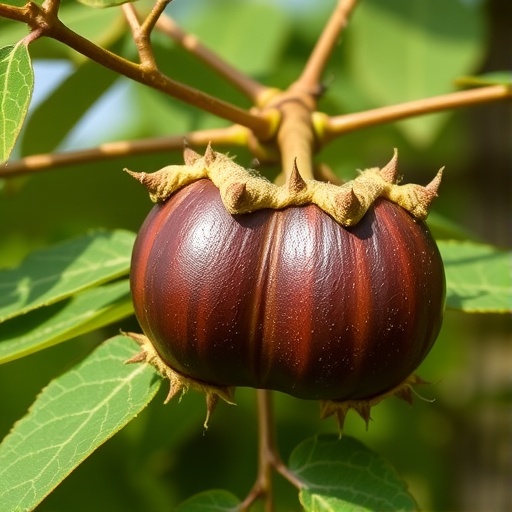
In a groundbreaking study led by researchers Serrazina, Martínez, Valladares, and their colleagues, the genetic underpinnings of enhanced resistance against the devastating pathogen Phytophthora cinnamomi in European chestnut plants have been meticulously explored. This research paves the way for advancements in plant biotechnology and agricultural resilience against environmental stressors. The work centers around the overexpression of the ginkbilobin-2 homologous domain gene, which has shown promising potential in bolstering plant defenses.
The European chestnut, a tree of great ecological and economic significance, has been heavily impacted by Phytophthora cinnamomi, a fungal pathogen responsible for root rot. This disease has led to significant declines in chestnut populations across Europe, causing not only ecological imbalances but also substantial economic losses for timber and nut production industries. The urgency of developing resilient strains of chestnut underscores the need for innovative genetic solutions that can enhance plant fitness and sustainability.
The research conducted by Serrazina and team elucidates the role of the ginkbilobin-2 gene in enabling chestnut plants to withstand infections from Phytophthora cinnamomi. Through detailed analyses of genetic pathways and expression patterns, the study highlights how the overexpression of this gene can lead to an enhanced defense mechanism. By effectively increasing the output of specific proteins that bolster the plant’s innate immune responses, the engineered chestnut varieties display a remarkable ability to resist pathogen attacks.
Previous research has indicated that ginkbilobin proteins possess antifungal properties, enhancing the protective layers within plant tissues. This study takes that knowledge a step further by demonstrating that the targeted overexpression of the ginkbilobin-2 homologous domain gene can create a fortified response in European chestnuts when faced with infection pressures. Key findings reveal that these genetically manipulated plants exhibited a substantially reduced susceptibility to disease symptoms compared to their non-modified counterparts.
In addition to laboratory experiments, field trials were conducted to assess the practical application of these genetic modifications in real-world settings. The results from these trials are expected to provide crucial validation for the approach taken and will be instrumental in determining the resilience of these modified plants in natural environments. This dual approach—spanning both laboratory and field conditions—ensures a comprehensive understanding of how the modifications translate to natural resistance.
Furthermore, the research team employed advanced genomic techniques including CRISPR and RNA sequencing to precisely manipulate and analyze gene expression dynamics. These cutting-edge methodologies not only facilitated the targeted alteration of the ginkbilobin-2 gene but also allowed researchers to monitor downstream effects within the plant’s cellular framework. This rigorous validation process is vital for confirming the efficacy of such genetic interventions in agricultural biotechnology.
Implications of this research extend beyond the European chestnut, as the methodologies and findings may serve as a blueprint for enhancing resistance traits in other economically significant tree species. The genetic insights gleaned from this work can lead to similar applications in ecosystems where other pathogens pose threats to native flora. This aspect of the study underlines the importance of leveraging genetic strategies in a broader context within agricultural and environmental science.
Moreover, public and environmental stakeholders are increasingly open to genetically modified organisms (GMOs) as potential solutions to food security and ecological stability issues. By developing crops that can withstand pathogen pressures, such as Phytophthora cinnamomi, this research addresses not only the immediate economic implications but also the broader context of sustainable agriculture amidst climate change challenges.
As the study moves forward, researchers are optimistic that these advancements will lead toward more rigorous acceptance of biotechnology in traditional farming practices. With the ever-increasing pressures of climate variability, the ability to adapt plants genetically to foster resilience could play a critical role in ensuring food security for future generations.
Additionally, the socio-economic ramifications of such advancements can be monumental, with farmers potentially benefitting from increased yields and lower losses due to pathogen outbreaks. This research advocates for not just scientific innovation but also for community engagement, education, and the responsible deployment of genetic technologies. It emphasizes the need for a collaborative approach between scientists, policymakers, and farmers.
Looking ahead, the researchers intend to delve deeper into the functional pathways involving the ginkbilobin-2 gene, aiming to uncover more intricate details about its mechanisms and potential synergies with other resistant traits. Future studies may involve broader genomic editing efforts to further improve the resilience traits exhibited by these plants.
In summary, the groundbreaking study has set a precedent in the field of plant genomics. By demonstrating the enhanced resistance of European chestnut against a formidable pathogen through genetic modification, Serrazina and colleagues have spotlighted the potential of cutting-edge biotechnological approaches to mitigate significant agricultural threats. The integration of scientific findings with practical applications hints at a favorable trajectory for genetically modified crops in promoting agricultural sustainability.
As the research continues to unfold and gain traction, it has the potential to inspire similar studies across various domains in plant science. The success of this genetic intervention hinges not only on the immediate outcomes observed but also on how it paves the path for future innovations in agricultural practices designed to counter an ever-evolving landscape of challenges posed by pathogens and pests.
Subject of Research: Overexpression of ginkbilobin-2 homologous domain gene in European chestnut to enhance tolerance to Phytophthora cinnamomi.
Article Title: Overexpression of ginkbilobin-2 homologous domain gene to enhance the tolerance to Phytophthora cinnamomi in plants of European chestnut.
Article References: Serrazina, S., Martínez, M.T., Valladares, S. et al. Overexpression of ginkbilobin-2 homologous domain gene to enhance the tolerance to Phytophthora cinnamomi in plants of European chestnut. BMC Genomics (2026). https://doi.org/10.1186/s12864-025-12485-x
Image Credits: AI Generated
DOI: 10.1186/s12864-025-12485-x
Keywords: Ginkbilobin-2, Phytophthora cinnamomi, European chestnut, genetic modification, plant resistance, biotechnology.
Tags: Agricultural resilience strategieschestnut population declinechestnut tree ecological significanceenhancing plant defense mechanismsEuropean chestnut resiliencefungal pathogen impact on forestrygenetic solutions for plant healthginkbilobin-2 gene overexpressioninnovative agricultural practicesPhytophthora cinnamomi resistanceplant biotechnology advancementssustainable forestry management



