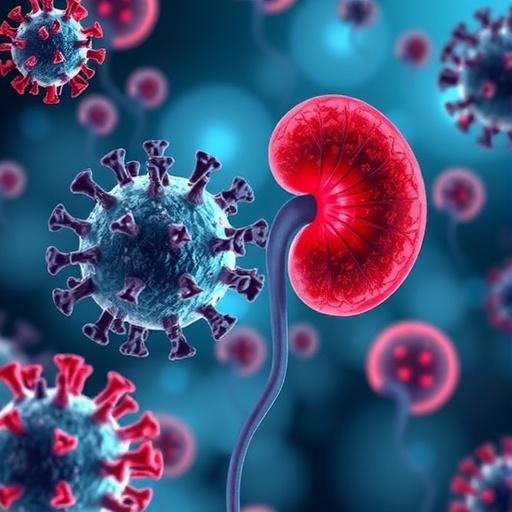
In a pivotal advancement in managing COVID-19 among immunocompromised patients, recent research has demonstrated that booster doses of COVID-19 vaccines reinvigorate virus-specific immune responses in kidney transplant recipients who exhibited negligible response after their primary vaccination series. This insight offers renewed hope for a highly vulnerable population facing elevated risks of severe COVID-19 infections due to immunosuppressive therapy inherent in transplant medicine.
Kidney transplant recipients require lifelong immunosuppression to prevent organ rejection, a necessary but double-edged sword that significantly compromises their immune systems. Consequently, their initial response to the standard two-dose COVID-19 vaccination regimen has been consistently suboptimal, granting them insufficient protection against SARS-CoV-2. The challenge has been to identify effective strategies to fortify immunity within this group, as they remain disproportionately susceptible to breakthrough infections and attendant complications.
The study, spearheaded by researchers including den Hartog, van Sleen, and Gommers, meticulously evaluated the immunological outcomes of administering COVID-19 booster doses to kidney transplant patients who had failed to mount adequate humoral or cellular immune responses following initial vaccination. Using sophisticated immunoassays and T-cell activation profiling, the investigators quantified virus-specific antibody titers and cellular immune markers, establishing a comprehensive view of the immune reconstitution induced by booster doses.
Findings revealed a marked enhancement in both the quantity and quality of virus-specific antibodies after booster administration. Importantly, this serological improvement was paralleled by a robust restoration of T-cell mediated immunity, a critical axis in combating viral infections especially when antibody levels alone are insufficient. The restoration of cellular responsiveness underscores the booster’s role in reactivating immune surveillance mechanisms previously dormant or suppressed in these patients.
This augmentation of immune defenses is particularly crucial given the immune escape characteristics of evolving SARS-CoV-2 variants. The study’s data suggest that booster doses not only amplify the magnitude of the immune response but potentially broaden the spectrum of viral epitopes recognized by the immune system. Such diversity in antigen targeting is essential to maintain protection against variant strains bearing multiple mutations in the spike protein, which can otherwise evade neutralizing antibodies.
The research methodology included longitudinal monitoring of immune parameters post-booster, delineating the kinetics of immune restoration. Notably, the study found that the timing of the booster relative to transplantation date and ongoing immunosuppressive regimens influenced the extent of immune rebound. Patients further out from their transplant surgery and on less intensive immunosuppression showed more pronounced benefits, highlighting the complex interplay between therapeutic immunomodulation and vaccine efficacy.
Beyond humoral and cellular markers, the investigators explored functional immune aspects, such as the capacity of vaccine-induced antibodies to neutralize live virus and mediate antibody-dependent cellular cytotoxicity (ADCC). Boosters substantially enhanced these functional capabilities, translating into a more potent antiviral effect likely to reduce viral replication and disease severity upon exposure.
The implications of these findings extend beyond kidney transplantation. They set a precedent for immunization strategies in other solid organ transplant recipients and immunosuppressed populations, urging healthcare providers to prioritize booster vaccinations as an integral part of COVID-19 management protocols. This approach could mitigate the disproportionate morbidity and mortality borne by these high-risk groups during ongoing pandemic waves.
Critically, the study also underscores the imperative need for personalized vaccination schedules and immunological monitoring in transplant patients. Fixed vaccination regimens may be insufficient for optimal protection, necessitating individualized plans that consider immunosuppressive therapy profiles and transplantation timelines. This personalized medicine paradigm ensures tailored interventions that maximize patient-specific immune restoration.
Moreover, the safety profile of COVID-19 boosters in kidney transplant recipients was reassuring. The researchers reported no significant increase in adverse events or acute allograft rejection episodes post-booster, alleviating early concerns regarding vaccine-induced immune activation potentially triggering transplant complications. These safety data will likely assuage apprehensions among clinicians and patients alike, encouraging broader booster uptake.
From a public health perspective, improving vaccine responsiveness in transplant recipients diminishes their vulnerability as potential reservoirs for prolonged viral replication and mutation, which can contribute to the emergence of novel variants. Thus, booster immunization in this cohort not only protects individuals but also supports collective efforts to curb viral spread and evolution.
Looking forward, the study paves the way for future research into optimized vaccine formulations and adjuvant therapies that could further enhance immunogenicity in immunosuppressed hosts. Investigations into heterologous vaccine boosters, novel mRNA designs, and immune potentiators could yield incremental benefits, fortifying protection against ongoing and future coronavirus outbreaks.
In conclusion, the restorative effect of COVID-19 booster vaccinations on virus-specific immunity in kidney transplant recipients represents a vital breakthrough. It highlights the dynamic adaptability of the immune system even under suppression and underscores the necessity of booster doses as a cornerstone in protecting immunocompromised individuals. As pandemic management continues to evolve, these findings will inform best practices and potentially reshape vaccination guidelines to safeguard those most at risk.
This critical study illuminates the path toward achieving durable immunity against COVID-19 in a population historically marginalized in vaccine efficacy studies. It is a clarion call for continued vigilance, research investment, and implementation of personalized immunization strategies to ensure no vulnerable patient is left defenseless in the face of a persistent viral threat.
Subject of Research: Restoration of virus-specific immune responses after COVID-19 booster vaccination in kidney transplant recipients unresponsive to primary vaccination.
Article Title: COVID-19 boosters restore virus-specific immune responses in kidney transplant recipients unresponsive to primary vaccination.
Article References:
den Hartog, Y., van Sleen, Y., Gommers, L. et al. COVID-19 boosters restore virus-specific immune responses in kidney transplant recipients unresponsive to primary vaccination. npj Viruses 4, 14 (2026). https://doi.org/10.1038/s44298-026-00178-5
Image Credits: AI Generated
DOI: https://doi.org/10.1038/s44298-026-00178-5
Tags: booster dose impact on SARS-CoV-2 immunitybreakthrough COVID-19 infections in transplant patientsCOVID-19 immunity restoration in transplant patientsCOVID-19 vaccine boosters for immunocompromisedhumoral immune response in kidney recipientsimmune response in kidney transplant recipientsimmunosuppressive therapy and vaccine responsemanaging COVID-19 in organ transplant recipientsstrategies to enhance vaccine protection in immunocompromT-cell activation after COVID-19 boostersvaccine efficacy in immunosuppressed individuals