• HOME
  • NEWS
  • EXPLORE
    • CAREER
      • Companies
      • Jobs
    • EVENTS
    • iGEM
      • News
      • Team
    • PHOTOS
    • VIDEO
    • WIKI
  • BLOG
  • COMMUNITY
    • FACEBOOK
    • INSTAGRAM
    • TWITTER
Wednesday, December 31, 2025
BIOENGINEER.ORG
No Result
View All Result
  • Login
  • HOME
  • NEWS
  • EXPLORE
    • CAREER
      • Companies
      • Jobs
        • Lecturer
        • PhD Studentship
        • Postdoc
        • Research Assistant
    • EVENTS
    • iGEM
      • News
      • Team
    • PHOTOS
    • VIDEO
    • WIKI
  • BLOG
  • COMMUNITY
    • FACEBOOK
    • INSTAGRAM
    • TWITTER
  • HOME
  • NEWS
  • EXPLORE
    • CAREER
      • Companies
      • Jobs
        • Lecturer
        • PhD Studentship
        • Postdoc
        • Research Assistant
    • EVENTS
    • iGEM
      • News
      • Team
    • PHOTOS
    • VIDEO
    • WIKI
  • BLOG
  • COMMUNITY
    • FACEBOOK
    • INSTAGRAM
    • TWITTER
No Result
View All Result
Bioengineer.org
No Result
View All Result
Home NEWS Science News Biology

Book on plants in the Murmansk region (Russia) scores 4/19 correct insect identifications

Bioengineer by Bioengineer
March 4, 2020
in Biology
Reading Time: 2 mins read
0
IMAGE
Share on FacebookShare on TwitterShare on LinkedinShare on RedditShare on Telegram

IMAGE

Credit: Vitali Zverev


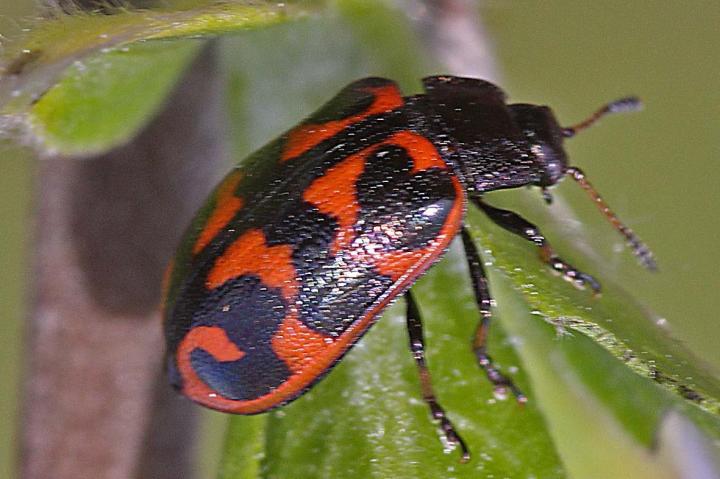
A recently published book on some aspects of the ecology of woody introducents in the Murmansk oblast of Russia provides the information on 19 species of plant-damaging insects out of which only 4 species are identified correctly. Dr Mikhail V. Kozlov from the University of Turku provides correct identifications for the insects, illustrated in the book, in his paper, published in the open-access journal Arctic Environmental Research, in order to prevent the spread of erroneous information across future publications and databases.

Insect fauna of the Murmansk region is relatively well-studied and that’s why any new faunistic records from this region immediately attract the attention of entomologists. Those findings are especially exciting when they extend the distribution range of certain species by 1,000 to 2,000 km towards the North Pole.

The published misidentifications of insect species can lead to a cascading effect of mistakes, because entomologists commonly use faunistic data published by colleagues decades and even centuries ago. That’s why it is very important to keep a track of such cases and provide correct identifications if possible, remarks the author.

“In particular, three moth species (Archips crataegana, A. podana
and Erannis defoliaria) reported in this book to occur around Kirovsk have not yet been found either in the Murmansk oblast or in the more southern Karelia. In neighbouring Finland, the northernmost records of these species are from locations some 1,000 km to the south of Kirovsk,” Dr Kozlov shares his concerns.

The most striking examples of misidentification in the book are at the order level: a syrphid fly (Diptera) identified as a leafcutter bee (Hymenoptera), and a sawfly (Hymenoptera) identified as a psyllid (Hemiptera).

In conclusion, Dr Kozlov’s revision found that 15 out of the 19 species illustrated were incorrectly identified. Thus, the leaf damage associated with certain insect species, considered in the book, also becomes very questionable.

“The misidentification of pest species can easily result in incorrect pest management and face unnecessary costs, while publication of incorrect data distorts our knowledge of the distribution and biology of insects. Therefore, insect identification for scientific, educational or pest management purposes should always be performed by professionals or by volunteers and students who have specific training for this
purpose,” concludes Dr Mikhail V. Kozlov.

###

Original source:

Kozlov MV (2019) Insects identified by unqualified scientists: multiple “new” records from the Murmansk oblast of Russia are dismissed as false. Arctic Environmental Research 19(4): 153-158. https://doi.org/10.3897/issn2541-8416.2019.19.4.153

Media Contact
Mikhail V. Kozlov
[email protected]

Related Journal Article

http://dx.doi.org/10.3897/issn2541-8416.2019.19.4.153

Tags: BiodiversityBiologyEntomology
Share12Tweet8Share2ShareShareShare2

Related Posts

Unraveling Safflower Spininess: EMS and QTL-Seq Insights

Unraveling Safflower Spininess: EMS and QTL-Seq Insights

December 30, 2025
blank

Gender Identity: Breaking Down Stereotypes and Cognition

December 30, 2025

Unlocking Embryonic Secrets: Nematode Chromatin Accessibility Revealed

December 30, 2025

Impact of Wildlife on Livestock Production in Zimbabwe

December 30, 2025
Please login to join discussion

POPULAR NEWS

  • blank

    PTSD, Depression, Anxiety in Childhood Cancer Survivors, Parents

    84 shares
    Share 34 Tweet 21
  • NSF funds machine-learning research at UNO and UNL to study energy requirements of walking in older adults

    71 shares
    Share 28 Tweet 18
  • Exploring Audiology Accessibility in Johannesburg, South Africa

    52 shares
    Share 21 Tweet 13
  • Nurses’ Views on Online Learning: Effects on Performance

    71 shares
    Share 28 Tweet 18

About

We bring you the latest biotechnology news from best research centers and universities around the world. Check our website.

Follow us

Recent News

Precision Therapeutics Target CKD via Shroom3-Rock Interaction

Boosting Nurse Wellbeing: The Power of Resilience Programs

Blocking IL-1 Receptor Eases Kidney Fibrosis Mechanisms

Subscribe to Blog via Email

Enter your email address to subscribe to this blog and receive notifications of new posts by email.

Join 71 other subscribers
  • Contact Us

Bioengineer.org © Copyright 2023 All Rights Reserved.

Welcome Back!

Login to your account below

Forgotten Password?

Retrieve your password

Please enter your username or email address to reset your password.

Log In
No Result
View All Result
  • Homepages
    • Home Page 1
    • Home Page 2
  • News
  • National
  • Business
  • Health
  • Lifestyle
  • Science

Bioengineer.org © Copyright 2023 All Rights Reserved.