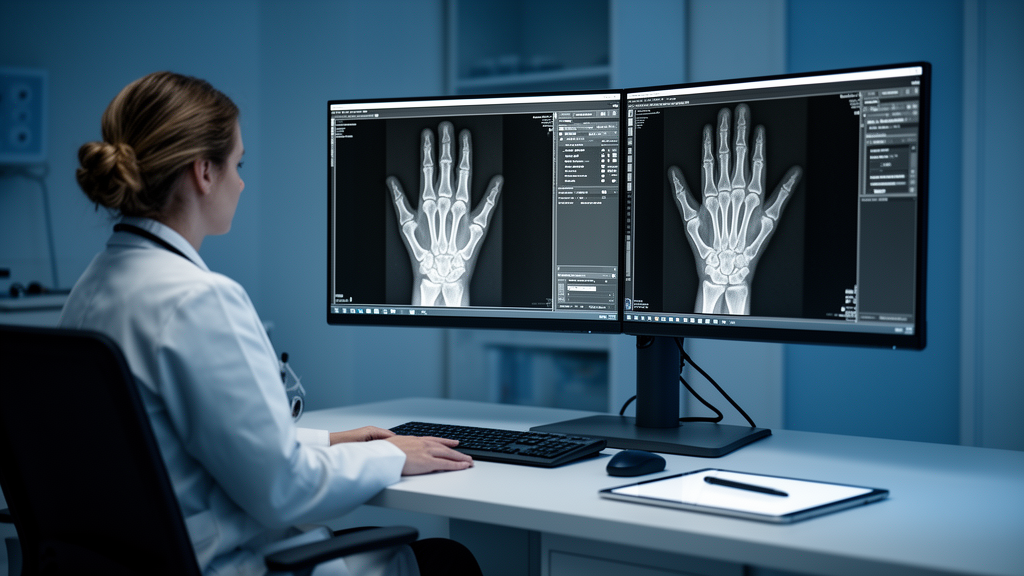
Investigators evaluating two artificial intelligence approaches developed within the Bone2Gene project observed that hand radiographs from several rare bone diseases were predominantly misclassified into the category of SHOX-related short stature.
To identify potential genetic mechanisms responsible for this diagnostic overlap, the researchers conducted a literature review focused on SHOX-related signaling during endochondral ossification and examined its molecular intersections with pathways driving other rare bone diseases.
The literature investigation revealed that SHOX activates the expression of the structural protein aggrecan (ACAN), while simultaneously repressing FGFR3-induced RAS/RAF/MAPK signaling.
These biochemical connections establish direct signaling overlaps between SHOX pathways and other conditions, specifically linking to ACAN-related growth disorder as well as hypochondroplasia and achondroplasia.
The authors concluded that the pronounced phenotypic diversity characteristic of SHOX-related short stature also fosters misclassification in rare bone diseases that lack a direct biochemical connection to SHOX-related signaling pathways.
Although the heterogeneity and rarity of rare bone diseases continue to challenge timely clinical diagnosis, the researchers determined that Bone2Gene models offer a valuable diagnostic aid when systematically complemented by genetic testing.
In addressing the diagnostic challenges posed by rare bone diseases, the research highlights that their pronounced heterogeneity and rare occurrence present significant obstacles to clinical identification. Nevertheless, achieving a correct and timely diagnosis is of critical relevance for securing the best therapeutic outcome for patients. To assist in overcoming these clinical hurdles, the Bone2Gene project developed two artificial intelligence approaches specifically designed to support the diagnostic process by assigning hand radiographs to corresponding rare bone diseases.
Specifically, the researchers observed a predominant misclassification of several distinct rare bone diseases into the single category of SHOX-related short stature. This overlap across both Bone2Gene artificial intelligence approaches prompted an investigation to determine potential genetic explanations for the misclassifications.
To understand the biological mechanisms underlying the diagnostic overlap, the researchers conducted literature research focused on SHOX-related signaling pathways in endochondral ossification and their connections to the molecular signaling underlying other rare bone diseases.
The literature research revealed specific biochemical intersections between SHOX and pathways associated with other skeletal conditions. In particular, the findings demonstrated that SHOX activates the expression of aggrecan, a structural protein designated as ACAN. Simultaneously, SHOX represses FGFR3-induced signaling through the RAS/RAF/MAPK pathway. These dual regulatory roles establish direct signaling connections between SHOX-related pathways and ACAN-related growth disorder, as well as connections to hypochondroplasia and achondroplasia.
In addition to direct signaling interactions, the researchers concluded that the high phenotypic variety characteristic of SHOX-related short stature significantly contributes to diagnostic misclassification. Notably, this pronounced phenotypic variability also fosters the misclassification of rare bone diseases that do not exhibit any direct connection to SHOX-related signaling pathways.
Overall, the literature research deepened understanding regarding the occurrence of misclassification across both Bone2Gene artificial intelligence approaches. When systematically complemented with genetic testing, the Bone2Gene approaches can serve as a valuable tool in supporting the diagnostic process for rare bone diseases.
Subject of Research: SHOX-related signaling pathways and artificial intelligence misclassification in rare bone diseases
Article Title: Molecular mechanisms underlying phenotypic overlap and AI-misclassification in rare bone diseases: Insights from SHOX-related signaling pathways in endochondral ossification
Article References: Fischer, I., Bialdiga, S., Schmidt, P., Bolmer, E., Javanmardi, B., Mohnike, K., & Schanze, D. (2026). Molecular mechanisms underlying phenotypic overlap and AI-misclassification in rare bone diseases: Insights from SHOX-related signaling pathways in endochondral ossification. Frontiers in Endocrinology, 17, Article 1996027. https://doi.org/10.3389/fendo.2026.1996027
Image Credits: AI Generated
DOI: 10.3389/fendo.2026.1996027
Keywords: rare bone diseases, SHOX, SHOX-related short stature, Bone2Gene, hand radiographs, endochondral ossification, aggrecan, ACAN, FGFR3, RAS/RAF/MAPK signaling, hypochondroplasia, achondroplasia, ACAN-related growth disorder, phenotypic overlap, artificial intelligence misclassification, growth plate development, genetic testing
News Source: Ophelia Keating. (November 15, 2026). Bone2Gene Hand Radiograph AI Misclassifications Linked to SHOX Signaling Pathways. Scienmag.