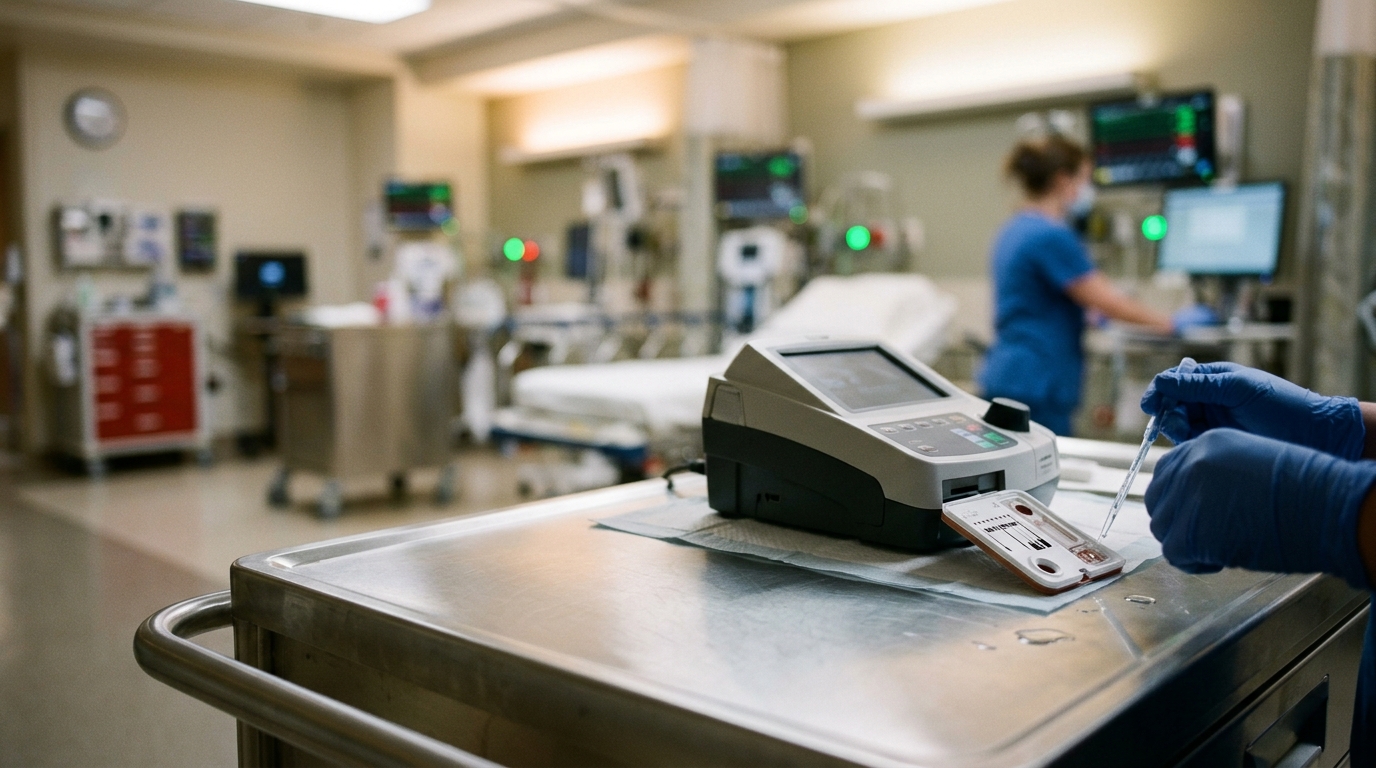
A large German research consortium is preparing to test whether a bedside blood-clotting measurement can identify which neurosurgery patients are most likely to develop life-threatening venous thromboembolism in the days after an operation. The study, known as TENS, is described in a newly published protocol as a prospective, multicenter, observational prognostic factor study that will enroll up to 369 patients at four university hospitals in Cologne, Munich, and Oldenburg. The protocol appeared in the journal Diagnostic and Prognostic Research on 2 November 2026, and it lays out in detail how the investigators plan to evaluate a modified form of rotational thromboelastometry, a viscoelastic coagulation test run on the ROTEM delta system, as a potential risk-stratification tool for a population in which deep vein thrombosis rates have been reported to range from 15 percent to as high as 70 percent.
The clinical problem the study targets is well documented. Neurosurgical patients, and particularly those with intracranial tumours such as glioma or meningioma, face a markedly elevated risk of venous thromboembolism, the umbrella term for deep vein thrombosis and pulmonary embolism. According to the protocol, the incidence of deep vein thrombosis among neurosurgical patients ranges from 15 to 45 percent and depends strongly on tumour pathology, surgical extent, and the patient’s clinical condition. In patients with primary brain tumours, rates of up to 70 percent have been reported, a figure the authors attribute to biological factors, specifically the release of procoagulant substances and fibrinolytic inhibitors from the tumour or surrounding tissue. These substances contribute to a subclinical hypercoagulable state that may matter more than traditional clinical risk factors. Pulmonary embolism, meanwhile, occurs in 1.4 to 5 percent of neurosurgical patients overall and rises to 3 to 10 percent among those classified as high risk. Recent reviews continue to identify patients with glioma, particularly glioblastoma, as a population at high risk of venous thromboembolism, while also emphasising the competing danger of intracranial haemorrhage when preventive or therapeutic anticoagulation is considered.
What the existing toolkit misses, the investigators argue, is a functional picture of how an individual patient’s blood actually clots and dissolves clots. Current prophylactic strategies rely predominantly on pharmacological and mechanical measures and do not account for the individual complexity of coagulation dynamics. Standard laboratory parameters such as platelet count, haemoglobin, International Normalized Ratio, activated partial thromboplastin time, and fibrinogen assess isolated aspects of the coagulation cascade and cannot reliably identify patients with altered functional coagulation when their values fall within the normal range. The protocol also flags a subtler hazard: uncritical substitution of coagulation factors such as factor XIII in the absence of functional testing may itself increase the risk of thromboembolism, a risk that standard laboratory parameters fail to detect. In neurosurgical patients, where thromboembolism and perioperative intracranial haemorrhage must be weighed simultaneously, this diagnostic gap is clinically significant.
Thromboelastometry addresses that gap by providing a point-of-care assessment of the entire coagulation process, from clot initiation through clot formation and fibrinolysis, the enzymatic breakdown of a fibrin clot. The ROTEM delta system enables detection of both diffuse bleeding tendency and prothrombotic states, meaning coagulation states that favour thrombosis. The specific innovation under study is a modified low-dose tissue plasminogen activator test, in which recombinant alteplase is prepared as a stock solution of 1 milligram per millilitre, diluted to an intermediate concentration of 0.1 milligrams per millilitre, and finally adjusted to a working concentration of 0.01 milligrams per millilitre. For each measurement, 10 microlitres of the diluted solution are added to 1 millilitre of citrated whole blood, followed by a standardised incubation of 60 seconds before analysis. Prior work from the same group has shown that the modified tissue plasminogen activator test reliably detects residual antifibrinolytic activity following tranexamic acid administration, underscoring its sensitivity to clinically relevant changes in fibrinolytic capacity. A recent systematic review in primary brain cancer reported evidence of increased secondary haemostatic activity and impaired fibrinolysis, including prolonged clot lysis time, supporting the biological rationale for the approach.
The central hypothesis is that preoperative and perioperative thromboelastometric parameters, in particular the lysis time measured in the low-dose tissue plasminogen activator test, are associated with the occurrence of thromboembolic events in neurosurgical patients. Lysis time is defined as the time from clot formation to a predefined degree of clot breakdown and is interpreted as a measure of fibrinolytic resistance. The primary objective is to determine whether this parameter is associated with objectively imaging-confirmed venous thromboembolic events occurring within 30 days after surgery. Secondary objectives include whether preoperative pathological thromboelastometric values are associated with postoperative thromboembolic complications, whether perioperative changes from the preoperative baseline to postoperative day 1 predict thrombotic events, whether pathological values in the low-dose test identify patients at elevated risk for perioperative haemorrhage, and whether demographic and perioperative variables such as age, body mass index, pre-existing medication, fluids, and surgery time can be combined with thromboelastometric parameters in multivariable analysis to identify independent predictors of postoperative thromboembolic events.
The design is strictly observational. No randomisation or experimental intervention is performed, and thromboelastometric measurements are taken as an adjunct to routine perioperative care without influencing clinical decision-making or treatment. Eligible patients are adults aged 18 or older scheduled for elective neurosurgical procedures at one of the four participating centres who either have a diagnosed intracranial tumour, including but not limited to glioma, meningioma, or brain metastasis, or are scheduled for a procedure with an anticipated operative duration of at least four hours. Notably, patients with pre-existing haemostatic disorders, known coagulopathies, or current anticoagulant therapy are intentionally not excluded, in order to preserve the clinical representativeness of this high-risk cohort; these characteristics will be recorded prospectively and considered in unadjusted and adjusted analyses. The only exclusion criterion is refusal to participate or ineligibility for informed consent.
Each participant will be followed for 30 days from the date of surgery, with blood drawn from already indwelling catheters at three defined time points: before surgery, immediately following anaesthesia induction; at the end of surgery; and on postoperative day 1. An optional additional clinical assessment is planned for postoperative days 5 through 7 in patients still hospitalised. The standard assays comprise EXTEM, INTEM, and FIBTEM, assessing the extrinsic, intrinsic, and fibrinogen-dependent components of clot formation, alongside the low-dose tissue plasminogen activator assay. Recorded parameters include clotting time, clot formation time, maximum clot firmness, lysis indices at 30, 45, and 60 minutes, and lysis time, with all assays run at 37 degrees Celsius. A structured telephone follow-up on day 30 will ask about interval thromboembolic diagnoses, bleeding complications, re-hospitalisation, re-operations, and days at home. For the primary endpoint, imaging confirmation is mandatory: deep vein thrombosis must be confirmed by compression ultrasonography and pulmonary embolism by computed tomography pulmonary angiography. Clinical signs or D-dimer elevation alone are insufficient for classification, and systematic imaging screening of asymptomatic participants is not part of the approved protocol.
The sample size calculation was performed a priori using PASS 2022 Power Analysis software. Because no prior neurosurgical data exist for this modified assay, the investigators selected an alternative-hypothesis area under the receiver operating characteristic curve of 0.725 as the target level of discrimination considered sufficient to justify subsequent clinical validation. That figure represents an absolute improvement of 0.225 over chance discrimination and was not derived from pilot data. Based on a one-sided z-test with a significance level of 0.025 and 80 percent power, a minimum of 14 participants with confirmed thromboembolic events and 336 participants without events are required, yielding an achieved power of 82 percent under these assumptions. Allowing for 5 percent attrition, up to 369 participants will be enrolled to obtain 350 evaluable participants. The primary analysis will treat lysis time as a continuous prognostic factor with no prespecified clinical cut-off, using an unadjusted ROC analysis with a 95 percent confidence interval estimated from 2,000 stratified non-parametric bootstrap resamples. An exploratory data-derived threshold estimated with the Youden index will be reported explicitly as exploratory rather than as a validated clinical cut-off, and penalised logistic regression will be used if conventional estimation would be unstable given the limited expected number of events.
The trial is registered in the German Clinical Trials Register under number DRKS00034388, with registration dated 8 October 2024. Recruitment began at the coordinating centre in Cologne on 19 December 2024, with additional centres opening after local approval and site-initiation processes. As of March 2026, fewer than half of the target sample of 350 evaluable participants had been enrolled, and recruitment is expected to be completed by March 2027. The coordinating centre is the Department of Anaesthesiology and Intensive Care Medicine at University Hospital of Cologne, with Ludwig-Maximilians-Universität Munich, Technical University of Munich, and University Hospital of Oldenburg as participating sites. Because the study is non-interventional and involves no investigational medicinal product or device, no formal data monitoring committee or external auditing is planned; data quality is monitored through source data verification and electronic case report form review.
The investigators are candid about the limitations. As an observational prognostic factor study, TENS cannot establish causality between thromboelastometric parameters and thromboembolic events. The number of participants expected to develop confirmed venous thromboembolism is relatively small by design, limiting the precision of adjusted and subgroup analyses, and the study is not powered to detect differences between individual tumour entities or surgical subgroups, so any such findings will be exploratory and hypothesis-generating. Because the assumed discrimination target of 0.725 is a design choice rather than an estimate from prior data, the study may be underpowered if the true discrimination is lower. VTE surveillance is symptom-driven, so asymptomatic events may be missed and detection bias cannot be excluded. Rotem measurements are also limited to the early perioperative window and will not capture later coagulation changes between postoperative day 1 and a subsequent event. Perioperative confounders such as mild hypothermia, known to influence thromboelastometric parameters, will be recorded for consideration in the analyses. If the low-dose test does prove to be a reliable predictor, the findings could inform individualised, thromboelastometry-guided diagnostic and prophylactic algorithms for this high-risk population; if no association is demonstrated, the authors note, that result would itself clarify the boundaries of thromboelastometry as a diagnostic tool in the neurosurgical context.
Subject of Research: A prospective multicenter observational protocol evaluating modified thromboelastometry with a low-dose tissue plasminogen activator test for prognostic stratification of venous thromboembolism risk in neurosurgical patients.
Article Title: Prognostic value of modified thrombelastometry for thromboembolic risk stratification in neurosurgical patients: protocol for a prospective, multicenter, observational study (TENS)
Article References: Heiroth, H.-J., Groene, P., Schäfer, S., Längin, M., Fuest, K., Hof, M., Alfitian, J., Brezina, T., Omuro, P., Torabi, S., Rueß-Paterno, G., Göke, A., Werschnik, S., Lenschow, M., Neuschmelting, V., Hagemeier, A., & Kammerer, T. (2026). Prognostic value of modified thrombelastometry for thromboembolic risk stratification in neurosurgical patients: protocol for a prospective, multicenter, observational study (TENS). Diagnostic and Prognostic Research, 10(1), Article 29. https://doi.org/10.1186/s41512-026-00244-9
Image Credits: AI Generated
DOI: 10.1186/s41512-026-00244-9
Keywords: thromboelastometry, venous thromboembolism, neurosurgery, fibrinolysis, lysis time, low-dose tPA test, ROTEM, brain tumours, deep vein thrombosis, pulmonary embolism, prognostic study, perioperative coagulation
News Source: Ophelia Keating. (November 6, 2026). Blood Clot Test Could Flag Dangerous Clots After Brain Surgery, Study Protocol Says. Scienmag.