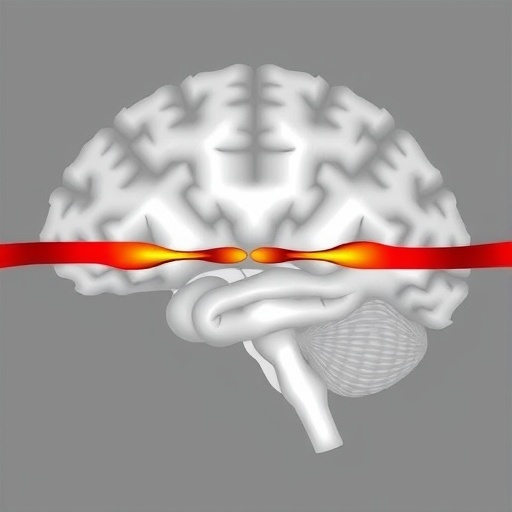
In a groundbreaking study that may redefine therapeutic strategies for aggressive brain tumors, researchers have unveiled a novel biomarker that predicts glioblastoma’s responsiveness to chemotherapy with remarkable precision. The study, recently published in Nature Communications, sheds light on the dynamic release of extracellular particles following the transient opening of the blood-brain barrier (BBB), offering a transformative window into tumor susceptibility to the chemotherapeutic agent paclitaxel.
Glioblastoma remains one of the most lethal forms of brain cancer, notorious for its resistance to standard treatments and its ability to evade therapeutic agents through the protective mechanism of the BBB. This physiological barrier, while crucial in normal brain physiology, notoriously limits drug delivery to the tumor site, posing a formidable challenge for oncologists. For decades, the quest to breach this barrier safely and effectively has driven extensive research, but the ability to predict which tumors might respond to treatment following BBB disruption has remained elusive—until now.
The research team, led by M.W. Youngblood and colleagues, meticulously tracked the release patterns of extracellular particles—tiny vesicles and microvesicles secreted by cells—after the BBB was transiently opened. These extracellular particles, which include exosomes and microvesicles, are increasingly recognized as critical mediators of intercellular communication, carrying molecular cargo such as proteins, RNAs, and lipids that reflect the physiological or pathological state of their cell of origin.
Using advanced imaging and molecular characterization techniques, the researchers observed that the opening of the BBB triggered an immediate and quantifiable surge in extracellular particle release into circulation. More importantly, this dynamic release profile correlated strongly with the glioblastoma’s vulnerability to paclitaxel, a chemotherapeutic agent traditionally limited by its poor penetration across an intact BBB.
The implications of this discovery are profound. Clinicians could soon leverage extracellular particle dynamics as a minimally invasive biomarker to tailor chemotherapy regimens, customizing treatment plans based on tumor-specific responses rather than relying solely on imaging or biopsy. This would not only enhance therapeutic efficacy but also minimize adverse effects by avoiding ineffective treatments.
Diving deeper, the study elucidated the molecular composition of these extracellular particles, revealing a signature profile rich in tumor-specific markers and metabolic enzymes involved in drug metabolism. This molecular fingerprint enabled the researchers to establish a predictive model of chemotherapy sensitivity, which was validated in both preclinical glioblastoma models and patient-derived samples.
Furthermore, the investigation revealed the temporal nature of BBB disruption and particle release. The window for effective paclitaxel delivery corresponded precisely with the peak burst of extracellular particles, emphasizing the importance of timing in clinical intervention. Such insight paves the way for synchronizing drug administration with BBB permeability fluctuations, potentially maximizing drug accumulation within the tumor microenvironment.
This research also explores the mechanistic underpinnings of particle release, linking it to vascular endothelial responses and tumor-induced modulation of BBB integrity. The controlled opening of the BBB was achieved through a combination of focused ultrasound and microbubble technology, an emerging non-invasive approach that safely increases BBB permeability without causing long-term damage.
The study’s design included rigorous longitudinal monitoring, integrating liquid biopsy analyses with imaging data to provide a comprehensive understanding of how extracellular particle profiles evolve in response to treatment. This integrative strategy not only validates extracellular particles as biomarkers but potentially positions them as active players in modulating drug delivery and tumor microenvironment interactions.
Moreover, the findings open avenues for enhancing therapeutic delivery using extracellular particles themselves as drug carriers. By harnessing their natural targeting abilities, engineered extracellular vesicles could be adapted to ferry chemotherapeutic agents directly to tumor cells, sidestepping the barrier limitations altogether.
In a broader sense, this research underscores the potential of extracellular particles as a versatile tool in neuro-oncology. Beyond glioblastoma, the principles elucidated here may extend to other CNS pathologies where the BBB plays a critical modulatory role, offering new frontiers for diagnostic and therapeutic innovation.
While the study heralds promising clinical applications, the authors acknowledge the need for larger-scale clinical trials to fully establish the utility of extracellular particle monitoring in routine patient care. Implementing such protocols will require standardization of particle isolation, quantification, and molecular characterization methods to ensure reproducibility and accuracy.
This research stands at the confluence of cutting-edge neuroscience, oncology, and molecular biology, embodying the shift toward precision medicine in brain cancer treatment. By decoding the language of extracellular particles in the context of BBB disruption, the team has unlocked a predictive axis that could revolutionize glioblastoma management.
As research advances, the integration of extracellular particle-based diagnostics with existing imaging and molecular profiling may herald an era where glioblastoma therapies are not only more effective but also personalized to the unique biological landscape of each tumor.
The blend of innovative technology and molecular insight highlighted in this study delivers a powerful narrative of hope, signaling a new chapter in the relentless battle against one of the most formidable cancers.
In conclusion, the dynamic extracellular particle release following BBB opening emerges as a compelling biomarker, predicting glioblastoma susceptibility to paclitaxel while illuminating pathways for enhanced drug delivery and personalized treatment strategies. This paradigm-shifting work offers a beacon of progress, reinforcing the promise of translational research in turning molecular discoveries into tangible clinical benefits for patients facing brain cancer.
Subject of Research: Glioblastoma, blood-brain barrier dynamics, extracellular particles, chemotherapy susceptibility, paclitaxel delivery.
Article Title: Dynamic release of extracellular particles after opening of the blood-brain barrier predicts glioblastoma susceptibility to paclitaxel.
Article References:
Youngblood, M.W., Kumari, A., Kang, YT. et al. Dynamic release of extracellular particles after opening of the blood-brain barrier predicts glioblastoma susceptibility to paclitaxel. Nat Commun 16, 11045 (2025). https://doi.org/10.1038/s41467-025-65681-4
Image Credits: AI Generated
DOI: https://doi.org/10.1038/s41467-025-65681-4
Tags: Blood-Brain Barrier Openingbridging blood-brain barrier for drug deliverychemotherapy biomarker discoveryextracellular particles in cancer treatmentglioblastoma drug responseglioblastoma treatment strategiesinnovative cancer research methodologiesovercoming drug delivery challengespaclitaxel effectiveness in brain tumorstargeted therapy for brain cancertumor susceptibility predictionvesicles and microvesicles in oncology