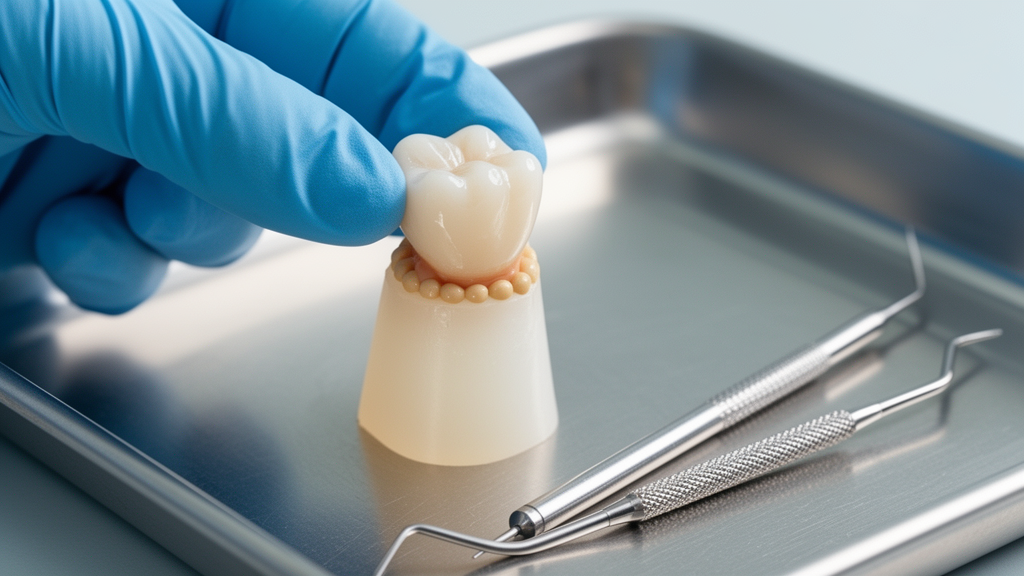
In an in vitro investigation evaluating prosthetic procedures, researchers demonstrated that utilizing replica techniques or venting designs significantly decreased the quantity of residual cervical cement in implant-supported crowns compared with standard cementation protocols. Excess luting agent left behind after seating restorations poses serious biological concerns around peri-implant tissues, prompting the evaluation of methods that clear redundant material before final seated placement.
To evaluate these clinical alternatives, the investigators prepared sixty dental abutments connected to analogues, which were torqued securely and embedded inside standardized resin blocks. Definitive metal crowns were subsequently fabricated using laser sintering processes, engineered with a specified 50-micrometer cement space and integrated with an occlusal pull-out ring to facilitate mechanical retention testing across all experimental specimens.
The experimental protocol distributed the specimens evenly across six distinct groups of ten crowns each to contrast distinct fabrication and seating approaches. The primary control group utilized direct conventional cementation on the definitive abutments, while a second cohort evaluated vent holes incorporated directly into the occlusal surfaces of the metal crowns to permit passive cement escape during placement.
Four additional groups tested extraoral trial seating onto specialized replica dies prior to definitive crown placement. These replica systems comprised resin-ceramic dies produced through additive three-dimensional printing, chairside bis-acryl replicas, elastomeric silicone replicas, and polymethyl methacrylate dies fabricated via subtractive computer-aided design and computer-aided manufacturing milling procedures.
During the seating protocol for the replica cohorts, crowns loaded with cement were first pre-seated onto their corresponding duplicate dies, allowing clinicians to express and clear initial excess material extraorally. Following this preliminary clearing step, the restorations were transferred to the definitive abutments, where all remaining displaced cervical cement was carefully retrieved and weighed on precision scales.
Subsequent pull-out tensile testing assessed whether the varied replica materials and displacement mechanisms altered the ultimate retention capacity of the cemented crowns. Quantitative outcomes from the experiments were subjected to statistical evaluation using one-way analysis of variance and Tamhane’s T2 post-hoc comparisons to detect significant differences in residual weight and tensile resistance.
The gravimetric findings indicated that every evaluated experimental approach achieved a statistically significant reduction in residual cement compared to the traditional control protocol. Ranking the residual cement volume from greatest to least showed conventional seating yielding the most extrusion, followed sequentially by vent hole designs, silicone duplicates, bis-acryl forms, milled polymethyl methacrylate replicas, and additive three-dimensional printed resin-ceramic dies.
Tensile testing revealed marked divergence in final retention among the alternative protocols despite their shared capacity to diminish extruded cement. The pull-out strength was significantly elevated exclusively in the bis-acryl replica cohort relative to the control group, whereas crowns cemented following pre-seating on milled polymethyl methacrylate dies displayed significantly degraded retention values.
In summary, the authors noted that while every tested intervention curtailed residual cervical cement below conventional baselines, bis-acryl replicas uniquely provided a favorable compromise by preserving and augmenting retention alongside cement control. Conversely, the substantial loss of mechanical pull-out strength observed with milled polymethyl methacrylate replicas underscores that replica material selection fundamentally influences definitive restoration stability.
Subject of Research: Dental implant cementation methods, excess cement reduction, and crown pull-out retention
Article Title: Comparison of cementation methods for excess cement and retention in implant-supported crowns: in vitro study
Article References: Usta Kutlu, İ., & Demir, S. B. (2026). Comparison of cementation methods for excess cement and retention in implant-supported crowns: in vitro study. BMC Oral Health. https://doi.org/10.1186/s12903-026-10434-y
Image Credits: AI Generated
DOI: 10.1186/s12903-026-10434-y
Keywords: implant-supported crowns, excess cement, pull-out strength, bis-acryl replicas, CAD/CAM milling, 3D printing, resin-ceramic replicas, PMMA replicas, vent holes, conventional cementation, in vitro study, dental abutments, laser sintering, prosthodontics, cement gap, cervical cement
News Source: Ophelia Keating. (November 19, 2026). Bis-Acryl Replicas Limit Excess Implant Cement While Preserving Crown Pull-Out Retention. Scienmag.