• HOME
  • NEWS
  • EXPLORE
    • CAREER
      • Companies
      • Jobs
    • EVENTS
    • iGEM
      • News
      • Team
    • PHOTOS
    • VIDEO
    • WIKI
  • BLOG
  • COMMUNITY
    • FACEBOOK
    • INSTAGRAM
    • TWITTER
Saturday, June 27, 2026
BIOENGINEER.ORG
No Result
View All Result
  • Login
  • HOME
  • NEWS
  • EXPLORE
    • CAREER
      • Companies
      • Jobs
        • Lecturer
        • PhD Studentship
        • Postdoc
        • Research Assistant
    • EVENTS
    • iGEM
      • News
      • Team
    • PHOTOS
    • VIDEO
    • WIKI
  • BLOG
  • COMMUNITY
    • FACEBOOK
    • INSTAGRAM
    • TWITTER
  • HOME
  • NEWS
  • EXPLORE
    • CAREER
      • Companies
      • Jobs
        • Lecturer
        • PhD Studentship
        • Postdoc
        • Research Assistant
    • EVENTS
    • iGEM
      • News
      • Team
    • PHOTOS
    • VIDEO
    • WIKI
  • BLOG
  • COMMUNITY
    • FACEBOOK
    • INSTAGRAM
    • TWITTER
No Result
View All Result
Bioengineer.org
No Result
View All Result
Home NEWS Science News Biology

Bird personalities influenced by both age and experience, study shows

Bioengineer by Bioengineer
June 6, 2019
in Biology
Reading Time: 2 mins read
0
IMAGE
Share on FacebookShare on TwitterShare on LinkedinShare on RedditShare on Telegram

New research by University of Alberta biologists examines development of personality in birds
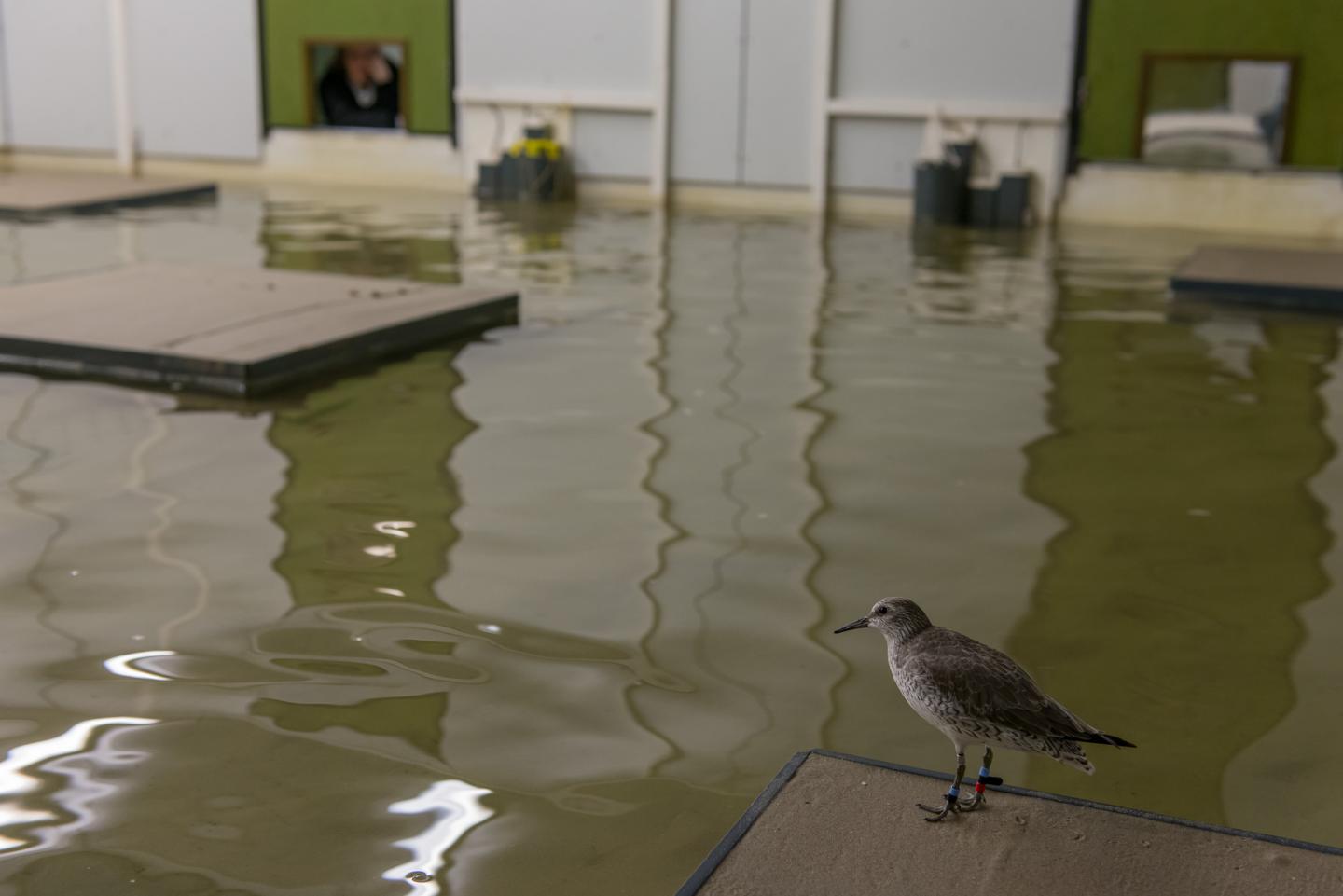
IMAGE

Credit: Jan J. Wijmenga

For birds, differences in personality are a function of both age and experience, according to new research by University of Alberta biologists.

The study examined the red knot, a medium-sized shorebird that breeds in the Canadian Arctic and winters in North Western Europe. The researchers studied 90 birds over a two year period, comparing behavioural and physiological traits of two age cohorts: adult and juvenile birds. Studying two age groups allowed the researchers to determine which changes were due to age versus time in captivity.

“During this time, birds had the same type of life experience, including varied diet,” explained Kim Mathot, assistant professor in theDepartment of Biological Sciences and Canada Research Chair in Integrative Ecology. “At the start of the experiments, individuals showed differences in their behaviour. We looked at whether these differences disappeared in the course of the study, which would suggest that there is something about individually variable experiences that helps maintain differences, because in our experiments, all these birds had the same experience.”

Exploring nature and nurture

The results? Well, it’s complicated.

The causes of variation among individual birds were different for different traits. For the birds in this study, individual differences in behaviour were maintained over the course of the study. But physiological traits, such as the size of each bird’s gizzard, became more similar.

“The world isn’t simple, so it makes sense that there isn’t a straightforward answer for how and why individuals differ,” added Mathot. “Nature is wonderfully complex. This is yet another example of that at play.”

In the next leg of the research, PhD student Eva Kok will follow a smaller subset of the study’s birds after they’ve been released back into the wild in order to examine how the traits measured in the lab translate to real life.

“We’re curious to see if physiological differences will reappear after release back into the wild,” explained Mathot. “For instance, if an individual had a relatively large gizzard when we initially captured it but that became smaller in captivity, will it grow to be relatively large again when re-released? Or did we shuffle the deck, and now birds can go onto different trajectories than what they were on before?”

###

The paper, “Within-individual canalization contributes to age-related increases in trait repeatability: a longitudinal experiment in red knots,” was published in The American Naturalist (doi: 10.1086/704593).

Media Contact
Katie Willis
[email protected]

Original Source

https://www.ualberta.ca/science/science-news/2019/may/bird-behaviour-study

Related Journal Article

http://dx.doi.org/10.1086/704593

Tags: BehaviorBiologyEcology/EnvironmentPopulation BiologySocial/Behavioral Science
Share12Tweet8Share2ShareShareShare2

Related Posts

Natural Hallucinogens: Evolution’s Ecological Tools, Not Mere Chemical Byproducts

June 25, 2026

This Famous Butterfly Revealed: Three Distinct Species Hidden in One

June 25, 2026

Scientists Attack Soybean Cyst Nematode by Starving Its Food Source

June 25, 2026

Decoding the Secret Code of a Crucial Immune Sensor

June 24, 2026
Please login to join discussion

POPULAR NEWS

  • Saying Goodbye to PGY-6: Pediatric Fellowship Realities

    103 shares
    Share 41 Tweet 26
  • Multi-Hospital Study Reveals Long Covid Burden Is Twice as High as Current Estimates

    92 shares
    Share 36 Tweet 23
  • Detection of EDCs in Breast Milk and Infant Urine Up to Six Months Highlights Early Exposure Risks

    77 shares
    Share 31 Tweet 19
  • New Drug Candidate Developed at McMaster Shows Potential for Treating Brain Cancer

    58 shares
    Share 23 Tweet 15

About

We bring you the latest biotechnology news from best research centers and universities around the world. Check our website.

Follow us

Recent News

Tracking Lanthanide-Labeled Microplastics in Plants

POSTECH Researchers Slash Cost of Reconstituted Cell-Free Systems by 95%

AI and Physics Collaborate to Design Advanced Hydrogen Storage Materials

Subscribe to Blog via Email

Success! An email was just sent to confirm your subscription. Please find the email now and click 'Confirm' to start subscribing.

Join 82 other subscribers
  • Contact Us

Bioengineer.org © Copyright 2023 All Rights Reserved.

Welcome Back!

Login to your account below

Forgotten Password?

Retrieve your password

Please enter your username or email address to reset your password.

Log In
No Result
View All Result
  • Homepages
    • Home Page 1
    • Home Page 2
  • News
  • National
  • Business
  • Health
  • Lifestyle
  • Science

Bioengineer.org © Copyright 2023 All Rights Reserved.